TL;DR
- To clean an RV toilet, use your toilet maker’s RV bowl cleaner, or a non-abrasive cleaner your manual allows, with a soft brush, sponge, or cloth.
- Avoid bleach and abrasive scrubbers. Check your model’s manual before using acidic cleaners: Dometic and Thetford give different instructions.
- Clean the flush seal gently, never mix cleaners in a small bathroom, and check that the bowl still holds water afterward.
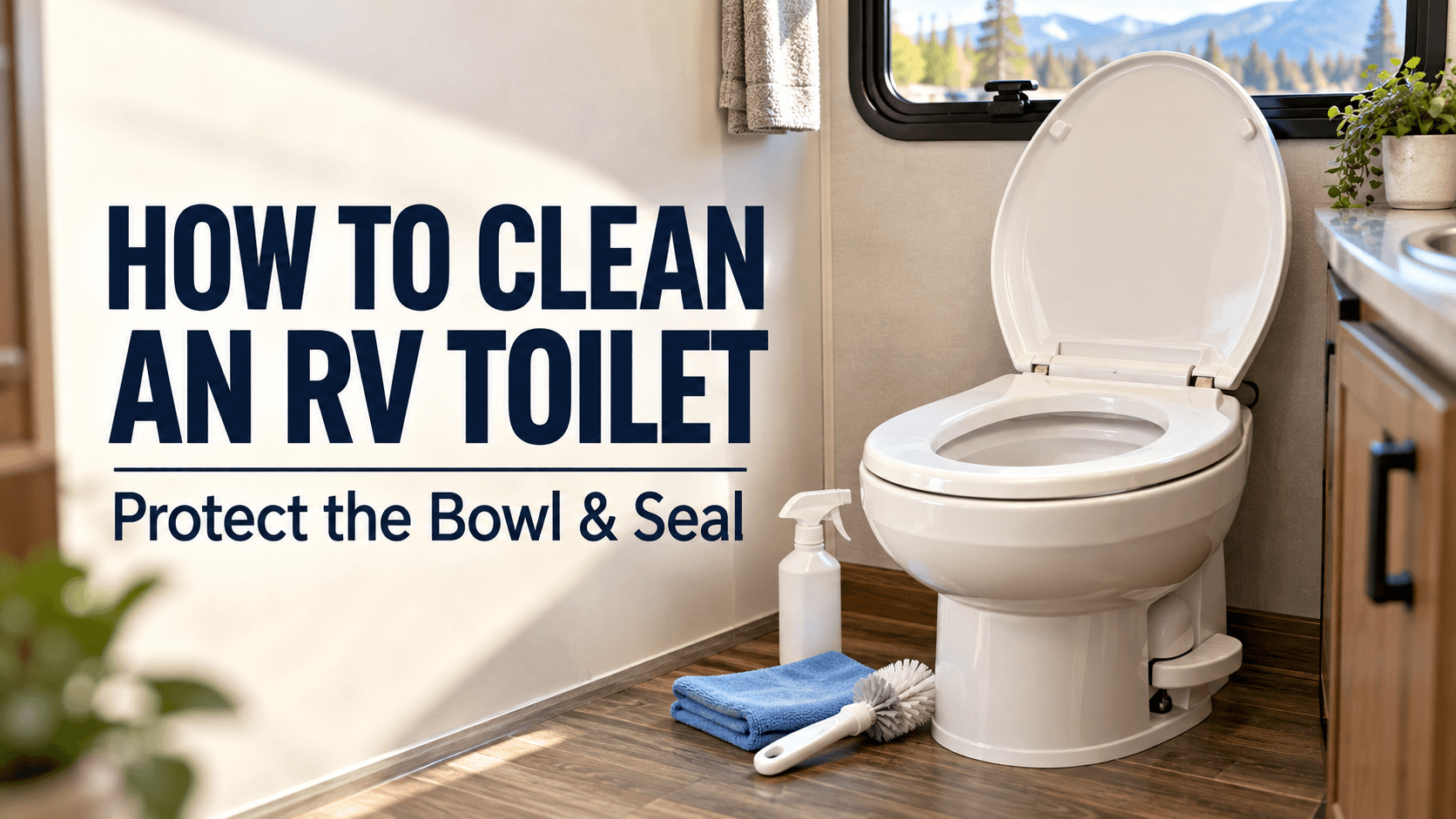
To clean an RV toilet safely, start with the cleaner approved for your model, a soft brush or sponge, and fresh water. Avoid bleach and abrasive pads. The most important difference from a household toilet is the flush seal: harsh products or rough scrubbing can damage the part that keeps water in the bowl.
Here is a practical cleaning routine first, followed by brand-specific advice for Dometic, Thetford Aqua-Magic, and cassette toilets. If you do not know your model, check the label on the toilet before choosing a cleaner.
How to Clean an RV Toilet: 7 Safe Steps
- Check your model and cleaner labelUse the cleaner recommended for your Dometic, Thetford, or other toilet model. Get a soft-bristle brush or sponge and a soft cloth.
- Put on gloves and ventilateOpen a window or roof vent. Never add a new cleaner to a bowl that may contain bleach or another product.
- Add a little water to the bowlFor Dometic 300/310/320-style pedal toilets, press the pedal partway to add water without opening the flush ball. Other toilets may use a different flush control.
- Apply the approved cleanerFollow the product label for the amount and contact time. Gently wipe or brush the bowl and under the rim; avoid abrasive pads and hard scrubbing.
- Rinse completelyFlush with water, or use the built-in hand sprayer if fitted. Do not mix a second product with cleaner left in the bowl.
- Wipe the seat, lid, and outsideUse a soft cloth and an exterior cleaner permitted for your model, following its label. Wipe and dry accessible surfaces.
- Check the seal and leave water in the bowlMake sure the flush ball or blade closes. On Dometic 300/310/320 series, leave roughly 1 inch of water in the bowl to help block tank odors.
For stubborn stains, repeat with the same approved product and follow its label rather than reaching for a stronger chemical. Dometic’s 300/310/320 manual (maintenance section) also allows careful use of rubbing alcohol for stains on 300/301 plastic bowls only; do not treat that as permission for every bowl material.
Which RV Toilet Cleaner Is Safe for Your Model?
There is no single household cleaner approved for every RV toilet. Follow the instructions for your exact model; recommendations differ by manufacturer and even by toilet type.
- Dometic 300/301, 310/311, 320/321: Dometic recommends SeaLand Toilet Bowl Cleaner. If unavailable, its manual allows a non-abrasive bathroom or toilet bowl cleaner used according to its label. Models 300/301 have plastic bowls; the 310/311/320/321 models have ceramic bowls.
- Thetford Aqua-Magic permanent toilets: The Aqua-Magic VI manual recommends Thetford Aqua-Clean and a soft brush, sponge, or cloth. It warns against petroleum-based products, scouring powders, acids, and concentrated cleaners.
- Thetford C-250 cassette toilets: The official C-250 user manual recommends water and Thetford Bathroom Cleaner/Toilet Bowl Cleaner. It specifically warns against bleach and vinegar.
- Other models, including macerating and composting toilets: Use the exact manufacturer’s cleaning instructions; the product and seal materials can be different.
Most RV toilets need very little equipment: the right cleaner and a soft cloth or brush. Buying several specialty chemicals is not necessary for a basic bowl clean.
Can You Use Bleach, Vinegar, Lysol, or Dawn in an RV Toilet?
The answer depends on the product ingredients and your toilet model. Bleach is a clear no for the Dometic and Thetford toilets discussed here. Acids and abrasive cleansers also require caution. Use the table as a guide to what the cited documents actually say—not as approval for unlisted products.
| Product | Dometic 300/310/320 | Thetford Aqua-Magic family | Thetford cassette (C-250, EU edition) |
|---|---|---|---|
| Chlorine bleach | Manual says avoid | Manual and FAQ say avoid | Manual says avoid |
| Acidic household bowl cleaners | Manual permits non-abrasive cleaners; does not separately approve acids | Manual and FAQ say avoid | Manual says avoid “powerful household cleaners” |
| Vinegar | No guidance found | No guidance on vinegar by name. FAQ says mild organic acids won’t harm seals, but the manual says no acids | Manual says avoid |
| Citric acid | No guidance found | FAQ discusses mild organic acids and seal compatibility, not blanket approval for bowl cleaning | No guidance found |
| Dish soap | No guidance found | No guidance found | No guidance found |
| Scouring powder, pumice, hard abrasives | Manual says non-abrasive only | Manual and FAQ say avoid | No specific instruction found |
| Rubbing alcohol | Manual allows careful use for stains on 300/301 plastic bowls only | No guidance found | No guidance found |
| Manufacturer RV bowl cleaner | Manual recommends | Manual recommends | Manual recommends |
Vinegar and citric acid: Thetford’s US FAQ says mild organic acids may be compatible with seals, but its Aqua-Magic cleaning instructions warn against acids, and the C-250 manual specifically says not to use vinegar. These are different products and use cases. Don’t assume vinegar is an approved bowl cleaner for your toilet.
Lysol and other branded bathroom cleaners: Formulas vary. Check the current ingredient label and your toilet manual instead of judging by the brand name. Dawn or other dish soaps: the manufacturer documents reviewed do not establish them as approved bowl cleaners. If uncertain, choose the cleaner specified for your model.
How to Clean an RV Toilet Flush Seal Without Damage
The flush ball or blade opens when you flush. The seal is the flexible ring it presses against to keep water in the bowl. Hard-water deposits and grit can prevent a tight seal even when the bowl looks clean.
For Dometic gravity-flush toilets
- Slowly press and release the flush pedal several times. Dometic says this can rinse loose debris off the ball and seal.
- If buildup remains, use a soft-bristle brush and the recommended SeaLand cleaner to gently clean the top of the ball and the underside of the seal where they meet. Follow the manual’s flush-ball cleaning procedure.
- After cleaning, check whether the bowl holds water. If it still leaks, the seal may need reseating or replacement. A bowl that will not hold water has a separate diagnosis guide.
Important: Dometic warns not to separate the bowl from the base or remove the foot pedal on its 300/310/320 series. However, the manual explicitly allows flush-ball seal replacement using the instructions supplied with the replacement kit. Routine cleaning and a manufacturer-approved seal replacement are not the same as dismantling the toilet.
Seal lubricant: use the instructions for your brand
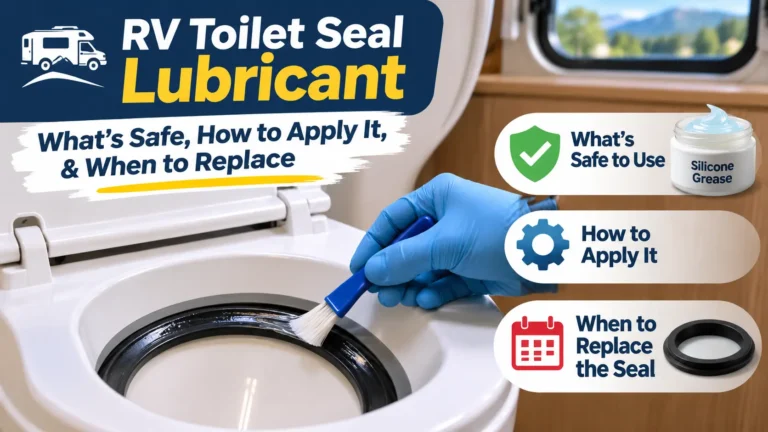
Thetford directs owners to its seal lubricant/conditioner and warns against petroleum-based products. Dometic’s maintenance literature recommends silicone spray for particular flush-ball friction problems; some Dometic seal-kit instructions specify additional lubricants for that specific replacement procedure. Do not apply a general lubricant rule across brands, and never substitute an unapproved product for the instructions that came with your toilet or replacement seal. For a model-by-model breakdown, read our guide to safe RV toilet seal lubricants.
How to Clean a Thetford C-250 Cassette Toilet
The Thetford C-250 user manual covers C-250S, C-250CS, and C-250CWE variants. Its cleaning routine is a little different from a fixed gravity-flush toilet:
- Use water and Thetford’s specified bowl cleaner inside the bowl; use its bathroom cleaner and a damp cloth on exterior surfaces.
- After emptying the waste cassette at an authorized point, rinse the tank and blade with water. Avoid high-pressure washing.
- Clean rubber seals with water and treat them with Thetford High Grade Seal Lubricant as directed. Do not use Vaseline.
- Do not pour waste-tank treatment fluid through the bowl or blade; the manual says to add it through the cassette’s emptying spout.
- Before long storage, clean and treat the seals according to the manual.
This document is a European-edition C-250 manual. If you have a different cassette toilet or a US-market variant, check the exact model’s current instructions before applying model-specific details. To understand what happens during a flush, see our cassette toilet mechanism explained guide.
What to Check After Cleaning
A freshly cleaned bowl is a good chance to check whether the seal holds water, the pedal closes normally, and the toilet is dry around the base.
| What you notice | Possible reason | Next step |
|---|---|---|
| Water drains out of the bowl | Debris, a mis-seated seal, or a worn flush ball seal | Diagnose a bowl that won’t hold water |
| Pedal or flush ball sticks | Debris or friction around the seal | Check the pedal and seal mechanism |
| Water appears around the base | Possible floor flange seal or supply-line issue | Find the source of a base leak |
| Odor appears when flushing | Tank contents or a blocked vent | Trace the odor when flushing |
| Ceramic Dometic bowl keeps trickling | Residual rim water or a water-valve issue | Up to 20 minutes can be normal on models 310/311/320/321; beyond 30 minutes, consult the Dometic water-valve procedure |
If the flush ball seal looks torn or a crack appears in the bowl, stop scrubbing. Follow the relevant repair guidance or contact the manufacturer. For a persistent odor with the flush ball closed, see why an RV toilet smells. For a damaged seal, RV toilet seal replacement covers the next decision.
Safety and Common Cleaning Mistakes
Never mix cleaning chemicals
- Bleach mixed with acids or ammonia-based cleaners can release dangerous gases. If you develop coughing, burning eyes, or trouble breathing, leave the area for fresh air and seek urgent medical or poison-control advice.
- Avoid bleach and caustic drain cleaners in the Dometic 300/310/320 system, as the manual says they damage seals.
- Avoid scouring powders, pumice, stiff brushes, and strong acids unless the exact manufacturer’s instructions expressly permit the method.
- Do not layer cleaners or use a second product over residue from the first. Rinse thoroughly and follow product ventilation and protective-equipment directions.
- Do not flush wipes, paper towels, or other foreign objects. Bowl cleaning does not replace proper black-tank maintenance.
How Often Should You Clean an RV Toilet?
Clean the bowl whenever visible buildup appears, and check the seal regularly—especially after a trip or before storing the RV. The manuals cited here say to clean regularly or according to use; they do not set a universal every-X-days schedule. More use, hard water, and visible deposits may mean cleaning more often.
The Bottom Line
A safe RV toilet cleaning routine is simple: use your model’s recommended cleaner, scrub gently, rinse fully, and make sure the bowl holds water afterward. Keep Dometic and Thetford advice separate, especially for acids and seal lubricants. If cleaning reveals a leak, deal with the seal or valve problem rather than trying stronger chemicals.