TL;DR
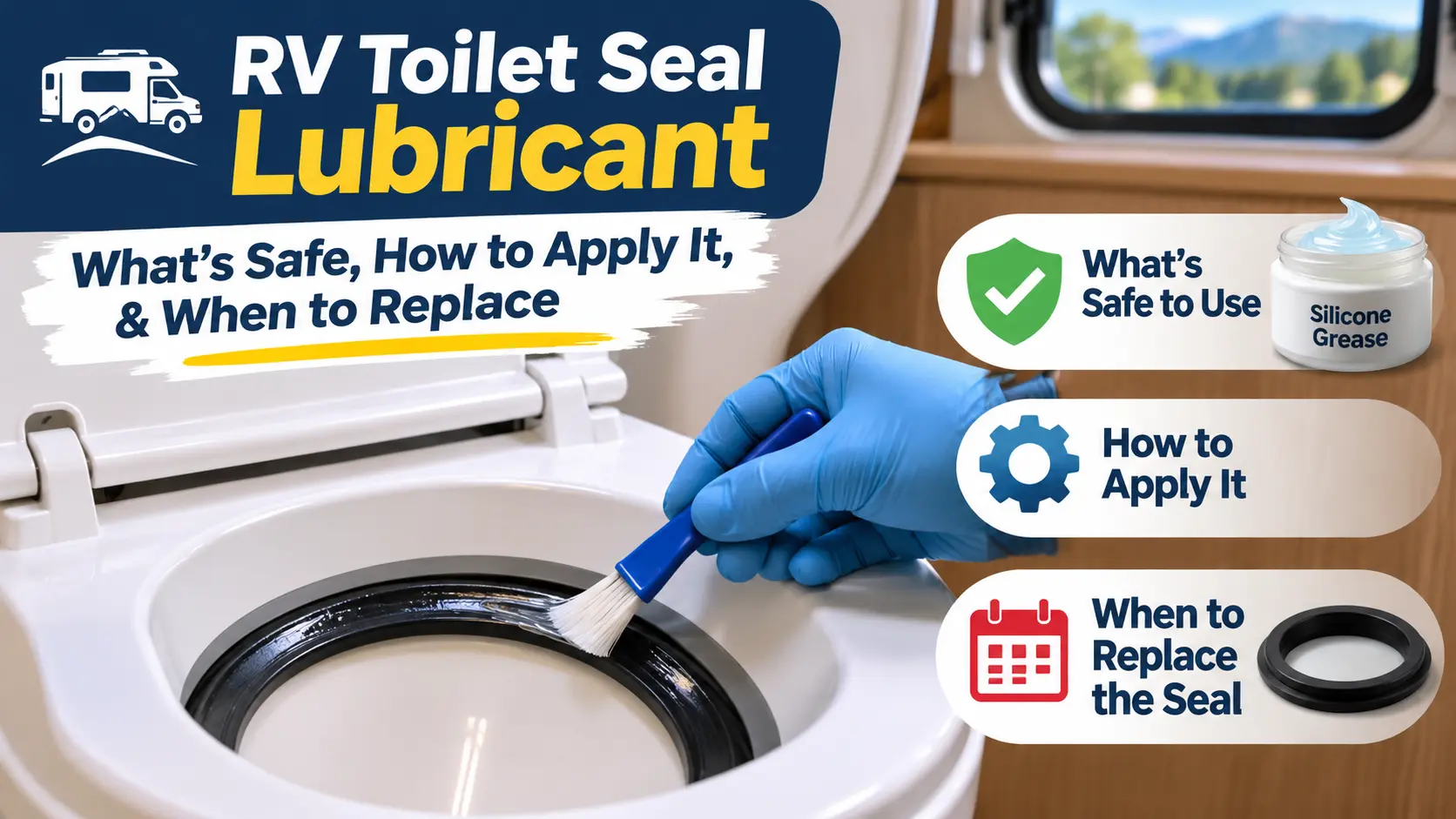
- Thetford says its Toilet Seal Lubricant & Conditioner is a non-petroleum silicone product that is safe on toilet and holding tank seals, so silicone is the safest place to start. Dometic’s sheet for installing a new 300, 310, or 320 flush ball seal lists silicone grease or petroleum jelly.
- Clean the seal first and use a thin layer. If the seal is cracked or torn, or still leaks after cleaning and lubricating, replace it.
RV toilet seal lubricant is not one-size-fits-all. Gravity-flush toilets such as the Dometic 300/310/320 have a flush-ball seal, while a Thetford cassette toilet has a blade/lip seal on the waste cassette. A dry, dirty or damaged seal can stick or leak, but the safe lubricant depends on the model. Here is what the makers actually recommend, how to do basic maintenance, and when the seal needs replacing. If a gravity toilet bowl drains while parked, see our bowl-not-holding-water guide.
What Lubricant Is Safe on an RV Toilet Seal?
Thetford cassette toilets: Choose a seal lubricant approved for your model, such as Thetford Toilet Seal Lubricant & Conditioner or the maker’s specified Seal Lubricant spray. Thetford describes its US product as a non-petroleum silicone lubricant safe for toilet and holding-tank seals. The official C200 manual explicitly warns against Vaseline and vegetable oil.
Dometic 300/310/320 flush-ball toilets: Dometic’s official seal-installation sheet permits a thin film of silicone grease or petroleum jelly beneath a new seal where it contacts the flush ball. This is model- and procedure-specific; it does not mean petroleum jelly is safe on every RV toilet seal.
Other toilets: Check your specific manual before using any generic grease or household spray. For example, Thetford’s Aqua-Magic Bravura/V troubleshooting guide permits a light film of its seal lubricant or silicone spray on the blade/ball, but cautions against other spray lubricants. If you need to identify a replacement part, our Thetford parts guide can help.
How Do I Lubricate an RV Toilet Seal?
Identify the toilet and check its manual first. Wear gloves, clean the accessible contact surfaces and apply only a manufacturer-compatible product. For the Dometic models above, a thin film is specified during seal installation; for a Thetford spray or conditioner, follow that specific product label. Do not assume grease, spray and liquid products use the same method.
Safety
- Wear gloves. The seal sits in the waste path, and you will be reaching into the bowl area.
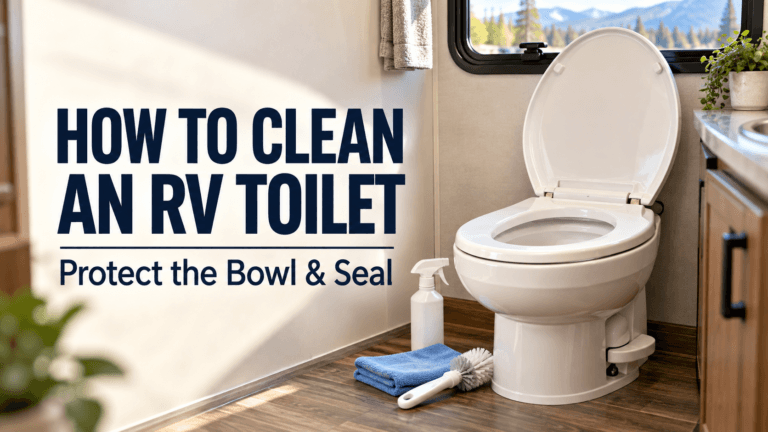
Clean gently with an approved, non-abrasive cleaner. Thetford warns against bleach and many strong household acids, while distinguishing mild citric acid from harsher products. Do not mix cleaning agents. See our guide to cleaning an RV toilet for more detail.
What You Need
- Disposable gloves
- Lubricant specifically approved for your toilet model
- A clean rag or paper towels
- A cleaner your toilet maker allows
Do not confuse maintenance with seal replacement. The steps below concern an intact accessible seal. Keep fingers away from moving flush mechanisms and do not pry out a fitted seal just to lubricate it.
For a Dometic 300/310/320 flush-ball seal: These are basic cleaning and inspection checks; Dometic’s full published instructions are for installing a new seal. Follow your specific manual when performing replacement or servicing an older seal.
- Identify the modelConfirm your toilet and inspect the seal for cracks, flattening or distortion before using lubricant.
- Shut off the waterWear gloves and operate the pedal only as the manual allows; keep fingers clear of moving parts.
- Clean the contact areaUse a soft cloth and a maker-approved non-abrasive cleaner to remove buildup from the visible seal and flush-ball contact area.
- Follow the model’s lubricant directionsFor new 300/310/320 seal installation, Dometic specifies a thin film of silicone grease or petroleum jelly underneath the seal at the ball contact. Do not lift an installed seal merely to copy the installation procedure.
- Close and test while parkedMove your hands away, restore water and add a little water to the bowl. Check for drainage and leaks. A persistently leaking seal or damaged flush ball needs further repair.
For a Thetford cassette lip/blade seal: Clean the accessible seal according to your toilet manual and apply the specified Thetford Seal Lubricant as directed on its label. Thetford’s cassette care instructions include routine lip-seal lubrication. Do not apply Dometic’s petroleum-jelly procedure to a cassette seal.
Stop and get help
- If the seal or the flush ball looks deformed, or the toilet leaks at the base, stop and contact the manufacturer or a qualified technician.
Which Seal Are You Lubricating?
Different toilets use different seals, and the makers say different things about each. Here is what is and isn’t confirmed.
| Seal or toilet | What the maker allows | What to do if leaking |
|---|---|---|
| Dometic 300/310/320 flush-ball seal | Thin film of silicone grease or petroleum jelly when installing a new flush-ball seal. | Inspect the fit, seal and flush ball; replace damaged parts according to model instructions. |
| Thetford cassette lip/blade seal | Thetford Seal Lubricant. The C200 manual says no Vaseline or vegetable oil. | Clean and lubricate; replace a worn lip seal. Thetford advises replacement about every 4–6 years depending on use. |
| Thetford Aqua-Magic Bravura/V | Light film of Thetford Toilet Seal Lubricant & Conditioner or silicone spray on blade/ball; avoid other sprays. | Clear debris from seal track; replace the blade/ball seal if worn. |
| Floor flange and other seals | Do not assume a flush-ball lubricant belongs here. Follow exact model and part instructions. | Diagnose the base leak; check appropriate flange seal and connections. |
Use the correct model instructions: the Thetford C200 manual and Dometic seal installation guide describe different seals and procedures. For parts identification, see our RV toilet parts overview.
Can I Use Vaseline, Olive Oil, or Plumber’s Grease Instead?
It depends on the model. Dometic explicitly allows petroleum jelly when installing a new 300/310/320 flush-ball seal, while Thetford’s C200 cassette toilet manual says never to use Vaseline or vegetable oil on its seals. Choose the manufacturer-approved product, not an owner anecdote.
Vaseline / petroleum jelly: Follow Dometic’s model-specific new-seal instructions only if they apply to your toilet. Thetford prohibits Vaseline on C200 cassette seals because it can lead to waste-tank leaks. Do not generalize one maker’s permission to another brand.
Plumber’s grease: The label may or may not indicate a silicone formula. Do not assume the word “plumber’s” establishes seal/plastic compatibility. Check the maker’s instructions and the product label; when in doubt, choose the toilet-brand seal lubricant.
Olive oil / vegetable oils: Do not use these on a Thetford C200 cassette seal. The current manufacturer manual warns against vegetable oil. Older anecdotes or model-specific advice should not override your own manual.
WD-40 or general-purpose sprays: Avoid them on seals unless the manual explicitly approves the exact product. Thetford’s Aqua-Magic instructions specifically caution against spray lubricants other than silicone.
Will Lubricant Fix a Seal That Won’t Hold Water?
A clean, lightly lubricated intact seal may operate more smoothly, but lubricant cannot repair a torn or permanently flattened seal, a damaged flush ball, or a poor-fitting replacement. If a leak continues, find the cause before adding more lubricant.
Clean and lubricate when: an intact seal is sticky, dry or visibly dirty and the manufacturer approves lubrication. Keep the toilet’s moving parts and your hands clear while inspecting.
Replace or arrange inspection when: the seal is torn, cracked, deformed, no longer seats properly or continues leaking after correct cleaning. Thetford’s four-to-six-year lip-seal advice applies to cassette seals depending on use, not universally to RV toilets.
If a leak persists, check:Do not heat, stretch or reshape a seal as a shortcut unless your specific manufacturer instructions say to. See our RV toilet seal replacement guide if the seal is worn.
Stop and get help
- If water appears at the base of the toilet, or you smell sewage with no water in the bowl after replacing the seal, stop. See our page on a toilet leaking at the base, or contact the manufacturer or a technician.
How Often Should I Lubricate the Seal?
Thetford’s cassette maintenance guide suggests lubricating the lip seal twice per season. Its support page recommends replacing cassette lip seals about every four to six years depending on use. Dometic’s 300/310/320 installation sheet gives no routine lubrication interval; follow the specific manual and the seal’s condition.
Seal lubricant is different from a holding-tank additive. For storage or cold weather, clean the seals and follow both your toilet manual and the RV’s winterization instructions.
What Should You Avoid Doing to RV Toilet Seals?
- Bleach and acid cleaners. Thetford says they can dry out and damage seals. Mild organic acids such as citric acid will not.
- Hard brushes and abrasive cleaners on the seal. Be gentle around the rubber.
- The wrong replacement part. Match the seal to your exact toilet model.
- Piling on lubricant. Dometic’s sheet calls for a thin layer.
Cheap aftermarket seals are a separate question, covered in OEM vs aftermarket seals.
Conclusion
Bottom line: Match the lubricant to the toilet model. Thetford cassette guidance recommends its own seal lubricant and prohibits Vaseline and vegetable oils on C200 seals. Dometic permits silicone grease or petroleum jelly for installation of a new 300/310/320 flush-ball seal. Clean first, follow the correct product instructions and replace a worn seal.