TL;DR
- If only the hot water smells like rotten eggs, check your water heater and confirm its exact brand and model.
- Suburban tank heaters: The manufacturer recommends chlorinating and flushing the water system. Selected Dometic/Atwood aluminum-tank heaters: their manuals describe flushing and a vinegar treatment; valve-related service should be handled by a qualified professional.
- If the odor comes from the air rather than the water, treat it as a possible LP-gas leak and evacuate. Never mix bleach with vinegar, acids, or ammonia.
A rotten-egg smell at the hot tap can be alarming, especially after an RV has been parked for weeks. Sulfur compounds and reactions inside some water heaters can produce the odor, but the smell alone does not prove that your water is safe. The first step is to compare hot and cold water, then identify the heater model. Below, we explain the different instructions in the Suburban tank-water-heater guide and Dometic XT manual. If the odor is coming from a sink drain or gray tank instead, use our gray-water odor guide.
Why Does an RV Water Heater Smells Like Rotten Eggs?
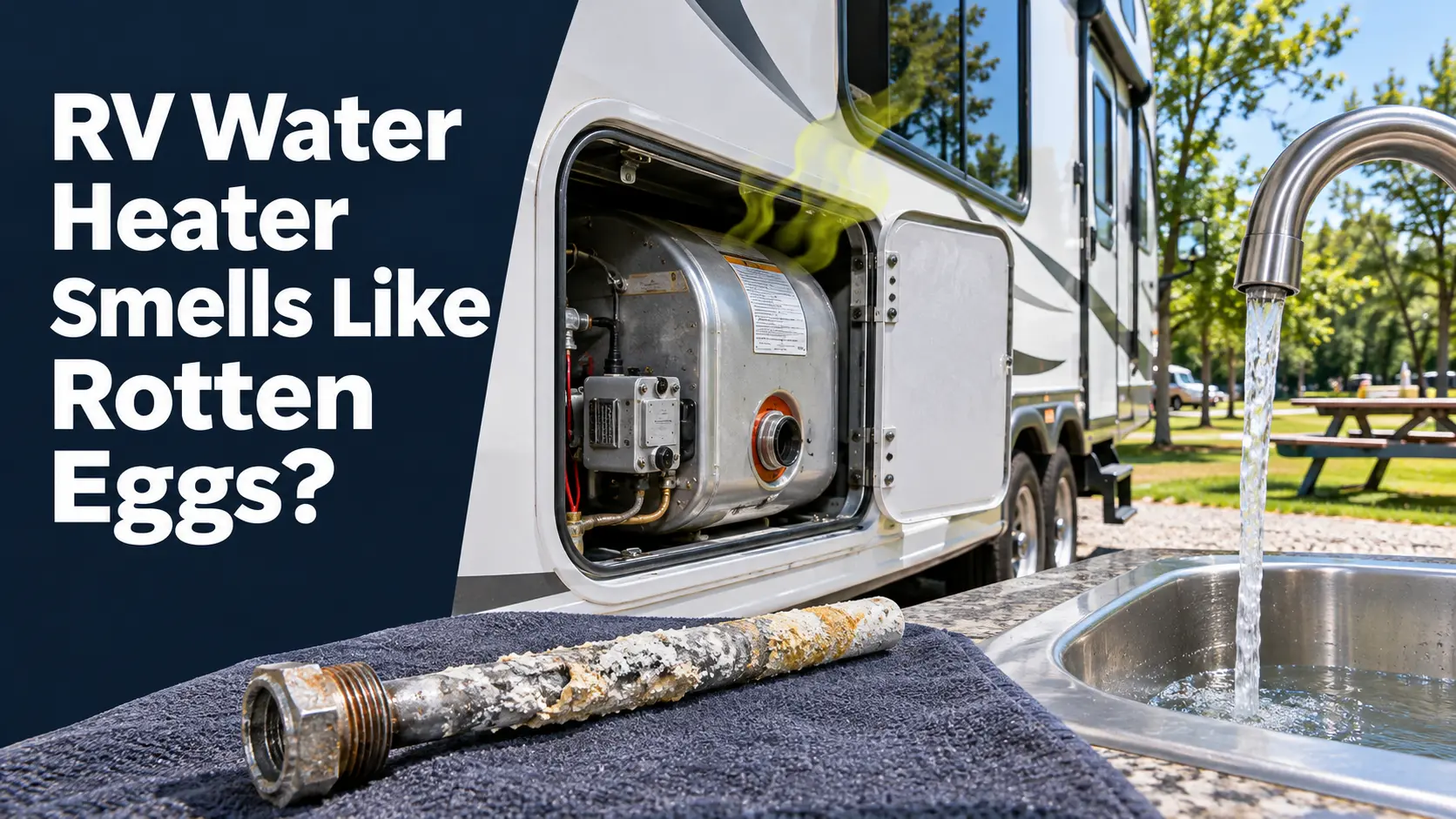
The familiar rotten-egg odor is commonly associated with hydrogen sulfide. Sulfur in a water supply may react with hydrogen produced inside some heater tanks; bacteria and stagnant water can also contribute. Suburban describes chemical reactions and bacteria as possible sources, while Dometic explains an electrochemical reaction in certain aluminum tanks. These are possible causes, not a water-quality test. If both hot and cold water smell, water comes out discolored, or anyone feels ill, avoid drinking it until the source is checked and the water is confirmed safe.
Is the Water Heater Really the Source of the Smell?
Run the cold tap first, then the hot. If only the hot water smells, the water heater is the likeliest source. If both smell, suspect the campground water or your fresh tank. If the odor is in the air near the heater or stove rather than in the water, treat it as a possible gas leak, not a water problem.
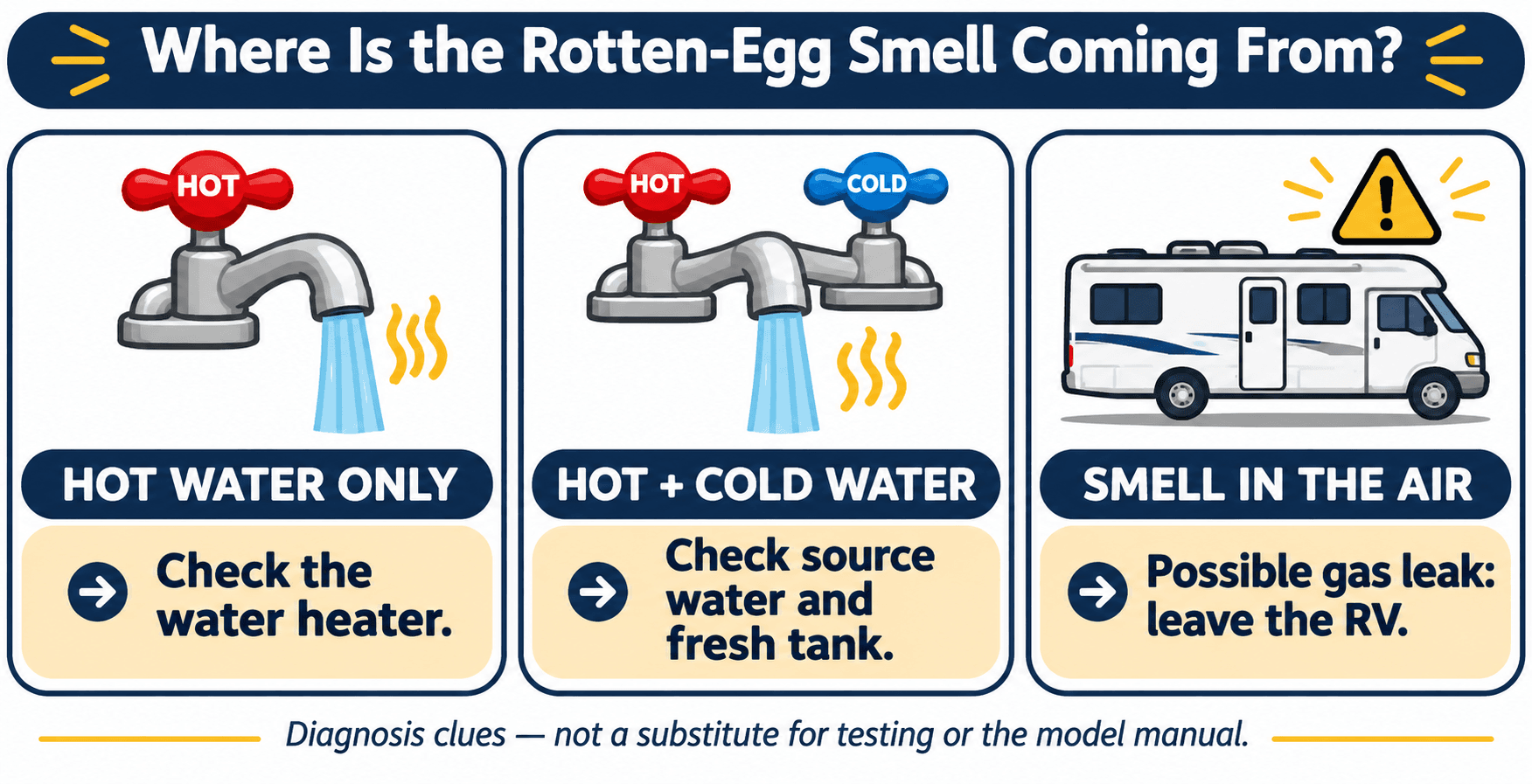
| What you notice | What it points to | Safe next step |
|---|---|---|
| Hot water only | The water heater | Find your brand below and follow its steps |
| Hot and cold water | Fresh tank or water source | Sanitize the fresh tank and check your hookup |
| One campground only | That campground’s water | Fill from a different tap or source |
| After storage or de-winterizing | Water sitting in the system | Flush and sanitize |
| Smell in the air, not the water | Possible gas leak | Follow the gas steps below |
Stop and get help
- If you smell gas, get everyone out, shut off the gas at the source, and touch no switches or phones inside. Both Suburban’s and Dometic’s manuals list the same steps, then say to call a gas supplier, a qualified technician, or the fire department.
Drain and gray-tank odors are a separate problem. If that sounds like yours, read about sewer gas risks.
Which RV Water Heater Brand and Model Do You Have?
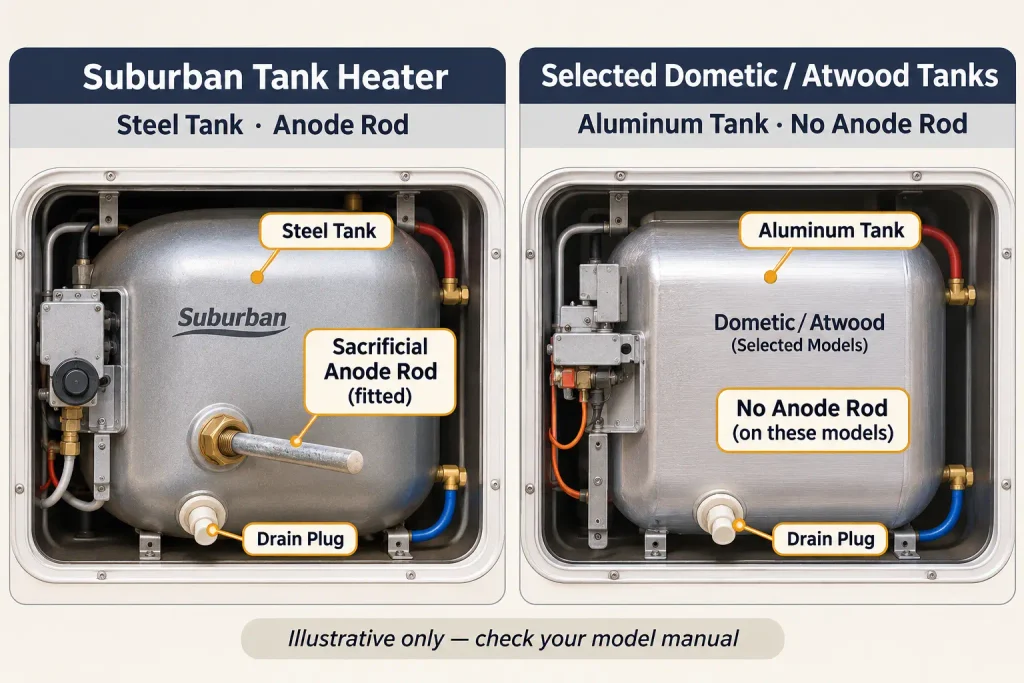
Check the label on the heater’s access door or tank for the brand and model. Suburban tank heaters have a porcelain-lined steel tank with an anode rod. Dometic’s XT 6- and 10-gallon manual describes aluminum tanks that do not use an anode rod, as do certain older Atwood tank models. Check your exact model’s manual. The fix is different for each, so confirm before you start.
| Heater | Tank and rod | What the maker says |
|---|---|---|
| Suburban tank heater | Steel tank with a magnesium or aluminum anode | Chlorinate the water system, flush, replace the rod if needed |
| Dometic XT or compatible older Atwood tank heater | Aluminum tank, no anode on the cited models; verify yours | Flush, then vinegar soak and flush |
| Other or unsure | Unknown | Read your exact model’s manual or contact the maker |
Don’t guess your brand from how the drain plug looks. If you can’t confirm the model, contact the maker. Tankless heaters work differently; see the separate section below.
How to Fix Rotten-Egg Smell in a Suburban Water Heater
This section applies to Suburban tank-style water heaters with a manufacturer-approved anode rod. Confirm the model label before following these instructions. Suburban recommends sanitizing the water system when sulfur odor comes from the hot water; do not apply this procedure automatically to an unrelated tankless or aluminum-tank model.
Suburban’s operation and maintenance guide treats hot-water odor as a water system problem, not a heater defect. Its fix is to chlorinate the system, flush it, and replace the anode rod if the smell stays.
Before you start:
- Turn off power to the heater at the breaker, and make sure the appliance is cool. Suburban says to do this before cleaning.
- Shut off the gas supply.
- Remember that surfaces get very hot in use. Suburban lists temperatures above 194°F.
- Never run the heater unless the tank is full of water.
- Wear gloves and eye protection when handling bleach, and open windows or doors for fresh air. The CDC says never to mix bleach with ammonia or any other cleaner.
Here are the steps, paraphrased from Suburban’s “Odor From Hot Water System” guidance:
- Add the bleach Pour about 6 ounces of plain household liquid bleach per 10 gallons into the water tank.
- Run it through the system Open each faucet one at a time until you smell chlorine at that tap.
- Let it sit Leave the chlorinated water in the system for a few days.
- Flush it out Run fresh water through the whole system until the chlorine is gone. Suburban says this can take several tries.
- Repeat if needed If the smell continues, chlorinate and flush again, and replace the anode rod as necessary.
Suburban’s wording says “water tank” and doesn’t give a heater-only dose, so don’t invent one. For fresh-tank volumes and rinse details, follow our guide to sanitize the fresh tank.
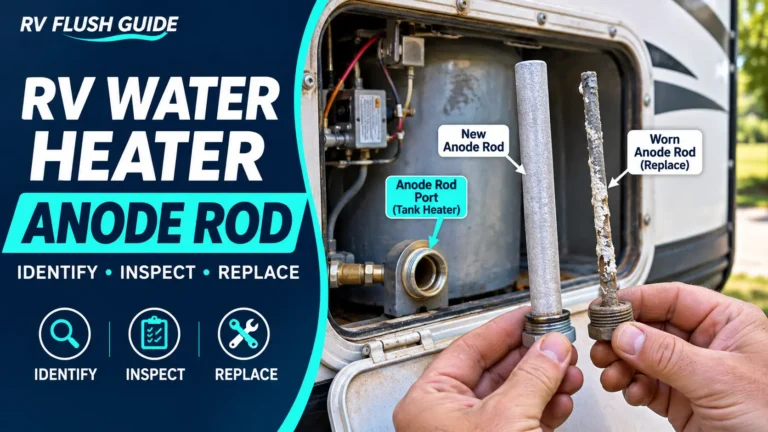
Chlorinating the plumbing system is different from opening the heater. If the anode rod needs inspection or replacement, turn off all heat sources, let the tank cool, shut off the pump or supply, and relieve system pressure as directed by the exact model manual. See our RV water heater anode rod guide; use a qualified technician for maintenance outside your experience.
Safety
- Use the bleach type and dose specified by Suburban’s manual. Wear eye protection, ventilate, and keep the heater off and cool while working. Never mix bleach with vinegar, acids, ammonia, or other cleaners; dangerous gases can form. Fully flush any previous chemical treatment before using another, and do not use treated water for drinking until properly flushed and verified.
Dometic and Atwood Water Heater Rotten-Egg Smell: Model-Specific Fix
Dometic’s manual says the rotten egg odor can come from the tank cladding releasing hydrogen, which combines with sulfur in the water to make the smell. Its XT manual describes flushing followed by a vinegar treatment for specified aluminum-tank models, and Dometic’s support page summarizes the treatment. Do not assume this procedure applies to every heater labeled Dometic or Atwood.
Before you start:
- Turn off the main water supply (pump or hookup).
- Turn off the water heater and let the water cool before removing the drain plug. Dometic warns about scalding.
- Turn off the gas at the LP tank before working near the gas line.
- Keep smoking and flame away from an open faucet. If the heater sat unused for more than two weeks, Dometic says hydrogen gas can build up in the hot line. Run the hot faucet at the kitchen sink for several minutes before using any electrical appliance on the hot system.
- Don’t add an aftermarket anode or heating element.
Important manual conflict: The XT odor-removal procedure calls for removing the pressure-temperature (P/T) relief valve, while its safety warning says not to remove that valve except for replacement. Because it is a critical safety component, do not remove or reinstall it yourself for odor treatment. Ask Dometic or a qualified RV service technician to confirm the safe method for your exact model. The outline below explains what the manual describes; it is not a DIY valve-removal instruction.
- Verify the model and shut down safely Confirm that the exact model supports this treatment. Turn off the heater and water supply, and let the water cool before draining as directed by its manual.
- Flush out sediment Follow your model-specific tank flushing directions; the XT guide recommends flushing until the drained water runs clear.
- Have a qualified technician evaluate the vinegar treatment The XT manual describes four parts white vinegar to two parts water (for a 6-gallon tank, four gallons vinegar plus two gallons water). Because its P/T relief-valve instructions conflict with a safety warning, obtain professional guidance before any valve handling.
- Follow the model-approved heat cycle For the cited XT procedure, the guide describes one full heating cycle followed by three or four maintenance cycles. Only operate the unit after it is correctly refilled, its safety parts are in place, and a qualified professional has confirmed the procedure.
- Cool, flush, and refill After treatment, switch the heater off, let it cool, drain and flush as directed, then refill with a verified clean water supply. Never operate the heater with an empty tank.
Check these steps against the manual for your exact model. Older Atwood models have a service manual with the same procedure, but confirm with yours, and call Dometic if you can’t find it.
Stop and get help
- Do not remove or tamper with the pressure-temperature relief valve yourself for an odor fix. The XT manual’s odor section and relief-valve safety warning are inconsistent; ask a qualified technician or Dometic for model-specific direction. Stop use if the valve leaks, is damaged, or does not seal.
Do not install an aftermarket anode rod in the aluminum Dometic XT/Atwood tank models covered by the cited manual. For other models, follow the parts and maintenance instructions specific to the unit.
What If You Have a Tankless RV Water Heater?
Do not use a Suburban tank-anode procedure or a Dometic XT tank-vinegar procedure on a tankless unit. Tankless heaters have different flow paths, sensors, and cleaning requirements. Look up the exact manufacturer and model, review its approved flushing or descaling procedure, and contact its service team when the odor continues. If both hot and cold water smell, start by checking the incoming supply and fresh-water system instead.
Can Removing the Anode Rod or Changing Its Metal Fix the Smell?
No—removing a required anode rod is not a safe odor remedy. Suburban states that operating the heater without the rod voids its limited warranty. Its published odor procedure uses chlorination rather than an unverified vinegar or peroxide treatment. Selected aluminum Dometic/Atwood heaters use a different procedure. Always match the treatment to the exact model.
Online tips sometimes recommend switching from magnesium to aluminum or zinc anodes to reduce sulfur odor. The cited Suburban instructions do not establish that as the recommended cure. Choose only manufacturer-compatible replacement parts and address the water source too.
Keep these cautions in mind:
- Don’t combine the two chemicals. Never follow a bleach step right after vinegar without a full fresh-water flush.
- Suburban’s guide mentions magnesium or aluminum rods but gives no rule for choosing between them, and no material swap for sulfur smell. Don’t count on a rod-metal swap as a fix.
- Don’t install an add-on electric element in place of the anode. Suburban says it isn’t approved.
How to Prevent Rotten-Egg Smell From Coming Back
Prevention depends on your heater and water source. Avoid leaving water stagnant for long storage periods, use the manufacturer’s drain/flush schedule, and address recurring odors in the incoming supply. A filter may help with certain source-water problems, but not every filter removes hydrogen sulfide.
- Suburban: Drain the tank whenever the RV isn’t in use, and avoid long stretches with water sitting in it. Suburban says to replace the anode yearly or when it is more than 75% consumed.
- Dometic: Flush a full-time RV every 60 days (every 30 in the Southwest). For part-time use, flush at least twice a year (every 90 days in the Southwest).
- Filters: Suburban suggests considering a water filter. Compare our RV water filter options, checking each filter’s certified reduction claims before assuming it removes sulfur odor.
- After storage: Flush and refill when de-winterizing.
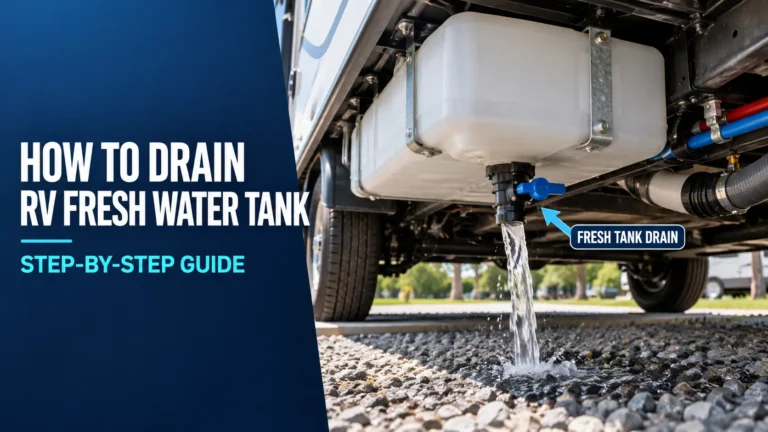
- Fresh tank: Learn how to drain the fresh tank so old water doesn’t sit.
When Should I Stop and Call a Technician?
Stop and get help
- Call a qualified technician or the maker if any of these happen.
- You smell gas in the air. Follow the evacuate-and-shut-off steps first, then call a gas supplier, technician, or the fire department.
- You see soot on the heater. Suburban says to shut it down and call a dealer or qualified technician.
- A relief valve leaks, won’t seat, or is damaged.
- The tank won’t drain, a rod or plug won’t turn, or a fitting leaks after you refill.
- The smell stays after you’ve done the maker’s steps and repeated them.
- You can’t confirm your model or find its manual.
Suburban says all repairs and maintenance should be done by a dealer or qualified technician.
Frequently Asked Questions
Why does only my RV hot water smell like rotten eggs?
When the cold water smells normal but the hot water does not, reactions or stagnant water inside the heater become more likely. Confirm the pattern at more than one faucet before servicing the heater.
What if both hot and cold RV water smell?
Check your campground connection, hose, and fresh-water tank before assuming the heater is the problem. Use a verified potable-water source and follow the fresh-tank sanitizing guide where appropriate. Consider a water test if the odor remains.
Can I use vinegar in a Suburban RV water heater?
Do not substitute a generic vinegar treatment for Suburban’s documented chlorination process. Follow the manual for your exact model, and ask Suburban before trying an unapproved chemical procedure.
Is rotten-egg smelling hot water safe to drink?
A smell by itself cannot confirm water safety. If the supply is questionable, appears discolored, or also tastes unusual, use an alternative verified potable-water source and obtain appropriate water testing.
Will changing the anode rod get rid of the smell?
Replacing a worn, model-compatible Suburban anode rod can be part of maintenance, but it is not a guaranteed odor cure. First follow the maker’s water-system instructions and inspect the anode as directed; see our anode rod replacement guide.
Final Takeaway
If only the hot water smells, the heater is the likeliest source, and the cold-then-hot test takes about a minute. The fix depends on your brand: Suburban says chlorinate the system and flush, while Dometic and Atwood say flush and use a vinegar soak. Never add or remove an anode rod against the maker’s guidance, and drain and flush on a schedule so the smell doesn’t return.
Next step: if your cold water smells too, start with sanitizing the fresh tank.