TL;DR
- Most 12V RV diaphragm pumps are sold as self-priming, so “priming” usually means giving the pump water and clearing air from the lines. Fill the fresh tank, set valves to normal use, disconnect city water, open the faucets while the pump is off, then switch it on and bleed each fixture.
- The pump is primed when flow is steady and it stops once every faucet is closed. If it keeps running with no water, stop and check the strainer and inlet for air leaks.
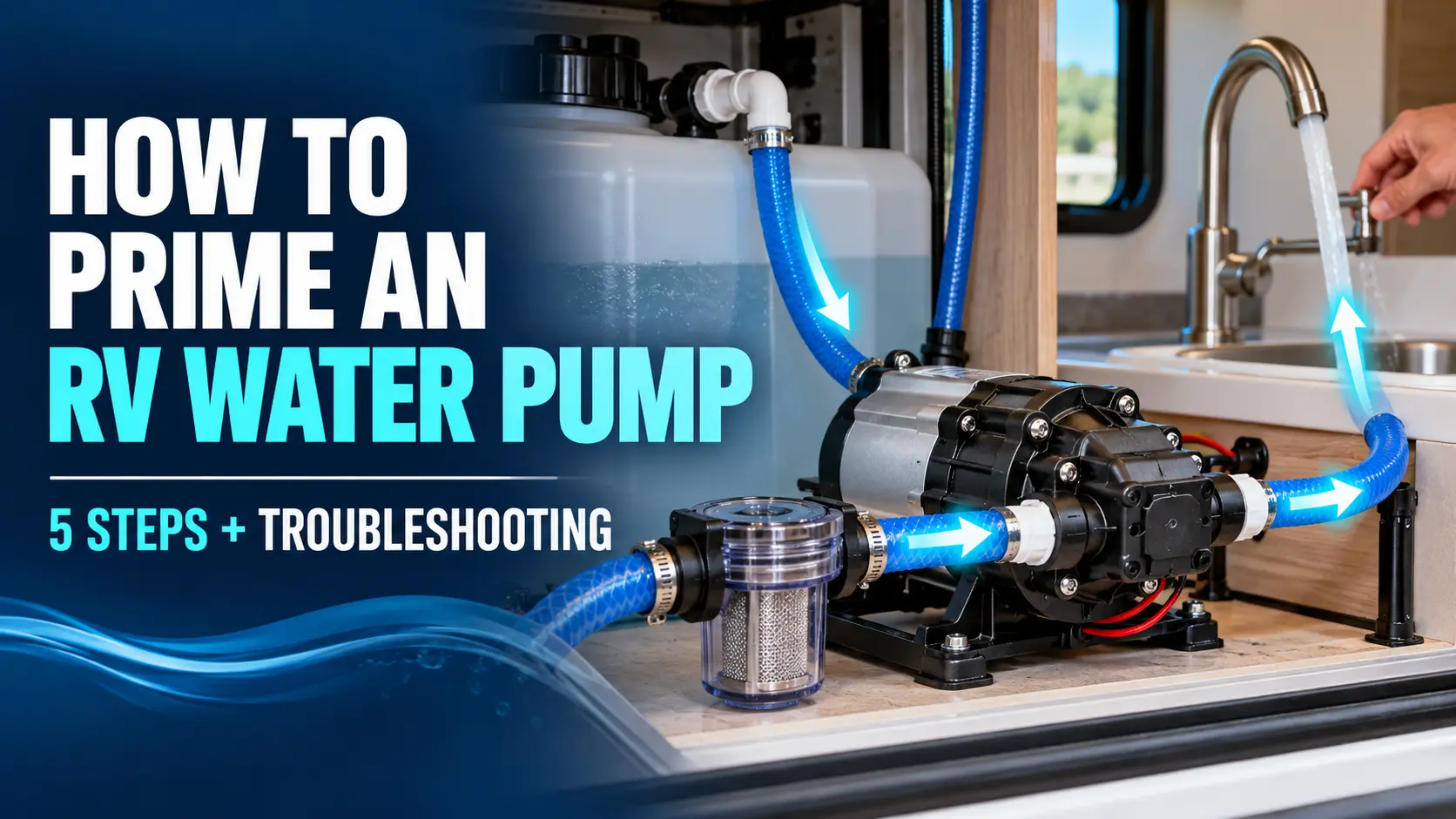
You flip the switch, the pump hums, and the faucet only sputters or gives you nothing. If the tank has run dry or air entered the plumbing, the pump may need help drawing water again. Priming just means getting water, not air, into the pump head so it can build pressure and push water to your fixtures.
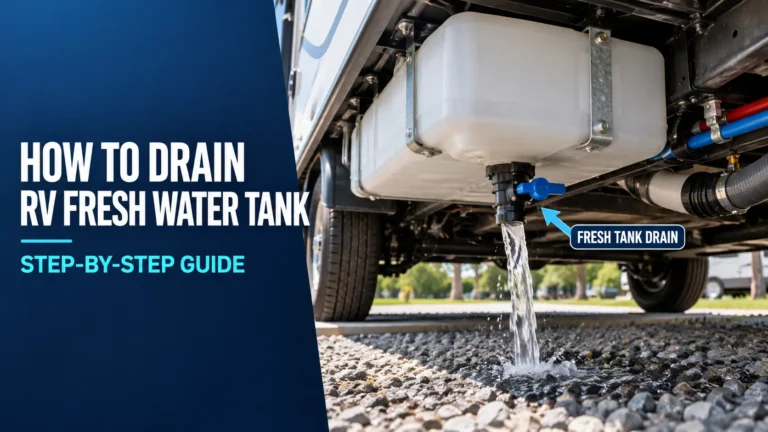
The usual triggers are spring de-winterizing, long storage, a fresh tank that ran dry, or a newly replaced pump. If you’ve just emptied the tank, check that the fresh tank drain valve is closed before refilling and priming. This guide gives you a situation table, an ordered sequence, a simple pass test, and a short checklist for when the pump still won’t prime.
The steps below follow the official Flojet 3426/3526/3626 operating instructions and the Shurflo 4008 troubleshooting guidance. Pump models differ, so follow your own manual if its sequence is different.
How to Prime an RV Water Pump Step by Step?
Fill the fresh tank, set valves to normal use, disconnect city water, open the faucets while the pump is switched off, then switch it on. Let the water clear of air, close the faucets as the flow becomes steady, and check all fixtures. The pump is primed when it runs only while a faucet is open. Stop if nothing moves within a few minutes.
- Fill the tank and set the valves Fill the fresh-water tank, restore any winterizing selector to normal operation, close low-point drains, confirm the inlet strainer is secure, and disconnect city water. Leave the water heater switched off.
- Open the faucets before turning on the pump Keep the pump switched off while opening all faucets, including the hot-water side, then switch it on. This order comes directly from Flojet’s 3426/3526/3626 manual.
- Bleed the air from each fixture Watch the kitchen and bathroom faucets, shower, outdoor shower, and toilet where fitted. Water may sputter at first; close outlets when their flow becomes steady.
- Close each faucet once its flow is steady Check that every hot-water outlet runs steadily too. Keep the water heater switched off until its tank is full and all air has cleared from the hot-water lines.
- Run the pass test Close all fixtures. Water should now flow steadily when a faucet is opened, and the pump should stop after every fixture is shut. If it does not, switch it off and use the checks below.
If your toilet has a water valve, run it too. A toilet that won’t fill properly may point to a separate issue, covered in our RV toilet won’t flush guide.
Why open faucets first? Flojet specifically says to fill the tank and open all faucets while the pump switch is off, then switch the pump on. When the water is free of air, close the faucets. Other models may use different instructions, so check the manual on your own pump.
If water still does not flow: Turn the pump off. Check water level, the tank selector and inlet strainer, then inspect suction-side fittings for loose connections or air leaks. Never loosen an outlet fitting while the pump is running. If you cannot find the cause, consult the model’s service guide or a technician.
Do I Need to Prime My RV Water Pump?
Often you don’t have to do much. Many 12V RV diaphragm pumps are described by their makers as self-priming, so switching one on with water in the tank usually pulls water through. Priming help is mainly needed after the system was dry, air got in, or the pump or its lines were opened. Check your own pump’s manual.
Here is what the documents say, model by model:
- Shurflo Lo-Flo 105 series: The manufacturer’s manual describes the pump as self-priming up to about 2.5 feet of vertical lift and able to run dry. This comes from a search excerpt of the official PDF, not the full document.
- Flojet 3426/3526/3626 series: The official Flojet manual describes these models as self-priming up to 9 feet of suction lift and rated to run dry without damage. It also gives the startup order: fill the tank, open all faucets with the pump off, then turn the pump on.
- Shurflo 4008: The manufacturer’s manual makes no self-priming or dry-run claim and gives no priming procedure. It does include a “will not prime/sputters” checklist, which is used later.
A few terms you will see in this article:
- Air-bound: the pump head holds air instead of water, so it spins without moving water.
- Suction side (inlet): the plumbing between the tank and the pump.
- Strainer: a small screen on the pump inlet that catches debris.
- Diaphragm pump: the common RV pump type that moves water with a flexing rubber diaphragm.
If you are shopping for a replacement, see our guide to RV water pump models.
Which Situation Are You In?
The first move depends on why the pump lost its prime. Find your row below.
| Situation | What changed | Do this first |
|---|---|---|
| Tank ran dry while camping | Air got into the pump and lines | Refill the tank, then bleed each fixture. Owner reports say it can take longer to catch than expected. |
| After winterizing with antifreeze | Valves may still be set to draw from the antifreeze hose, not the tank | Confirm the winterizing/bypass valve is back in normal-use position, then follow the flush steps in de-winterizing your RV plumbing. |
| After months of storage | Valves can be stiff, and the lines need cleaning | Check valve positions, and see sanitizing the fresh water tank. The Shurflo 4008 manual recommends sanitizing after storage. |
| Pump replaced or lines opened | Fittings may be on the wrong ports or left disconnected | Confirm inlet and outlet are on the correct ports and the strainer is installed. |
Safety
- If you winterized with antifreeze, do not drink or cook with the water until the antifreeze is fully flushed out. The de-winterizing guide covers the flush.
On that last row: the Shurflo 4008 winterizing instructions describe removing the plumbing at the pump ports and leaving it disconnected, with a reminder note at the tank filler. If you winterized that way, reconnect everything before you try to prime.
If the pump is completely silent, with no hum at all, that is not a priming problem. Head to our water pump troubleshooting page instead.
What Should I Check and Prepare Before I Start?
Before you start, check the tank, valves, and connections:
- Water in the tank. Add enough clean water to cover the tank pickup and supply the pump. Check your RV manual for tank-specific guidance.
- Valve positions. Winterizing/bypass valve in normal use, water heater bypass in its normal position, and low-point drain caps closed.
- City water disconnected. This way you are testing the pump itself, not city pressure.
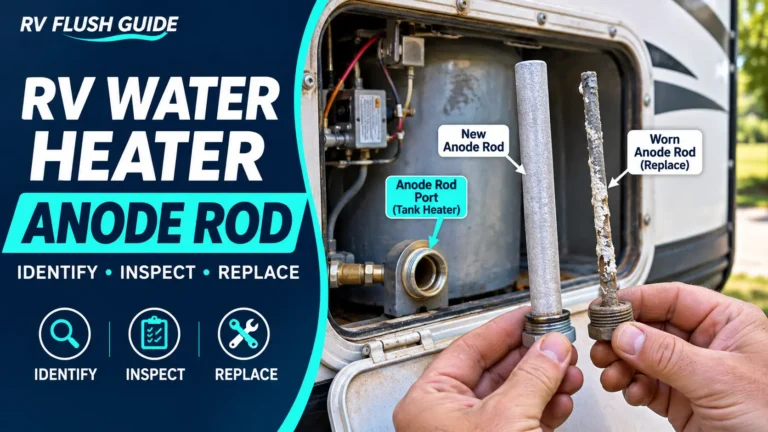
- Water heater off. Do not fire the water heater until its tank is full. Running it dry can destroy the element. If you drained a Suburban tank-style heater during storage, check that its anode rod and drain fitting are properly reinstalled before refilling; other heater models use different components.
- Strainer in place. Shurflo requires a 50-mesh inlet strainer on the 4008. Make sure its cap and bowl are intact.
- Battery charged. Check that the battery is charged. The Shurflo 4008 manual calls for voltage measured at the pump under load to be within 10% of its rated voltage; leave live electrical testing to a qualified technician.
Safety
- Pressurized lines can spray when a fitting is loosened. Switch the pump off and open a faucet to relieve pressure before you touch any pump fitting. Keep water away from 12V connections, and switch the pump off at its power switch whenever you leave the RV unattended.
Safety
- Do not wrap pump fittings with thread tape or sealant. The Shurflo 4008 manual warns it can crack the housing and can work into the pump, causing a no-prime or no-shut-off problem.
Safety
- Do not let the pump run for long with no water moving. Dry-run tolerance is model specific, as covered below.
If you winterized with antifreeze, our guide to winterizing with antifreeze explains the valve setup that you are now reversing.
How Do I Know the Pump Is Primed?
Your pump is primed when water comes out steadily without sputtering, and the pump stops once every faucet and fixture is closed. If it keeps running with all outlets shut, air or a leak is still present. A pump that restarts by itself with nobody using water suggests a leak.
Flojet describes this behavior in its sheet: a pressure switch starts the pump when a faucet opens and stops it when the faucet closes and pressure builds.
If the pump won’t shut off, the Shurflo 4008 manual lists these possible causes:
- leaks in the outlet plumbing or the toilet
- air trapped in the water heater or pump head
- debris in the pump valves
- the by-pass setting being above the shut-off point
Do not adjust the by-pass or pressure switch yourself. The manual says by-pass adjustment is for a professional with gauges. For cycling and leak hunting, see our water pump troubleshooting guide, which covers it in depth.
How Long Does Priming Take, and Can the Pump Run Dry?
There is no reliable one-size-fits-all priming time. If the pump runs but no water starts moving, switch it off promptly instead of letting it run continuously. Check your model’s guidance on dry running.
Timing: It may take a little time for trapped air to leave the lines, particularly after storage or winterizing. A persistent dry hum or no water flow is a signal to stop and inspect the inlet side—not to keep the pump running in the hope it will catch.
Dry running, by model:
- Shurflo Lo-Flo 105 series: The manufacturer says it can run dry.
- Flojet 3426/3526/3626: The official Flojet manual rates these specific models for dry running; that does not automatically apply to other Flojet pumps.
- Shurflo 4008: The manual makes no dry-run claim.
Dry-run tolerance is model-specific. Even on a rated model, stop and investigate if no water is moving.
Overheating. The Shurflo 4008 motor has a thermal breaker that resets once it cools. If the pump goes quiet after running hard, let it cool before you try again.
Why Won’t My RV Water Pump Prime?
When the motor runs but nothing comes out, work from cheapest to hardest: no water in the tank or a wrong valve, a clogged strainer, an air leak on the inlet side, a kinked or restrictive line, then debris or worn valves inside the pump. Fix the easy items before blaming the pump.
This table follows the Shurflo 4008 manual’s own “will not prime/sputters” list, ordered cheapest first. Other pumps have similar lists, but check your own manual.
| Check | What to look for | Who fixes it |
|---|---|---|
| Water and valves | Empty tank, wrong valve position, air in the water heater | You |
| Strainer | Clogged screen, cracked bowl or cap | You |
| Inlet connections | A loose fitting pulling air in (a vacuum leak) | You |
| Inlet and outlet lines | Kinked or severely restricted lines, restrictive valves | You |
| Voltage at the pump | Reading should be within 10% while the pump runs | Qualified person for live tests |
| Pump valves | Debris, or swollen or dry valves | Manual or technician |
| Pump body | Cracked housing or loose drive screws | Technician or replacement |
Two more notes. Sealer or thread tape inside fittings can block the pump’s valves, per the Shurflo manual. The Flojet sheet also lists a punctured diaphragm and an air leak on the intake as causes of failing to prime.
Start with the water supply and intake checks before considering a damaged pump.
For a deeper walk through valves, fuses, and strainers, see our full pump diagnosis.
When Should I Stop and Call a Technician or Replace the Pump?
Stop and get help
- if any of these happen, stop troubleshooting and call a qualified technician or the manufacturer:
- The pump still sputters after you have checked the strainer, inlet connections, and valves. Debris, swollen valves, or a damaged diaphragm may be inside.
- Water leaks from the pump head or switch. The Shurflo 4008 manual lists water in the drive assembly as a sign of a punctured diaphragm.
- The housing is cracked or the drive screws are loose.
- The fuse blows again. Leave wiring and live voltage tests to a qualified person, and never use an oversized fuse.
- The pump will not shut off after you have ruled out leaks and air. Don’t adjust the by-pass or switch screws.
- Anything electrical looks hot or melted, or smells burnt.
For internal repairs and replacement parts, use your model’s service manual or manufacturer support.
Some models, including the Shurflo 4008, have service parts available. Whether repair is worthwhile depends on the fault and parts cost. If replacement is the better option, compare compatible RV water pumps in our buying guide.
Prevention. The Shurflo 4008 manual calls lack of sanitizing the top cause of premature pump failure. Check your strainer regularly and winterize according to your owner’s manual. An RV water filter at a potable-water hookup can catch some incoming sediment, but it does not replace the pump’s inlet strainer.
Frequently Asked Questions
Do all RV water pumps need manual priming?
No. Many RV diaphragm pumps are self-priming. After a dry tank or winterizing, you may only need to refill the tank, restore the valves, and bleed the faucets. Check the instructions for your specific model.
Should RV faucets be open when priming the pump?
For Flojet 3426/3526/3626 pumps, yes: with the pump switched off, fill the tank and open all faucets, then switch on the pump. Close the faucets when the flow is free of air. Follow a different sequence if your own pump’s manual specifies one.
What if the RV pump runs but no water comes out?
Switch it off, verify fresh water and valve positions, then check for a clogged strainer, loose suction fittings, or a kinked inlet hose. If those are clear, use the manufacturer’s troubleshooting instructions before attempting internal repairs.
Conclusion
Priming an RV water pump usually comes down to three things:
- Priming is mostly about clearing air and giving the pump water.
- The pass test is a steady stream, plus a pump that shuts off when every outlet is closed.
- If it won’t prime, check the strainer and inlet side first, since those are the cheapest places to check for air getting in.
Your next step is to read your own pump’s manual for priming and dry-run guidance. If the pump still fails after the checks above, our water pump troubleshooting page covers the deeper diagnosis.