TL;DR
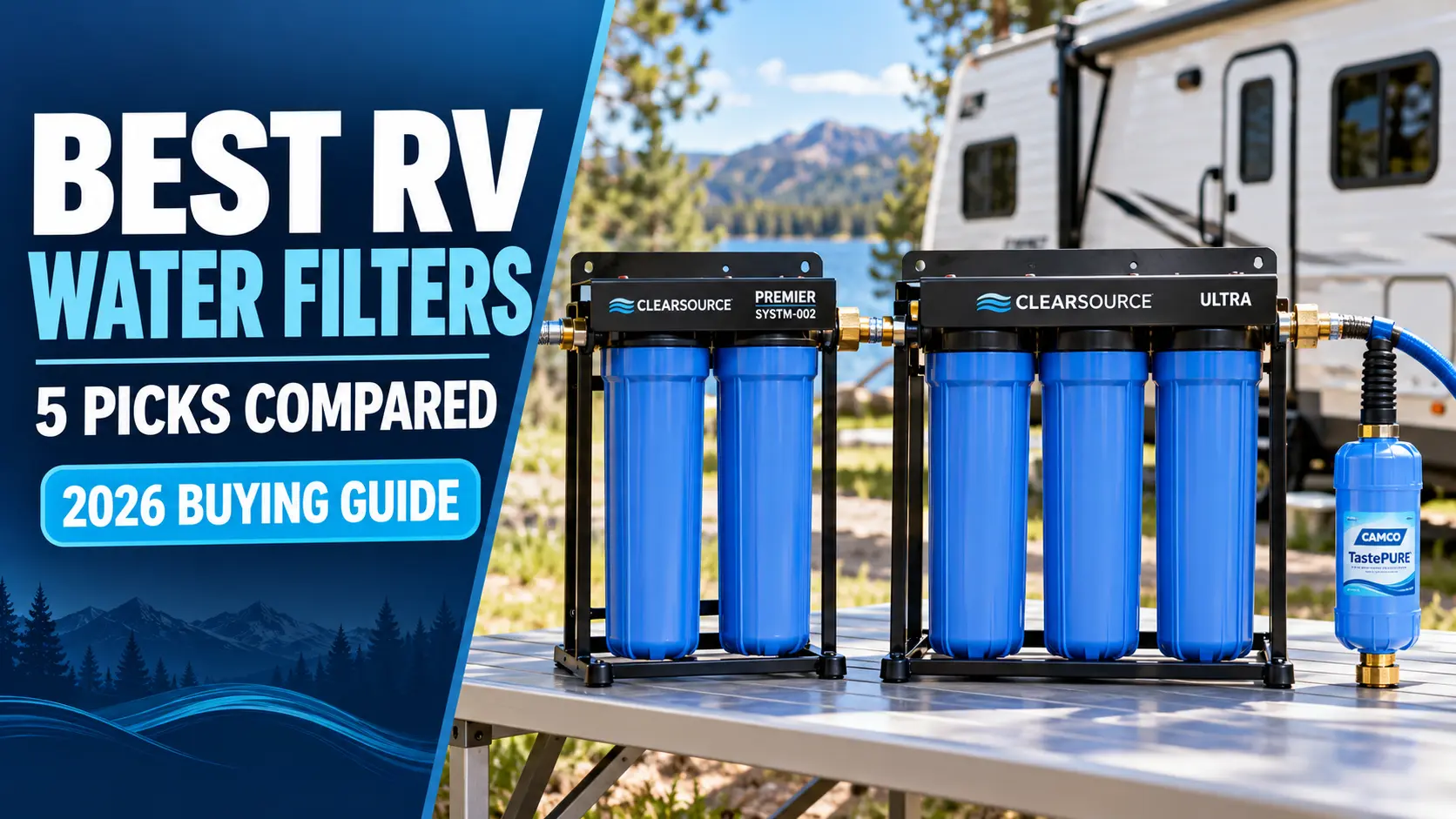
- For city hookups where you mainly want better taste and less sediment, a hose-end filter like the Camco TastePURE 40043 or Clear2O CRV2006 is the simple choice.
- If you camp full-time or use a tested potable well supply, a multi-stage system such as the Clearsource Premier or Ultra offers finer filtration. Neither should be relied on to make untreated or unsafe water drinkable.
- No filter replaces sanitizing your tank or treating questionable water.
Choosing the best RV water filter depends on your water supply. Camco’s manufacturer guide lists the TastePURE 40043 at 20 microns, although some older catalogs and retailer pages say 100. This guide prioritizes current manufacturer documentation when listings disagree. These picks come from manufacturer pages and retailer listing text, checked on 2026-10-27, and each claim is labeled by source type. The RV Flush Guide Editorial Team did not hands-on test these products. Award labels are editorial judgments based on documented specs and fit, not test results. The short version: an inline hose filter suits simple city hookups, while a canister system suits wells, long stays, and full-timers. Prices and reviews live on the Amazon buttons, not in this article.
Our Top 3 Picks: Best RV Water Filters
These picks are based on published specifications and compatibility, not hands-on performance tests.
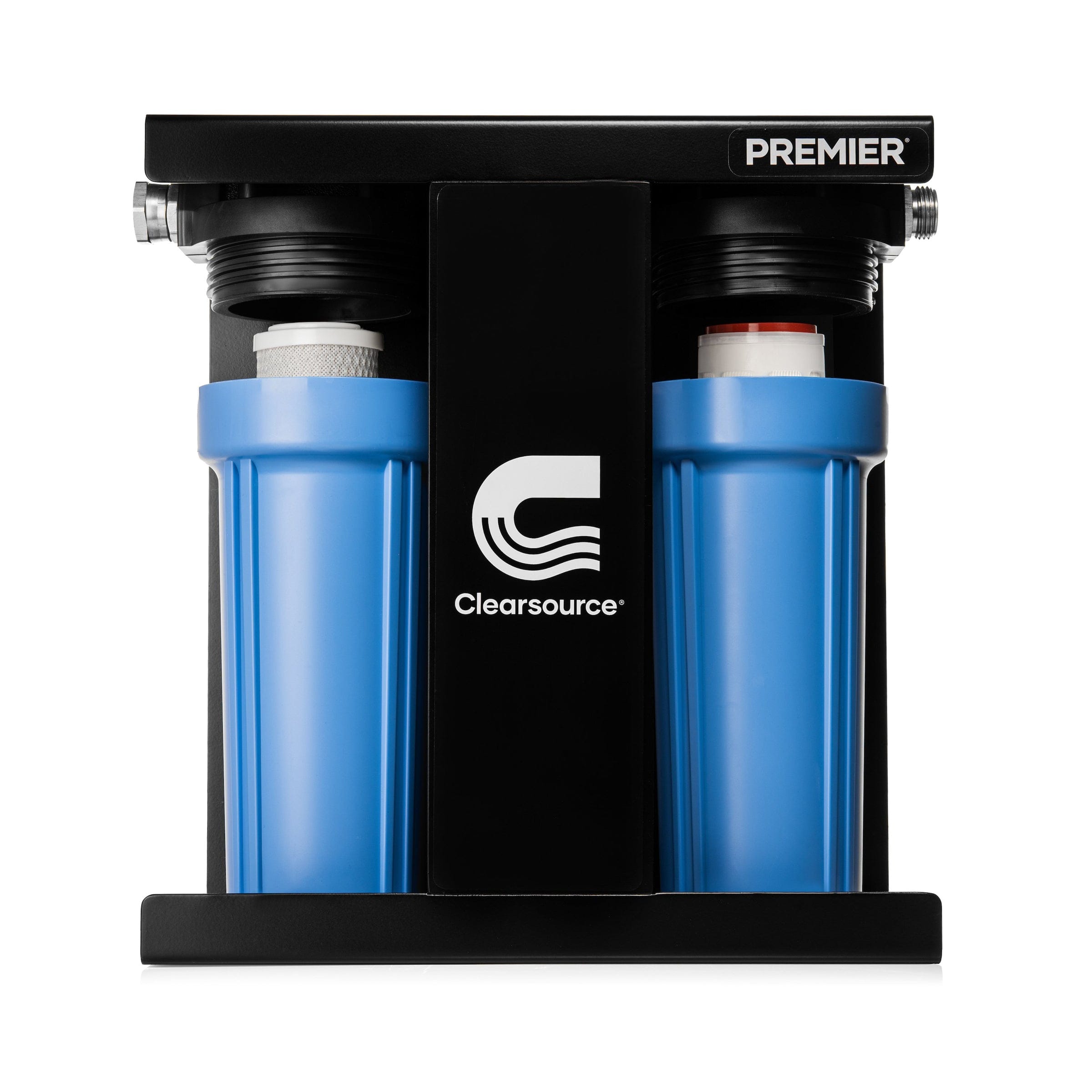
Clearsource Premier
Model: SYSTM-002
2 stages · 5 micron then 0.2 micron absolute · 6 to 6.5 GPM · 24 lb
- Two-stage canister: 5 micron carbon block plus 0.2 micron absolute stage
- Manufacturer lab flow of 6 to 6.5 GPM at 40 PSI static pressure
- Standard 2.5 by 10 inch cartridges rated 2,000 gallons

Clearsource Ultra
Model: Clearsource Ultra
3 stages · 5 / 0.5 micron plus VirusGuard · about 4.5 GPM · 28 lb
- Three stages: 5 micron sediment, 0.5 micron carbon block, VirusGuard
- Manufacturer claims bacteria, cyst, and virus reduction
- Manufacturer lab flow of about 4.5 GPM
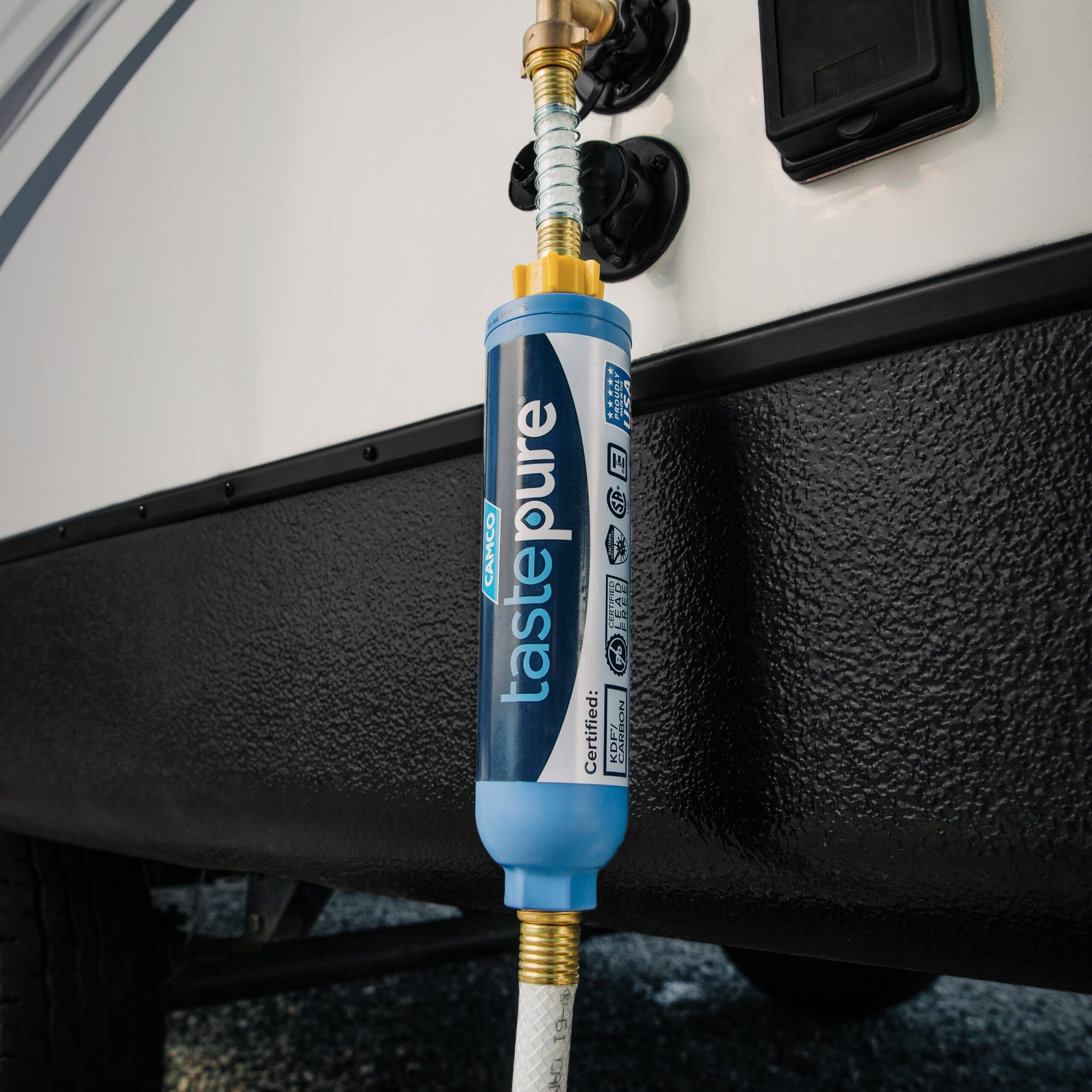
Camco TastePURE
Model: 40043
GAC and KDF · 20 micron in Camco’s manufacturer guide · 2.5 GPM · 16 oz
- Hose-end canister with GAC and KDF media
- Includes a flexible hose protector in the 40043 kit
- Camco’s Amazon listing states NSF/ANSI 42, 53, and 372
Check the model, hose connections, cartridge compatibility and available space before buying. Amazon buttons link to product detail pages. Prices and star ratings are deliberately omitted. Product photos: Clearsource (Premier and Ultra); Camco (TastePURE).
| Model | Type | Stages and micron ratings | Best for |
|---|---|---|---|
| Clearsource Premier SYSTM-002 | Canister system | 5 micron carbon block, then 0.2 micron absolute (manufacturer) | Full-timers, long stays |
| Clearsource Ultra | Canister system | 5 micron sediment, 0.5 micron carbon block, VirusGuard (manufacturer) | Tested well water with an appropriate treatment plan |
| Camco TastePURE 40043 | Hose-end filter | GAC and KDF; 20 micron in Camco’s published guide | Budget city hookups |
| Camco EVO Premium 40631 | Hose-end, replaceable cartridge | 5 micron, KDF and GAC (retailer listing) | Weekenders who want cartridge swaps |
| Clear2O CRV2006 | Hose-end filter | 1 micron solid carbon block (manufacturer) | Taste-focused city hookups |
Spec confidence varies. The Clearsource figures come from the manufacturer’s own pages. Camco and Clear2O flow, certification, and life numbers mostly come from retailer listings, and any unconfirmed detail below says “not confirmed” or flags the conflict.
Clearsource Premier SYSTM-002: Best Overall Canister System
The Premier is a stand-alone system that sits between the spigot and your hose. It is the pick for people who want fine filtration and a documented cartridge rating without paying for the three-stage Ultra.
SYSTM-002 Specs
Sources: Clearsource Premier RV Water Filter System, Clearsource FAQ, Water Filter Direct Premier listing.
What We Like
- Higher tested flow than the Ultra under Clearsource’s stated conditions
- Fine 0.2 micron absolute stage behind a 5 micron carbon block
- Manufacturer documents cartridge rating and change cadence
What Could Be Better
- Takes space and weighs 24 lb
- Replacement cartridges add ongoing cost
- Needs proper draining and storage during extended breaks
Clearsource says the Premier’s first stage is a 5 micron coconut shell carbon block and the second is a 0.2 micron absolute-rated filter. In its FAQ, Clearsource explains that “absolute” means every pore is that size, while “nominal” means some pores are. Its flow figure is a lab test at 40 PSI static pressure, so treat it as a manufacturer number measured under specific conditions.
Real-world suitability: This fits full-timers and anyone camping for weeks at a time, because the cartridge rating of 2,000 gallons stretches change intervals. It is more than a weekender on city water strictly needs. You also need room at the spigot, since it is a ground-standing unit and not a hose-end filter.
Comparison insight: Compared with the Ultra, the Premier trades the virus-claim stage for higher documented flow and a lighter body. Clearsource claims bacteria and cyst reduction for the Premier. One reseller says the 0.2 micron stage also blocks viruses, but the manufacturer page does not make that claim for the Premier, so this guide uses the manufacturer’s wording.
Our verdict: The best all-around pick here if you want a canister system with the most complete manufacturer documentation. Verify cartridge availability and your spigot clearance before buying.
Clearsource Ultra: Best Multi-Stage Option for Tested Well Water
The Ultra adds a third stage and is the most heavily documented option for RVers who want an extra filtration stage for known, potable water.
Clearsource Ultra Specs
Sources: Clearsource Ultra RV Water Filter System, Clearsource FAQ.
What We Like
- Three-stage design with a virus-claim stage
- Manufacturer claims over 95% lead removal
- Standard cartridge size and documented change schedule
What Could Be Better
- Largest and heaviest here at 28 lb
- Lower documented flow than the Premier
- Sulfur smell is not effectively treated by filtration, per Clearsource
Clearsource says the Ultra uses a 5 micron sediment stage, a 0.5 micron coconut carbon block, and a VirusGuard stage. It claims the system removes or reduces bacteria, cysts, and viruses, and its FAQ says the Ultra removes over 95% of lead. These are manufacturer claims, so read them as claims.
Real-world suitability: This suits RVers who want added filtration when using tested, potable well or campground supplies. Do not use it as a substitute for testing or treating unsafe water. It is bulky for a small storage bay. Even this system does not replace testing a well or treating water you suspect is contaminated.
Comparison insight: The Ultra gives up flow (about 4.5 GPM versus 6 to 6.5 GPM for the Premier) and adds weight in exchange for the third stage. Those flow numbers come from the same manufacturer’s lab test conditions, so they compare fairly with each other, though not with other brands’ numbers.
Our verdict: The most thoroughly documented protection of the five, and the right choice if water quality is your main worry. Pair it with source-water testing and our guide to sanitize the fresh water tank.
Camco TastePURE 40043: Best Budget Inline Filter
This is the simple hose-end filter many city-hookup campers start with.
40043 Specs
Sources: Camco manufacturer water filter chart, Camco TastePURE 40043 Amazon listing, CAMPERiD TastePURE 40043, RV Parts Center TastePURE 40043, RV Upgrade Store TastePURE.
What We Like
- Simple hose-end install with no tools
- Hose protector included in the 40043 kit
- Listing text claims NSF 42 and 53 certification
- Light at 16 oz
What Could Be Better
- Older listings may contradict the current 20-micron manufacturer guide
- Replaced as a whole unit, not by cartridge
- Hose-end weight can strain a spigot
Camco’s published filter guide identifies model 40043 as a 20-micron GAC/KDF filter rated for up to three months. An older catalog specified 100 microns, so verify the part number and packaging when reading old listings. Some retailers list 2.5 GPM and a 20–125 PSI range; these have not been independently tested here. Product listings mention NSF/ANSI 42, 53 and 372, but current certification for this exact SKU was not independently confirmed. The 40043-P variant is sold without the hose protector.
Real-world suitability: Good for weekenders on city hookups who want less chlorine taste and sediment. One older retailer page says about 500 gallons and 3 to 4 months, while another says about 3 months with no gallon figure. The safest reading is roughly one season or about three months, per retailer text. Camco’s instructions, as relayed by a retailer, say to flush for one minute on first use to clear carbon fines and to write the start date on the filter.
Comparison insight: There is no separate cartridge to track, but you replace the whole unit each time, so compare the unit price with cartridge prices for the other picks before deciding. Camco recommends a pressure regulator with it, and one is not included.
Our verdict: A practical basic filter for potable city hookups. Verify the part number, specific certification claims and replacement date.
Camco EVO Premium 40631: Best Refillable-Cartridge Inline Filter
If you would rather swap a cartridge than replace a whole filter, this is the Camco option.
40631 Specs
Sources: Camco manufacturer water filter chart, Walmart Camco EVO 40631, CAMPERiD EVO cartridge, Camco Dealer cartridge 40620.
What We Like
- Replace only the cartridge instead of the whole unit
- Includes a 12 inch hose to reduce spigot strain
- 5 micron rating is finer than a 20 micron filter
What Could Be Better
- You must buy the correct cartridge part number
- Housing adds bulk at the spigot
- Check the cartridge number and replacement schedule for your usage
Camco’s published guide lists the EVO 40631 with a 5-micron replaceable cartridge, KDF/GAC media, an extension hose and an approximate 8,000-gallon service rating. The 40621 is the standard cartridge, while 40624 is an upgraded alternative. Check your housing for the correct fit. The certification on these listings is NSF/ANSI 372, which is a lead-free materials certification and not a contaminant-reduction claim. The listings reviewed show no NSF 42 or 53 claim for this model, and this guide says so plainly.
Real-world suitability: A fit for campers who like the idea of swapping cartridges each season. Camco specifies about 8,000 gallons, while retailers describe about one camping season, while one dealer lists about 8,000 gallons for cartridge 40620. Both are presented as unresolved.
Comparison insight: It is finer (5 micron) than the TastePURE’s 20 micron listing, but with weaker certification claims on paper because 372 covers materials, not reduction.
Our verdict: A reasonable middle option for weekenders who want replaceable cartridges, provided you confirm the cartridge number before ordering.
Clear2O CRV2006: Best Fine-Filtering Inline Filter for Taste
For the finest hose-end filtration on this list, the CRV2006 uses a solid carbon block.
CRV2006 Specs
Sources: Clear2O CRV2006 product page, Clear2O RV collection, RV Upgrade Store CRV2006, Walmart CRV2006 listing.
What We Like
- Finest micron rating among the inline picks
- Tool-free hose connection
- Manufacturer claims reduction of chlorine, lead, and VOCs
What Could Be Better
- A fine block may restrict flow on low-pressure campground spigots (reasoned inference)
- Flow, life, and certification details come from retailer text
- Sulfur claim conflicts with another manufacturer’s statement
Clear2O describes a 1 micron solid carbon block with 3/4 inch hose threads and no tools needed. A retailer lists 3 GPM at 45 PSI and 3 to 6 months of life. A Walmart listing says it was independently tested to NSF/ANSI 42 and 53, but we did not verify that in the NSF database.
Real-world suitability: Best for city hookups where you care mostly about taste and chlorine. Clear2O claims it reduces sulfur taste and odor, but Clearsource says filtration does not effectively treat sulfur smell. We cannot reconcile those, so do not count on a fix. If you smell rotten eggs, diagnose the source with our page on the rotten egg smell. If the odor comes only from hot faucets, read our RV water heater anode rod and heater-type guide before blaming the filter.
Comparison insight: The CRV1005 sibling is a 5 micron version; we did not confirm its specs, so we mention it only as an option to look into.
Our verdict: A good pick if you want the finest hose-end filtration and your campground pressure is reasonable. Check the NSF database for the exact model before relying on the certification.
How We Compared These RV Water Filters
We did not test any of these products hands-on. This guide has no prices, no star ratings, and no review counts. We compared documented specs from manufacturer pages and retailer listing text, checked on 2026-10-27, and we label each claim by source type. Where sources disagree, we show the conflict instead of picking a winner. Flow numbers use different test conditions across brands, so they are not directly comparable. Award labels are editorial judgments about fit, not test results. We left out several brands because we could not retrieve manufacturer documentation for them.
How to Choose an RV Water Filter
Do I need a water filter for my RV?
Many RVers on city water use one to improve taste and catch sediment before it reaches the plumbing and pump. You need more than a basic filter if you fill from wells, lakes, or unknown sources, because a hose filter that only improves taste does not make unsafe water safe. Sediment may also add wear to your RV water pump, though that is reasoned inference and not a sourced figure.
| Your situation | Filter type to consider | Why |
|---|---|---|
| City hookup, weekender | Inline hose filter | Simple, light, easy to swap |
| Long stays or full-timer | Canister or higher-capacity system | Change intervals add up |
| Well or unknown source | Finer documented filtration, plus water testing | Taste filters do not cover microbes |
| Filling a tank from containers | Not a hose filter job | Clearsource’s Nomad is the only manufacturer-documented raw-water system in the sources reviewed for this guide |
| Drinking tap only | Not covered by these picks | Different product category |
What do micron ratings and NSF labels actually prove?
A micron rating describes particle filtration but does not verify removal of specific contaminants. Nominal and absolute ratings are different, and test methods matter. For drinking-water claims, look for certified contaminant-specific reduction rather than judging by micron number alone.
NSF listings cover specific claims, so read which claim a label makes. The NSF/ANSI 372 mark on the Camco EVO listings is a lead-free materials certification, not a contaminant-reduction claim. Some listings claim NSF/ANSI 42 and 53 certifications, but current records for each specific SKU were not independently confirmed. NSF/ANSI 42 covers aesthetic effects such as chlorine taste and odor; NSF/ANSI 53 covers particular health-related contaminant reduction claims. Certification to a standard does not establish removal of every contaminant under it. Check the exact model and claim in the certifier’s database; taste filtration is not water disinfection.
Should I get an inline filter or a canister system?
An inline filter screws onto the hose, costs less, and is easy to swap, but it filters in one pass. A canister system stands on the ground between the spigot and the hose, runs two or three cartridges, and handles longer stays. Choose by how often you camp, your water source, and how much space and weight you accept.
Canister systems here weigh 24 to 28 lb and run about 15 to 19 inches wide. Measure low spigots to ensure hoses and regulators can fit without kinks. Use the supplied flexible connector or a short drinking-water hose to prevent the filter’s weight from stressing the faucet. Clearsource says to empty canisters and dry the elements if you will not use them for a month or more.
How often should I change an RV water filter?
It depends on the model and your use. Clearsource rates its cartridges at 2,000 gallons and suggests yearly changes for occasional campers, twice a year for weekenders, and every two to three months for full-timers. Replace sooner if flow drops or taste turns bad. Camco says to replace the TastePURE when flow drops or taste goes bad.
| Model | Stated interval | Source type |
|---|---|---|
| Clearsource (Premier, Ultra) | 2,000 gal; yearly, twice yearly, or every 2 to 3 months by use | Manufacturer |
| Camco TastePURE 40043 | About 3 months (one page also says about 500 gal and 3 to 4 months) | Retailer |
| Camco EVO 40631 | About one season (one dealer says about 8,000 gal) | Retailer |
| Clear2O CRV2006 | 3 to 6 months depending on use | Retailer |
| General inline versus canister | 1 to 3 months versus 4 to 6 months | Camping World (not re-verified) |
Clearsource lists a 2,000-gallon cartridge rating, while Camco’s own filter guide lists approximately 8,000 gallons for the EVO 40631. Ratings are based on different designs and conditions. To compare cost of ownership, divide the current cartridge price by the rated gallons. Many owners swap filters at de-winterizing time, so see our guide to de-winterizing your RV.
How do I install a filter without hurting flow or my plumbing?
Connect in this order: spigot, then a pressure regulator if you use one, then the filter, then the hose. Camco recommends a regulator with the TastePURE and does not include one. Check that the arrow on the housing points in the direction of flow. Canister systems use standard RV hose connections, per Clearsource, and a flexible hose protector reduces strain on the spigot connection.
A filter attached to a city-water connection treats incoming water as it enters the RV plumbing. The city-water inlet normally bypasses the fresh-water tank and 12V pump; this filter does not clean water already in the tank, so use our guide to sanitize the fresh water tank for that. If flow drops after install, check for a clogged cartridge, a kinked hose, or a filter that is too fine for a weak spigot. If low pressure persists inside the RV, the pump is a separate cause, so see water pump troubleshooting.
Safety
- Do not treat a filter as a purifier. Do not drink water you suspect is contaminated, such as well water, lake water, flooded sources, or anything under a boil-water notice. Test it, treat it, or use another source.
Stop and get help
- If a hose or housing leaks, bulges, or sprays, shut off the spigot and replace the part. Do not tape or force a cracked housing. If you get persistent bad taste or smell after a new cartridge, visible slime or discoloration, or illness in the household, stop drinking from the system, sanitize it, and test the water. Contact the manufacturer, a qualified RV technician, or your local health authority for source-water concerns.
Before freezing weather, disconnect and drain or store the filter according to its manufacturer’s instructions. Replace a cracked housing. Draining the RV fresh water tank alone will not empty the external filter housing or protect the water lines from freezing.
Will a filter make well or campground water safe to drink?
Not by itself. The hose filters in this guide document taste, chlorine, sediment, and in some listings lead claims, not germ-killing claims. Only some systems document bacteria, cyst, or virus claims, and those are manufacturer claims that depend on the exact cartridge and conditions. The Camco listing says KDF helps prevent bacterial growth inside the filter during storage, which is not the same as treating the water. The Clearsource Nomad is marketed for certain raw-water applications but is outside this comparison; follow its specified water-source requirements. If you doubt the source, test the water and treat or avoid it.
Final Verdict
If you want one answer, match the filter to your water source first. For city hookups and weekends, the Camco TastePURE 40043 or Clear2O CRV2006 covers the basics, and the Camco EVO 40631 suits you if you prefer cartridge swaps. For longer stays or full-time living, the Clearsource Premier offers strong documented filtration and flow. The Ultra adds a virus-reduction stage, but neither replaces testing or appropriate treatment of unsafe water.
Three takeaways: pick the type by water source and use pattern, read the label claim and not just the micron number, and replace on the manufacturer’s cadence or when flow or taste drops. Before buying, check the exact model’s specs and certification, then sanitize the tank at the start of the season. For related reading, browse our RV water system guides.