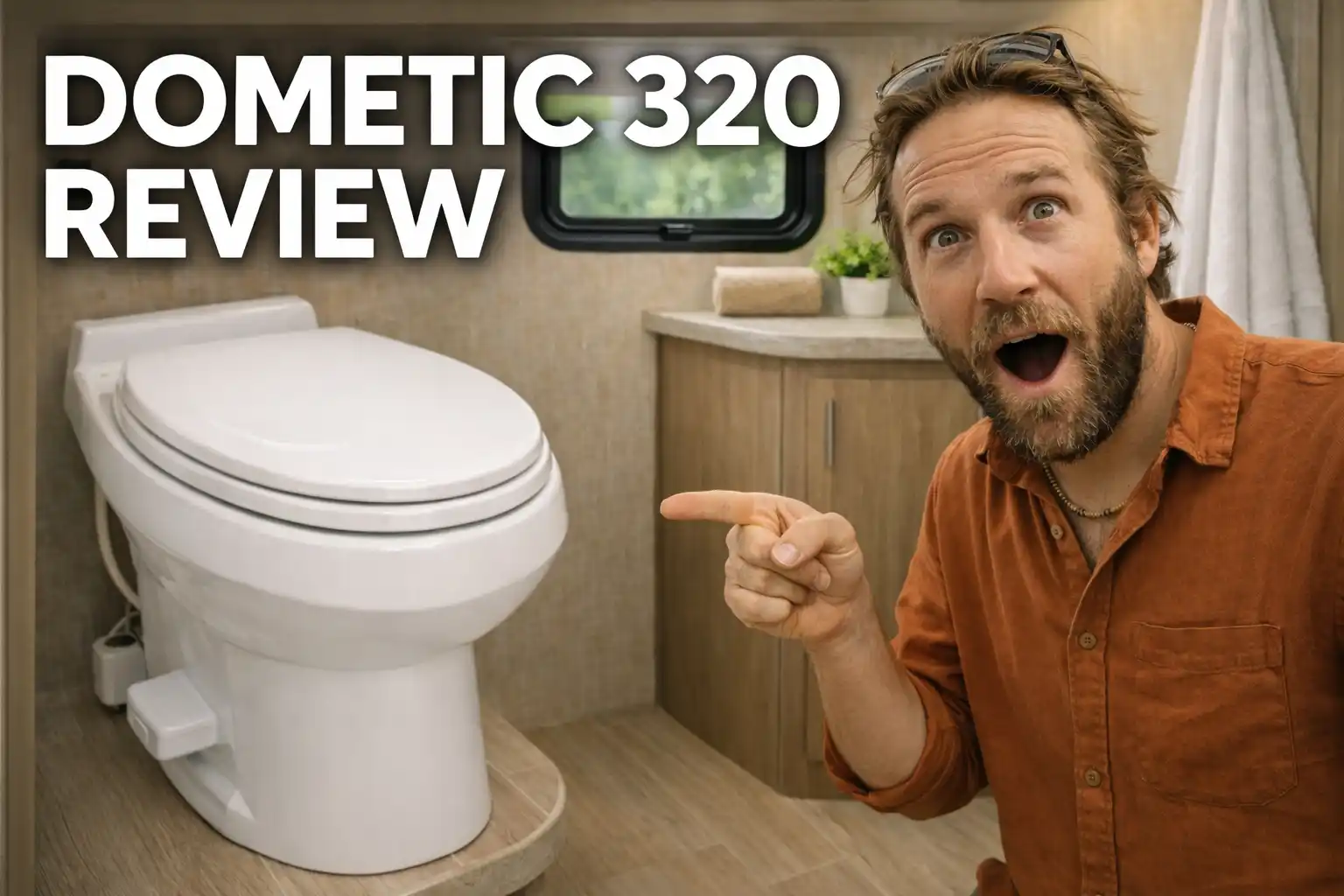
This Dometic 320 RV Toilet Review finds it best suited to RV owners who want an elongated ceramic bowl, residential-style seat height, and a familiar two-bolt installation. Its larger bowl may feel more comfortable than compact round RV toilets, but fit is the deciding factor. The 320 requires an 11-inch rough-in and measures about 22 inches deep overall, so check the bathroom door, shower entry, water-line access, and front clearance before ordering.
The honest catch: the front of the bowl gets weaker water flow than the rear, so water pressure matters. Measure your rough-in (you need 11 inches) before you order, then check the current price.
If you’re still sitting on a plastic stock RV toilet that sounds like a grocery bag and smells twice as bad, the Dometic 320 RV toilet is probably the upgrade you’ve been Googling. It shows up on almost every “best RV toilet” list, and real owners on forums from iRV2 to Jayco Owners have plenty to say about it — good and bad.
This review is not a spec sheet copy-paste. It pulls from owner forums, the official Dometic installation manual, and real complaints that show up again and again. By the end, you’ll know exactly what the 320 does well, where it falls short, how it stacks up against the 310, and whether it’ll even fit in your bathroom.
If you’ve been dealing with other toilet problems alongside this decision — smell after dumping, water not holding — you’ll want to keep the RV Flush Guide repair section open in another tab. A lot of those issues carry over after an upgrade if you don’t address the root cause first.
What Should You Know About the Dometic 320 RV Toilet Reviews?
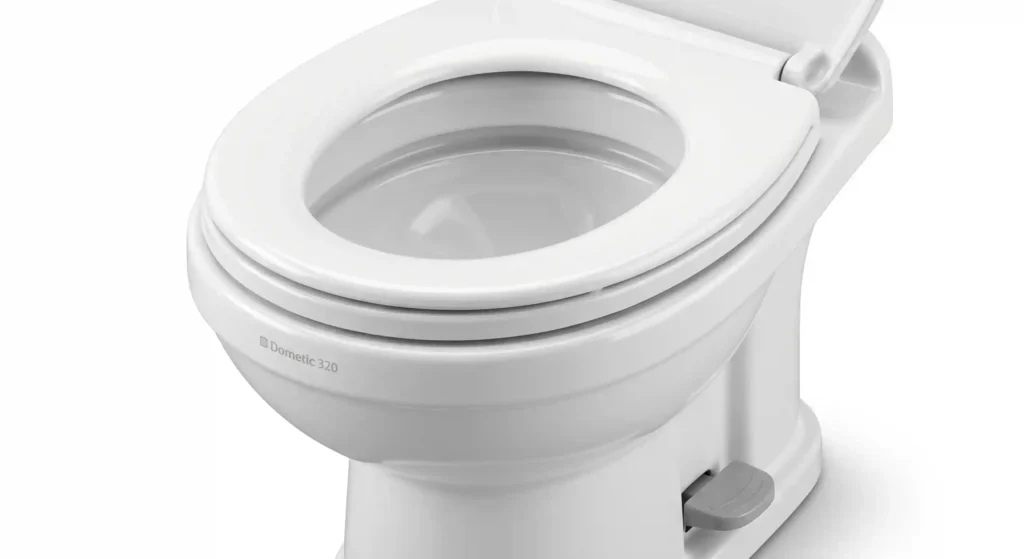
The Dometic 320 is a gravity-flush RV toilet with a 100% vitreous ceramic elongated bowl, a residential-height seat, and a foot pedal that controls both filling and flushing. It’s designed for RVs and boats, and it’s meant to replace the cheap all-plastic toilets that come factory-installed in most mid-range trailers and motorhomes.
It sits in Dometic’s 300 Series lineup above the all-plastic 300 and the round-bowl ceramic 310. The 320 is the top of that series: elongated bowl, enameled wood seat, standard 18-inch seat height, and a hand sprayer included on most versions. It comes with a 2-year full warranty and a 10-year ceramic bowl warranty against scratching or crazing, per Dometic’s official warranty terms. The 320 is especially relevant for bigger users because of its elongated bowl and taller seating position. If that’s your main buying concern, compare it with the other RV toilets for larger people.
It’s a good fit for full-timers, weekend campers who want something that feels more like home, and anyone upgrading from a Dometic 300 or an old Thetford.
Dometic 320 Specs: The Numbers You Actually Need
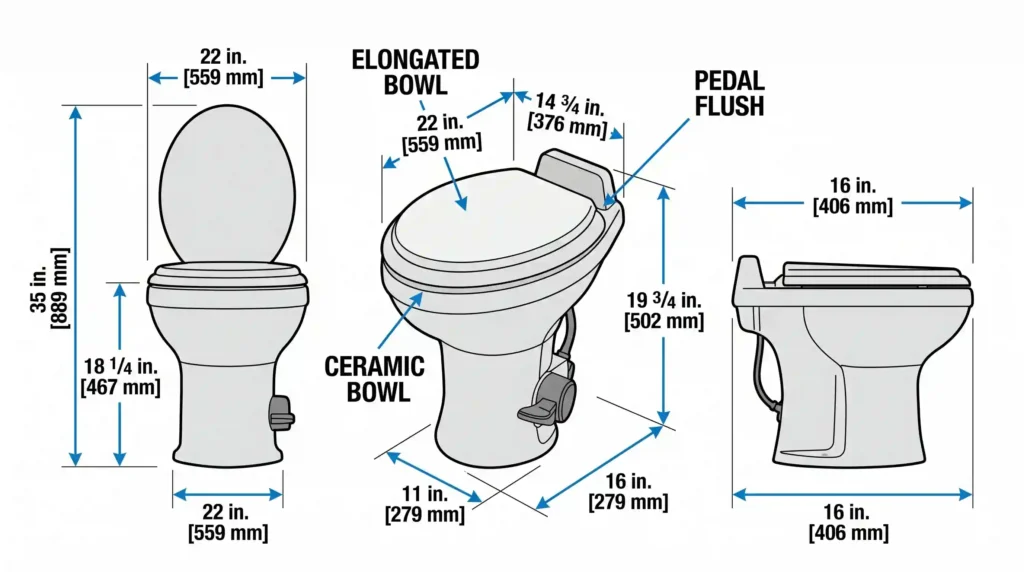
Before you get deep into the review, here are the specs that actually matter for fitting and buying decisions:
According to Camping World’s product listing and confirmed by eTrailer’s dimensional data:
- Dimensions: 22″ D x 14.75″ W x 19.75″ H
- Seat height: 18 inches
- Weight: 37 lbs
- Rough-in requirement: 11 inches (from flange centerline to back wall)
- Water use: roughly 1 pint per flush
- Bowl material: 100% vitreous ceramic
- Seat: enameled wood (standard model), slow-close wood optional
- Colors: white or bone
- Heights: standard (18″ seat) or low-profile
- Flush type: gravity discharge with foot pedal
- Warranty: 2 years full, 10 years ceramic bowl
The rough-in number is the one that trips people up the most. We’ll cover that in detail below.
What Do Real RV Owners Say About the Dometic 320?
The Dometic 320 sits at 4.4 out of 5 stars on Camping World, which is solid for an RV toilet. Most owners call it a major upgrade from plastic stock units. The recurring praise is comfort, easy install, and the ceramic bowl. The recurring complaint is weak water flow at the front of the bowl, especially at lower water pressure.
Here’s the honest breakdown of what shows up consistently across forum threads:
What people love:
- The elongated bowl feels like a normal home toilet
- The 18-inch height is comfortable for adults of all sizes
- Ceramic cleans up much easier than plastic
- The 2-bolt install is straightforward; many owners report finishing in under 30 minutes
- One Jayco Owners Forum member called it the best RV toilet they’ve ever owned
What people complain about:
- Water flow at the front of the bowl is noticeably weaker than the back
- Performance drops further at lower water pressure (under 40 PSI)
- On some Forest River forum threads, owners on older units report stronger flush performance than on current production models
- The wood seat can slip on the ceramic bowl occasionally
None of these complaints are dealbreakers for most people. But the flush issue is real, and it deserves its own section.
Is the Dometic 320’s Flush Actually Good?
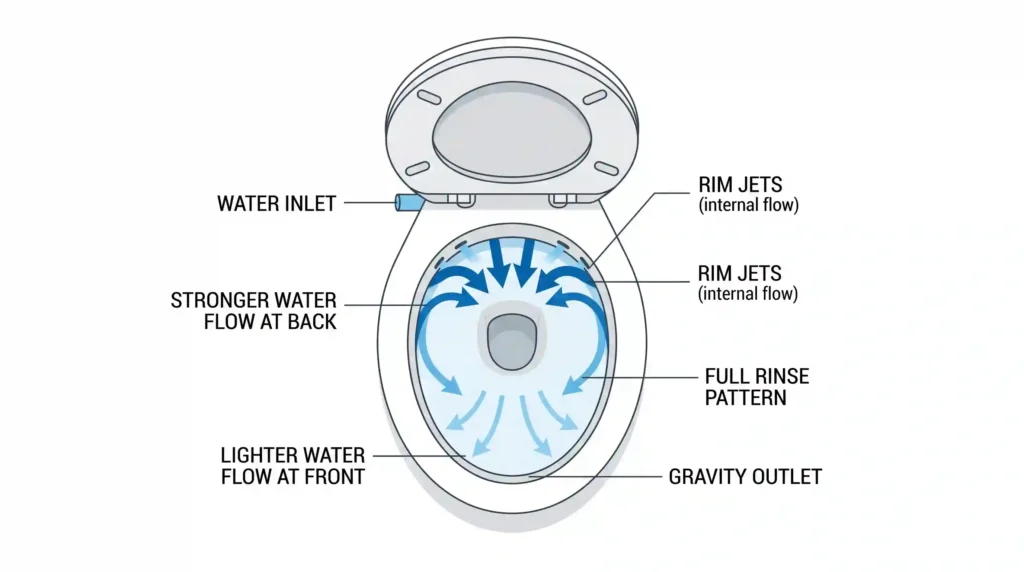
The Dometic 320’s flush is stronger at the back of the bowl and noticeably weaker at the front. This is a design characteristic, not a defect. At 40 to 55 PSI water pressure, the bowl clears fine for most uses. At lower pressure or on the internal water pump, the front of the bowl may not rinse fully, and you’ll likely need the included hand sprayer to finish the job.
This comes up in almost every active forum thread about the 320. On the Forest River Forums weak flush thread, multiple owners confirmed that at 40 PSI the flow is strong at the back and tapers toward the front. One owner described it as “not a big deal and works fine otherwise.” Another said they wish they had gone with the 310 instead, because its turbo flush covers the bowl more evenly.
Dometic markets the 320 as having a 360-degree PowerFlush swirl-jet bowl rinse. That description is generous. The water does swirl, but it’s not uniform around the bowl.
A few practical tips that help:
- Always add water to the bowl before flushing solids. The official manual recommends this, and it makes a real difference.
- Maintain at least 40 PSI at the connection. A pressure regulator set below that will noticeably hurt flush performance.
- Use the hand sprayer for any residue left at the front. Most 320 owners end up using it regularly.
- Don’t leave the black tank valve open at hookup sites. Poor flush technique creates the RV toilet smell after dumping problem faster than anything else.
The flush isn’t the 320’s strongest feature. The comfort and the ceramic bowl are. If a powerful all-around rinse is your top priority, the 310 may be the better call.
Is the Dometic 310 a Better Fit for You?
Before committing to the 320, check whether the smaller Dometic 310 serves you better. Per the official manual, it needs one inch less rough-in and is about 3 inches shorter in overall depth. Some owners also report a more even rinse from the 310’s round bowl, although flush performance depends on water flow and pressure. What you give up is the elongated bowl and slightly taller seat. Measure your bathroom first, then see which Dometic toilet fits your layout in the full comparison.
Measuring for Fit Before You Order
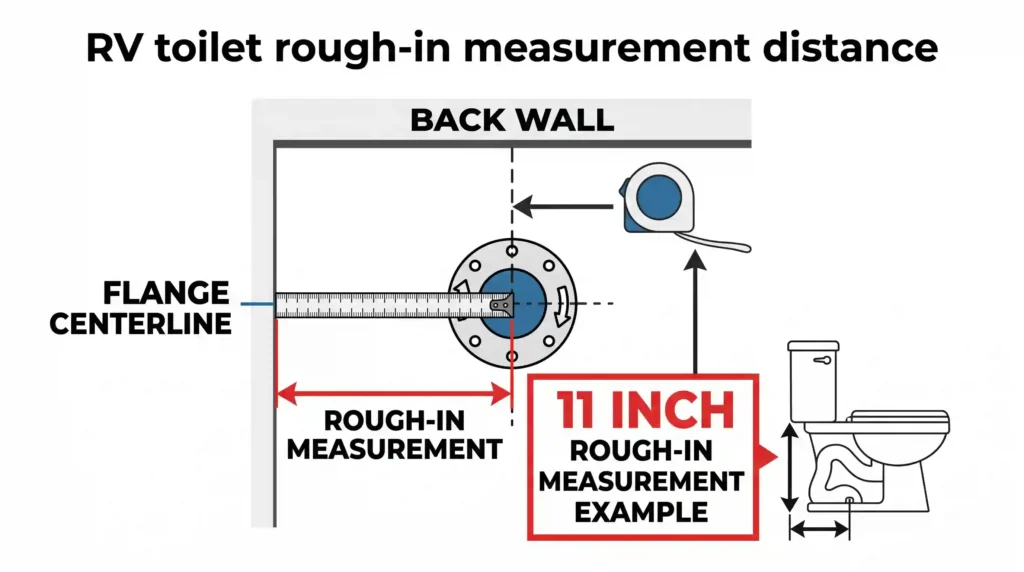
The Dometic 320 needs an 11-inch rough-in. That means 11 inches from the center of the floor flange to the back wall. If your current rough-in is 10 inches or less, the 320 won’t fit without modification.
This is the most common reason people return the 320 after buying it. The Dometic 300 uses an 8.5-inch rough-in. The 310 uses 10 inches. The 320 uses 11 inches. If you’re upgrading from a 300, that’s a 2.5-inch difference, and some bathroom cabinets don’t have that clearance.
How to measure: remove the toilet if it’s still installed, find the center of the floor flange, and measure straight to the back wall. That number needs to be 11 inches or greater.
On Forest River Forums, the consistent advice from experienced owners is “measure, measure, measure.” A few owners have made the 320 fit in a tight space by cutting a notch in the cabinet behind the toilet, or by modifying the hood on the back of the toilet unit itself. If you’re close but not quite there, it’s doable, but it’s extra work you don’t want to discover after the toilet is already on your doorstep.
Also check: the 320 is slightly taller than the 300. The base footprint is the same, but it stands higher. If there’s a cabinet above your toilet, confirm the clearance before ordering.
After install, run a few test flushes and check for any water at the base. If you see moisture around the base, the floor seal may not have compressed evenly during installation. Our guide on Dometic RV toilet leaking at the base walks through exactly how to diagnose and fix that before it becomes a bigger problem.
Keeping Your Dometic 320 in Good Shape
The 320 is not a high-maintenance toilet, but there are a few things that will either keep it running well for years or quietly shorten its life.
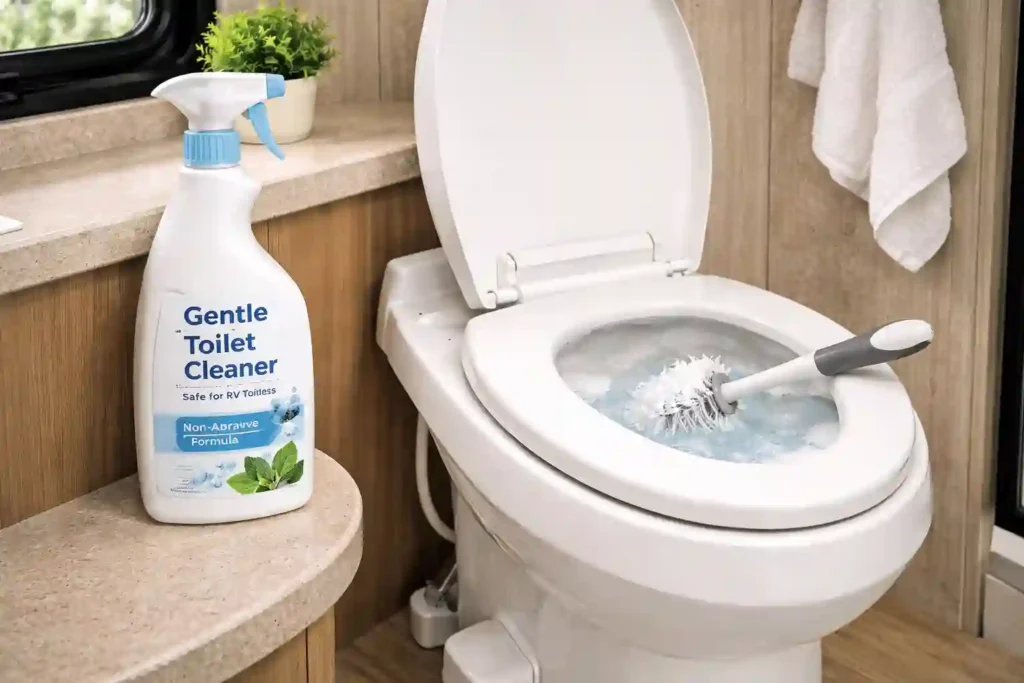
Cleaning: Only use non-abrasive cleaners. The official Dometic manual specifically says to avoid chlorine-based products like laundry bleach and caustic drain openers. These damage the rubber seals inside the toilet, particularly the flush ball seal and the water valve seal. A cleaner like Dometic Toilet Bowl Cleaner or any mild, non-abrasive bathroom cleaner is fine.
Seal maintenance: The flush ball seal is the rubber gasket that holds water in the bowl between uses. When it starts failing, the bowl won’t hold water and you’ll notice the bowl draining slowly on its own. If you’re seeing that, check our guide on why your Dometic toilet won’t hold water before pulling the toilet apart.
Freeze damage: The 320 has a freeze damage indicator window on the water valve. White stress marks in that window mean freeze damage has already occurred, and the valve needs replacement. This damage voids the warranty. If you’re storing your RV over winter, winterize the toilet correctly to avoid it.
What to flush: Don’t flush anything except waste and RV-safe toilet paper. Paper towels, napkins, and regular home toilet paper can clog the line between the toilet and the black tank.
Conclusion
The Dometic 320 is a genuine upgrade for most RVers. The ceramic elongated bowl, the residential seat height, and the easy 2-bolt install make it one of the most popular replacement toilets on the market for a reason. It’s not perfect; the front-of-bowl flush weakness is real and worth knowing before you buy. But for comfort and day-to-day usability, it beats every plastic RV toilet it replaces.
Three things to remember before ordering:
- Measure your rough-in. You need 11 inches from the flange centerline to the back wall.
- Water pressure matters. Aim for 40 to 55 PSI at the connection for best flush performance.
- If flush coverage matters more than bowl size, the Dometic 310 may serve you better.
Frequently Asked Questions
Is the Dometic 320 worth the money?
For most RVers, yes. The ceramic elongated bowl, 18-inch seat height, and easy installation make it a significant upgrade over plastic stock toilets. Real owners on Jayco and Forest River forums consistently call it one of the best toilet upgrades they’ve made. It’s not the cheapest option on the market, but the 10-year ceramic bowl warranty and 2-year full warranty back up the investment.
What water pressure does the Dometic 320 need to flush properly?
The Dometic 320 performs best at 40 to 55 PSI at the water connection, according to owner reports across multiple RV forums. Below 40 PSI, the front-of-bowl rinse weakens noticeably. If you’re running on the internal water pump at a boondocking site, expect to use the hand sprayer more often. A good pressure regulator keeps things consistent at campgrounds with variable city water pressure.
How long does it take to install a Dometic 320?
Most owners report a 20 to 30 minute installation from start to finish. The 2-bolt design fits directly over the standard RV floor flange, and the water connection is a quick-access fitting. The extra time goes into measuring the rough-in beforehand and checking for leaks after. If your rough-in is tight or your old toilet has a different bolt pattern, add another 30 to 60 minutes.
Can I replace just the flush ball seal on the Dometic 320?
Yes. The flush ball seal (part #385311658) is a serviceable part on the Dometic 320 and is available separately. However, note that the flush ball itself is not sold as a standalone replacement part by Dometic. If the ball is damaged, you’d need a new toilet. The seal is the part that usually fails first. If your bowl stops holding water, start there before assuming the whole unit needs replacing.
Does the Dometic 320 fit where my Dometic 300 was?
Not always, and this is important. The Dometic 300 needs an 8.5-inch rough-in. The Dometic 320 needs 11 inches. That’s a 2.5-inch difference that many RV bathrooms can’t accommodate without modification. Some owners notch the cabinet behind the toilet; others modify the toilet’s rear hood. Before ordering, measure from the center of the floor flange to the back wall. If that number is under 11 inches, check whether the Dometic 310, which needs 10 inches, is a better fit.