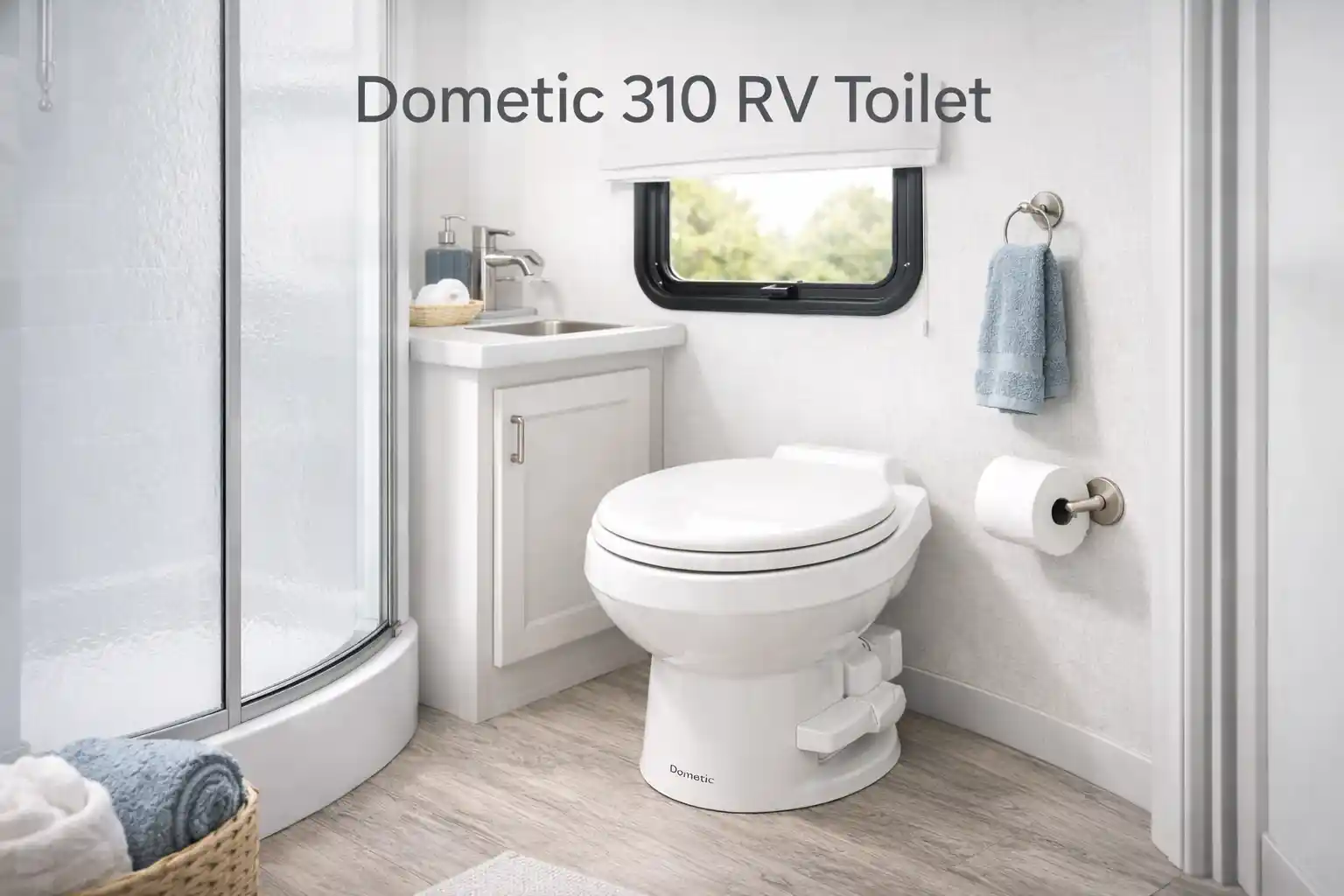
TL;DR: The Dometic 310 is one of the best compact ceramic RV toilet upgrades thanks to its 10-inch rough-in, residential-height seat, and even PowerFlush performance. The main downside is a widely reported bowl-to-base leak issue, and the flush ball is not replaceable. If you need a round-bowl toilet for a tight bathroom, it’s a strong buy, but measure carefully and buy with the warranty in mind.
Dometic 310 at a Glance
| Best for | RV owners who need a compact 10-inch rough-in ceramic toilet |
| Biggest strengths | Ceramic bowl, 18-inch seat height, even 360° flush |
| Main drawbacks | Bowl-to-base leak complaints, non-replaceable flush ball |
| Better alternative if you have room | Dometic 320 |
If your RV came with a stock plastic toilet that wobbles when you sit down and smells like it’s plotting against you, the Dometic 310 RV toilet shows up in almost every upgrade conversation. Over 1,200 Amazon reviews. Constant mentions on Forest River Forums and iRV2. Hard to ignore.
But here’s what most reviews skip: the 310 has a widely reported owner complaint at the bowl-to-base junction, and the flush ball is a dead-end part when it fails. That doesn’t mean you shouldn’t buy it. It means you should buy it with your eyes open.
For most RVers with a 10-inch rough-in, the Dometic 310 is still one of the best ceramic upgrade options available, but it’s not a blind buy.
This review pulls from real owner accounts across major RV forums, the official Dometic 310 instruction manual, and product data from retailers who’ve fielded thousands of buyer questions. No fluff, no spec sheet copy-paste.
If you’re weighing the 310 against the 320, check the full Dometic 320 review first. This post covers the 310 on its own terms.
What Is the Dometic 310 RV Toilet?
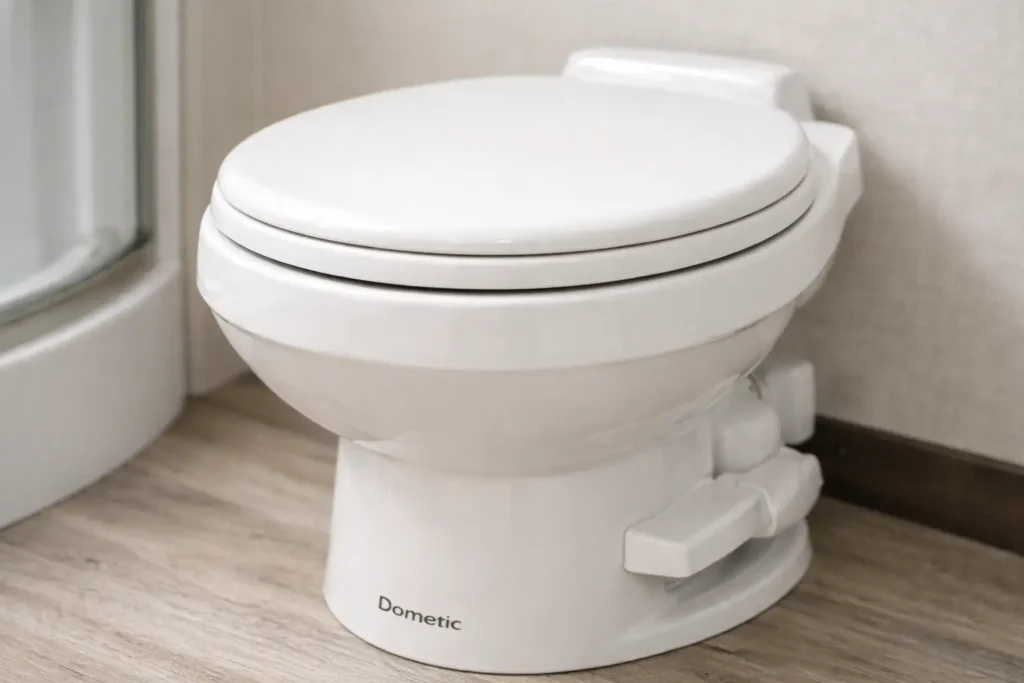
The Dometic 310 is a gravity-flush RV toilet with a full ceramic round bowl, a polypropylene base, and a foot pedal that handles both adding water and flushing. It sits in the middle of Dometic’s 300 Series lineup: above the all-plastic 300, and below the elongated ceramic 320.
It’s designed for anyone replacing a factory-installed plastic toilet who wants a ceramic bowl without committing to the extra footprint of the 320. The 10-inch rough-in is the key advantage over its bigger sibling. A lot of RV bathrooms simply don’t have room for the 320’s 11-inch requirement. The 310 fits where the 320 doesn’t.
There are two main variants:
- Dometic 310 (Standard): 18-inch seat height, the everyday choice for most rigs
- Dometic 311 (Low Profile): 13.5-inch seat height, built for compact wet baths and vintage trailers
Both share the same PowerFlush system and ceramic bowl construction. The only difference is height. If you have a small bathroom with limited clearance above the toilet, the 311 is worth a look.
The 310 is a solid fit for part-time campers, weekend warriors, and full-timers who need a compact footprint. If you have the bathroom real estate, the 320 is more comfortable. But for tight spaces, the 310 is the right call.
Dometic 310 Specs: The Numbers That Actually Matter
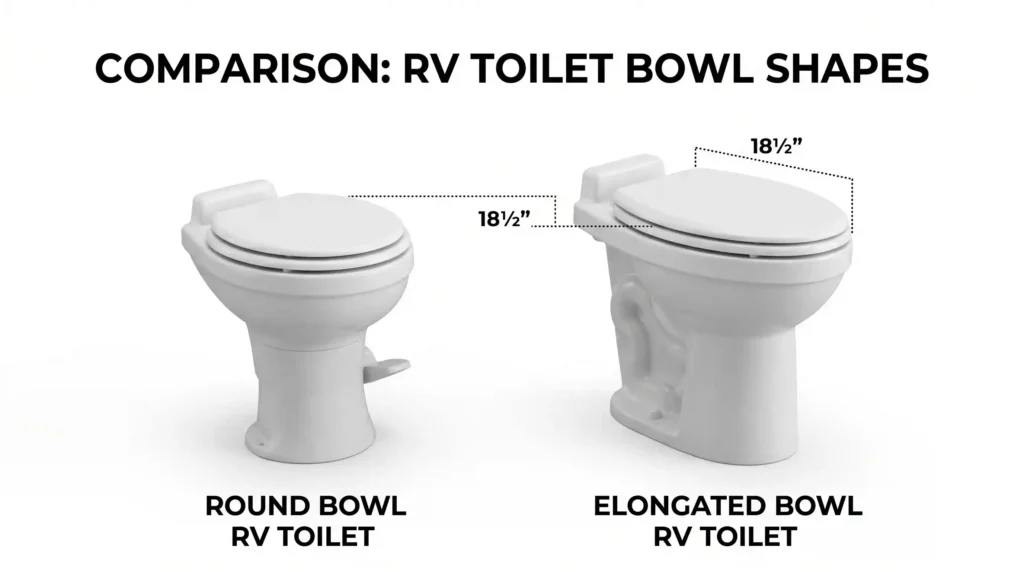
Before getting into what owners say, here are the specs that matter for buying and fitting decisions.
Per Camping World’s product data and the official Dometic 310 manual:
| Spec | 310 (Standard) | 311 (Low Profile) |
|---|---|---|
| Overall dimensions | 19″D x 20″H x 15″W | 19″D x 14.25″H x 14.875″W |
| Seat height | 18 inches | 13.5 inches |
| Rough-in required | 10 inches | 10 inches |
| Bowl shape | Round | Round |
| Bowl material | Ceramic | Ceramic |
| Base material | Polypropylene plastic | Polypropylene plastic |
| Seat | Slow-close enameled wood | Slow-close enameled wood |
| Water per flush | 1 pint (0.13 gallons) | 1 pint (0.13 gallons) |
| Flush type | Gravity, foot pedal | Gravity, foot pedal |
| Colors | White, Bone | White, Bone |
| Warranty | 2 years full, 10 years ceramic bowl | 2 years full, 10 years ceramic bowl |
A few things to pay attention to here. The 10-inch rough-in is measured from the center of the floor flange to the back wall. That’s the number that decides whether the 310 fits your rig. The 300 series all-plastic toilet uses an 8.5-inch rough-in, according to eTrailer’s rough-in guide, so upgrading from a 300 means you need at least 1.5 extra inches of clearance behind the toilet.
Measure before you order. It’s the most common reason people return this toilet.
If your RV has the required 10-inch rough-in, this is the point where the Dometic 310 starts making sense as a practical upgrade. Check the current price and available versions before reading the owner complaints below.
Does the Dometic 310’s PowerFlush Actually Clean the Whole Bowl?
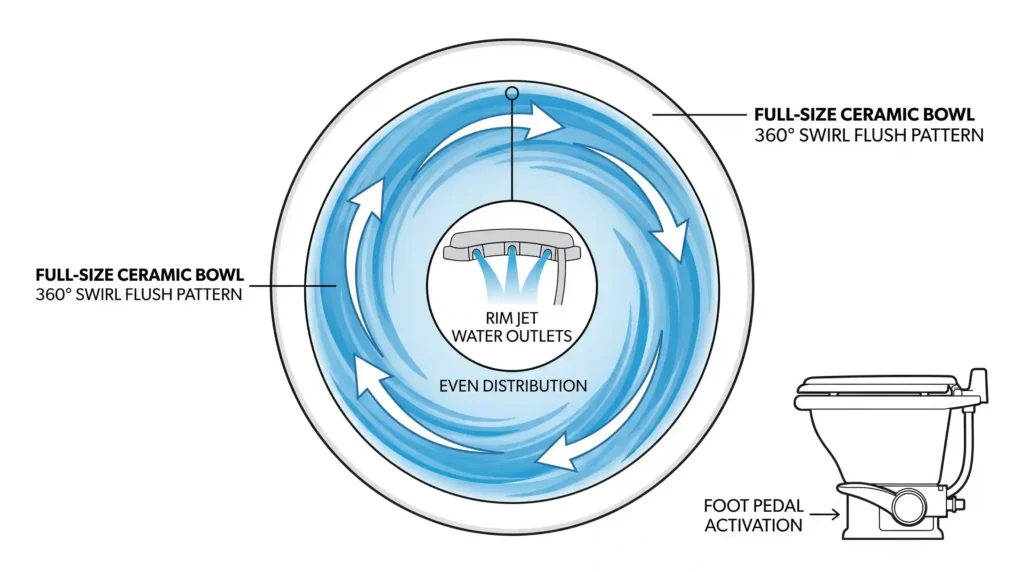
The Dometic 310’s PowerFlush system covers the bowl more evenly than the 320 does. The 310 uses side jets that push water around the full circumference of the round bowl in a 360-degree swirl pattern. At 40 to 55 PSI of water pressure, it clears the bowl cleanly for most uses. Performance drops noticeably at lower pressure, particularly when running on the internal water pump at a boondocking site.
Dometic markets the 310 as having a “best-in-class gravity flush” with “powerful swirl-jet cleaning action.” That’s not entirely wrong. The round bowl shape actually works in the 310’s favor here. The side jets hit the walls evenly, and the water swirls to the center before draining. It’s not dramatic, but it gets the job done without leaving dry patches at the front.
Compare that to the 320, which jets from under the rim and delivers stronger coverage at the back than the front. Owners who care about consistent flush coverage often prefer the 310 over the 320 for this reason alone.
A few tips that make a real difference:
- Add water to the bowl before flushing solids. The manual recommends this, and it prevents waste from sticking.
- Keep water pressure at or above 40 PSI at the connection. Below that, the flush weakens.
- If you’re on the internal pump regularly, add the hand sprayer version to your order. It’s worth the extra few dollars.
- Don’t leave the black tank valve open at hookups. That habit creates RV toilet smell after dumping faster than anything else.
The PowerFlush is good. It’s not magic, but it’s a genuine improvement over the rinse patterns on plastic RV toilets.
Bottom line: if flush coverage matters more to you than bowl shape, the Dometic 310 may actually be the better pick over the 320.
What Do Real RV Owners Actually Say About the Dometic 310?
The Dometic 310 has a 4.6 out of 5 rating on Amazon from over 1,200 verified buyers. Most owners describe it as a significant upgrade from the Dometic 300 and plastic Thetford units. The praise is consistent: ceramic bowl, residential seat height, easy installation, and an even flush. The complaints cluster around one specific issue, which gets its own section below.
Here’s the honest split from forum threads and verified reviews:
What owners consistently praise:
- The ceramic bowl cleans up far easier than plastic. No staining, no discoloration over time.
- The 18-inch seat height is the right call for adults. Several full-timers said they should have upgraded years earlier.
- Most installs take 20 to 30 minutes. The 2-bolt design fits standard RV floor flanges, and the toilet ships with the gasket and hardware.
- The slow-close seat is a small thing that makes a real difference, especially at 2 a.m.
What owners consistently complain about:
- The bowl-to-base junction leaks. This comes up across iRV2, Forest River Forums, Heartland Owners, and Amazon reviews. It’s not every toilet, but it’s common enough to have its own dedicated thread on multiple forums.
- The flush ball cannot be replaced separately. If it cracks or fails, you need a new toilet. More on this below.
- The plastic seat can slip slightly on the ceramic bowl, especially over time.
One full-timer on Amazon wrote that the 310 is “a huge upgrade from the creaky and leaky plastic Dometic 300” and called the ceramic bowl and seat height the standout features. On the other end, an RV Forum thread from an owner who had the bowl-to-base leak replaced under warranty twice said Dometic stood behind the product both times, but expressed skepticism about the design.
Owner consensus in one sentence: most buyers love the ceramic bowl, seat height, and easy install, but the bowl-to-base leak is the single issue you need to understand before buying.
If you want the elongated bowl experience and have the space, the full Dometic 320 comparison covers that model in full detail with its own set of tradeoffs.
The Bowl-to-Base Leak: The Dometic 310’s Most Talked-About Problem
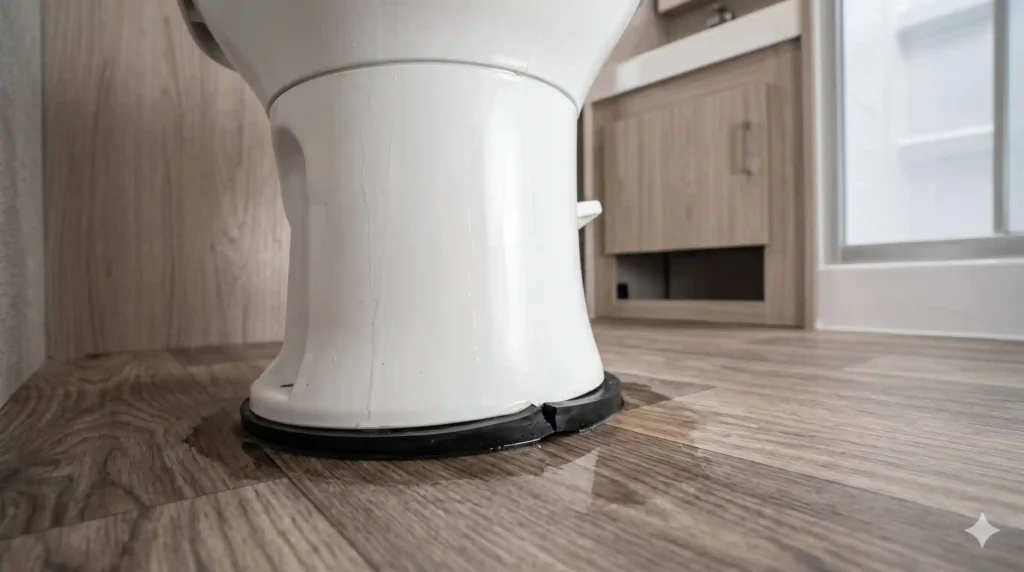
One of the most commonly reported Dometic 310 issues is a slow leak at the seam where the ceramic bowl meets the plastic base. The joint is held together by screws, plastic anchors, and a rubber gasket. When that gasket fails or the screws work loose over time, waste water seeps into the cavities in the plastic base and eventually reaches the floor. The official Dometic manual says clearly: do not separate the ceramic bowl from the plastic base. Unlike other Dometic models with serviceable seals, the 310’s bowl-to-base connection is not designed to be repaired.
Multiple owners on the Heartland Owners Forum and iRV2 have documented what happens when they disassemble the toilet anyway: corroded screws, disintegrated plastic anchors, and cavities full of waste water that had been accumulating for months. One owner described finding screws so rusted they couldn’t be fully removed, with the plastic anchors simply crumbling when force was applied.
Dometic has replaced affected toilets under warranty in many documented cases. Some owners report their replacement units have worked fine. Others have had the same leak return on a second toilet. The company’s line, per forum accounts, is that some units came off the line without the joint being fully tightened at the factory.
Here’s what to watch for:
- Water or staining around the base of the toilet that can’t be traced to the floor flange seal or the water valve
- A faint sewage smell coming from inside the base, not from the bowl or tank
- Slight rocking when sitting, which can accelerate the gasket failure
If your 310 is still under the 2-year warranty and you see any of this, call Dometic. They’ve covered replacements in many cases. If you’re out of warranty, the repair involves separating the bowl and base, cleaning the gasket surface, and resealing. A few owners have done it successfully. Many others found the hardware had corroded to the point where replacement was easier.
To be fair, not every Dometic 310 develops this issue, but it shows up often enough in owner discussions that it should be part of any honest buying decision.
For any moisture at the base of your Dometic toilet, the guide on how to diagnose a Dometic toilet leak at the base walks through how to confirm whether the leak is coming from the floor seal, the water valve, or the bowl-to-base junction before you start pulling things apart.
Dometic 310 or 320: The Quick Answer
The Dometic 310 is usually the better fit for compact RV bathrooms. Per Dometic’s published specifications, it needs a 10-inch rough-in and measures 19 inches deep overall. The Dometic 320 needs an 11-inch rough-in and measures 22 inches deep, but its elongated bowl may feel more familiar to users who prefer a residential-style toilet.
Both models use a similar foot-pedal gravity-flush platform, two-bolt mount, and several shared service parts. However, their bowl shape, rinse behavior, and space requirements differ. Before ordering, read the complete Dometic 310 vs 320 comparison for the full measurement checklist, flush comparison, and replacement-compatibility guidance.
Keeping Your Dometic 310 Running (And Knowing When to Replace It)
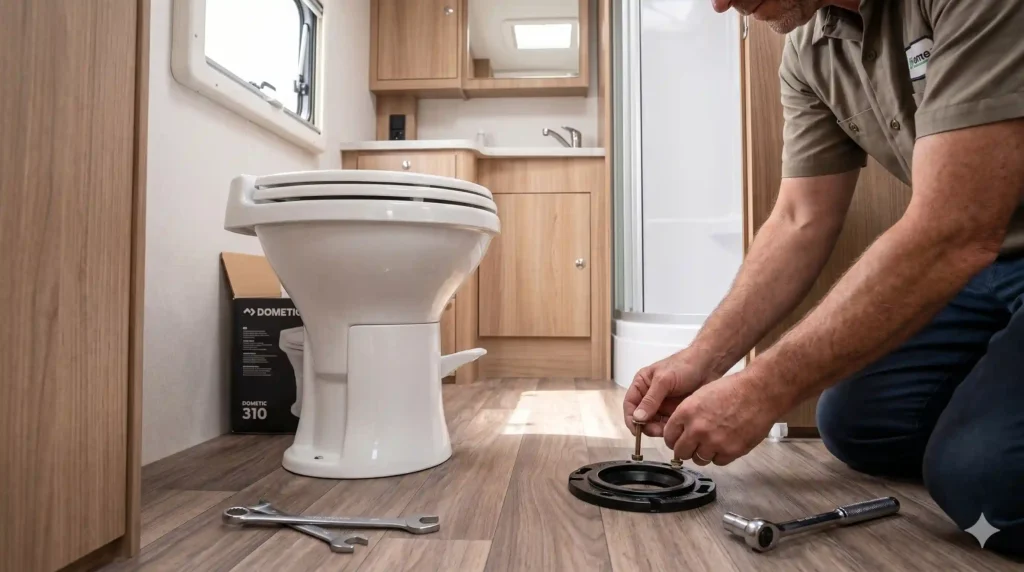
The 310 doesn’t need much attention day-to-day, but a few things will either extend its life or quietly cause problems you don’t notice until it’s too late.
Cleaning: Only use non-abrasive bathroom cleaners. The official 310 manual specifically warns against automotive-type products and caustic drain cleaners. Bleach-based cleaners damage the rubber seals inside the toilet over time. A mild toilet bowl cleaner or Dometic’s own bowl cleaner is fine.
Flush ball seal: This is the rubber gasket that holds water in the bowl between flushes. When it starts to fail, the bowl won’t hold water and will drain slowly on its own. You can often extend the seal’s life by cleaning it and applying a thin coat of petroleum jelly around the full perimeter. If cleaning and lubricating doesn’t help, the seal is replaceable on the 310. If your bowl is losing water, check the Dometic toilet not holding water guide before pulling the toilet apart.
Flush ball itself: This is the critical limitation. According to eTrailer’s product Q&A, the flush ball on the Dometic 310 is not sold as a standalone replacement part. If the ball cracks or gets damaged, you need a new toilet. This is one area where the 310 comes up short compared to the Dometic 510 (Sealand), which has a replaceable flush ball. It’s not a reason to avoid the 310, but it’s worth knowing.
Water valve: The water valve is a serviceable part and a common maintenance item on Dometic toilets. A failing valve will cause the bowl to fill on its own or drip constantly. Instructions for how to replace the water valve are covered separately.
Freeze damage: The 310’s water valve has a freeze indicator window. White stress marks inside that window mean freeze damage has already happened. At that point, the valve needs replacement, and the damage typically voids the warranty. Winterize your toilet correctly every season if you store your rig in a cold climate.
What not to flush: Only waste and RV-safe toilet paper go into an RV toilet. Paper towels, wipes labeled “flushable,” and regular home toilet paper can build up in the line and cause pyramid plugs in the black tank.
Who Should Buy the Dometic 310 (And Who Should Skip It)
Buy it if:
- You need a 10-inch rough-in toilet and the 320 won’t fit your bathroom
- You want a ceramic bowl without moving up to the larger, more expensive 320
- You prefer a round bowl for a tight RV bathroom with even flush coverage
- You’re upgrading from a cheap plastic stock toilet and want a major feel improvement
Skip it if:
- You want the most repairable toilet possible for long-term full-timing
- You strongly prefer an elongated residential-style bowl
- You have room for the Dometic 320 and comfort matters more than compact size
- You’d rather pay more for a model with a replaceable flush ball and better long-term serviceability
Best Alternatives to the Dometic 310
If the 310 isn’t the right fit after reading the above, here are the most practical alternatives:
- Dometic 320: Best if you want an elongated bowl and have 11 inches of rough-in. About $50 more.
- Dometic 311: Best for low-profile installations where the 310’s 18-inch height doesn’t fit. Same bowl and flush, just shorter.
- Dometic 510 (Sealand): Best if long-term serviceability matters. It has a replaceable flush ball, which the 310 does not.
Conclusion
The Dometic 310 is a genuine upgrade for most RVers coming off a plastic stock toilet. The ceramic bowl, the 18-inch seat height, and the even PowerFlush make it one of the most practical toilet upgrades on the market for tight-space RV bathrooms. It’s not without real flaws. The bowl-to-base junction leak is widely reported. The flush ball limitation means if that part fails, you’re buying a new toilet.
Three things to know before ordering:
- Measure your rough-in. You need 10 inches from the floor flange center to the back wall.
- The bowl-to-base seal is a widely reported weak point. Buy within the warranty window and know who to call if it develops a leak.
- If the flush ball can’t be replaced, factor that into your long-term cost math.
Final verdict: the Dometic 310 is one of the best compact ceramic RV toilets you can buy, but its long-term reputation is held back by the bowl-to-base leak issue and the non-replaceable flush ball. If your RV needs a 10-inch rough-in and you want a major upgrade from a plastic stock toilet, it’s still a strong option. Just buy it informed, not blindly.
Check the current price and see if it fits your budget. And if you run into other toilet or plumbing issues after install, the RV Flush Guide complete repair guide has you covered.
Frequently Asked Questions
Is the Dometic 310 worth buying in 2026?
Yes, for most RVers with a 10-inch rough-in. It offers a ceramic bowl, an 18-inch residential seat height, and a better overall feel than most stock plastic toilets. The main downside is the widely reported bowl-to-base leak issue, so buying with warranty coverage in mind matters. Verified buyers rate it 4.6 out of 5 across more than 1,200 reviews.
Can you replace the flush ball on a Dometic 310?
No. According to eTrailer’s product Q&A, Dometic does not sell the flush ball as a standalone replacement part for the 310. The flush ball seal is replaceable, but the ball itself is not. If the ball is cracked or damaged, you need a new toilet.
What’s the difference between the Dometic 310 and Dometic 311?
The Dometic 311 is the low-profile version of the 310. It has a 13.5-inch seat height instead of 18 inches, and it uses the same ceramic bowl, PowerFlush system, and 10-inch rough-in. It’s built for compact wet baths and vintage trailers with limited vertical clearance above the toilet. If vertical clearance or overall bathroom size is your main concern, compare the 311 with the other compact RV toilet options before ordering.
How do I know if my Dometic 310 is leaking at the bowl-to-base junction?
The early sign is moisture or staining on the floor around the base that can’t be traced to the floor flange or the water valve. A faint sewage smell inside the base, not from the bowl or tank, is another indicator. If you see either, check the guide on how to diagnose a Dometic toilet leak at the base before pulling the toilet apart.
What water pressure does the Dometic 310 need to flush properly?
The 310 performs best at 40 to 55 PSI at the water connection, per the official Dometic 310 manual. Below 40 PSI, the PowerFlush weakens noticeably. A pressure regulator set to 50 PSI keeps things consistent at campgrounds with variable city water pressure.