TL;DR: Dometic RV toilet ghost flushing means water is trickling into the bowl without you flushing. The most common cause is a worn water inlet valve (part #385311641). For most owners, replacing the valve fixes it in under 20 minutes. This guide covers all 4 causes, how to tell if it’s actually a problem, a free fix to try first, and step-by-step valve replacement for Dometic 300, 310, and 320 series toilets.
You didn’t flush. But water is running.
Maybe you noticed it overnight when the water pump kept kicking on. Maybe you came back to a bowl full of clean water. Either way, something is wrong with your Dometic RV toilet.
This is ghost flushing. It sounds mysterious. It isn’t. In most cases it comes down to one part and 20 minutes of work.
This guide covers why Dometic RV toilet ghost flushing happens, how to figure out which cause you have, and how to fix it yourself without a service appointment.
What Is Dometic RV Toilet Ghost Flushing?
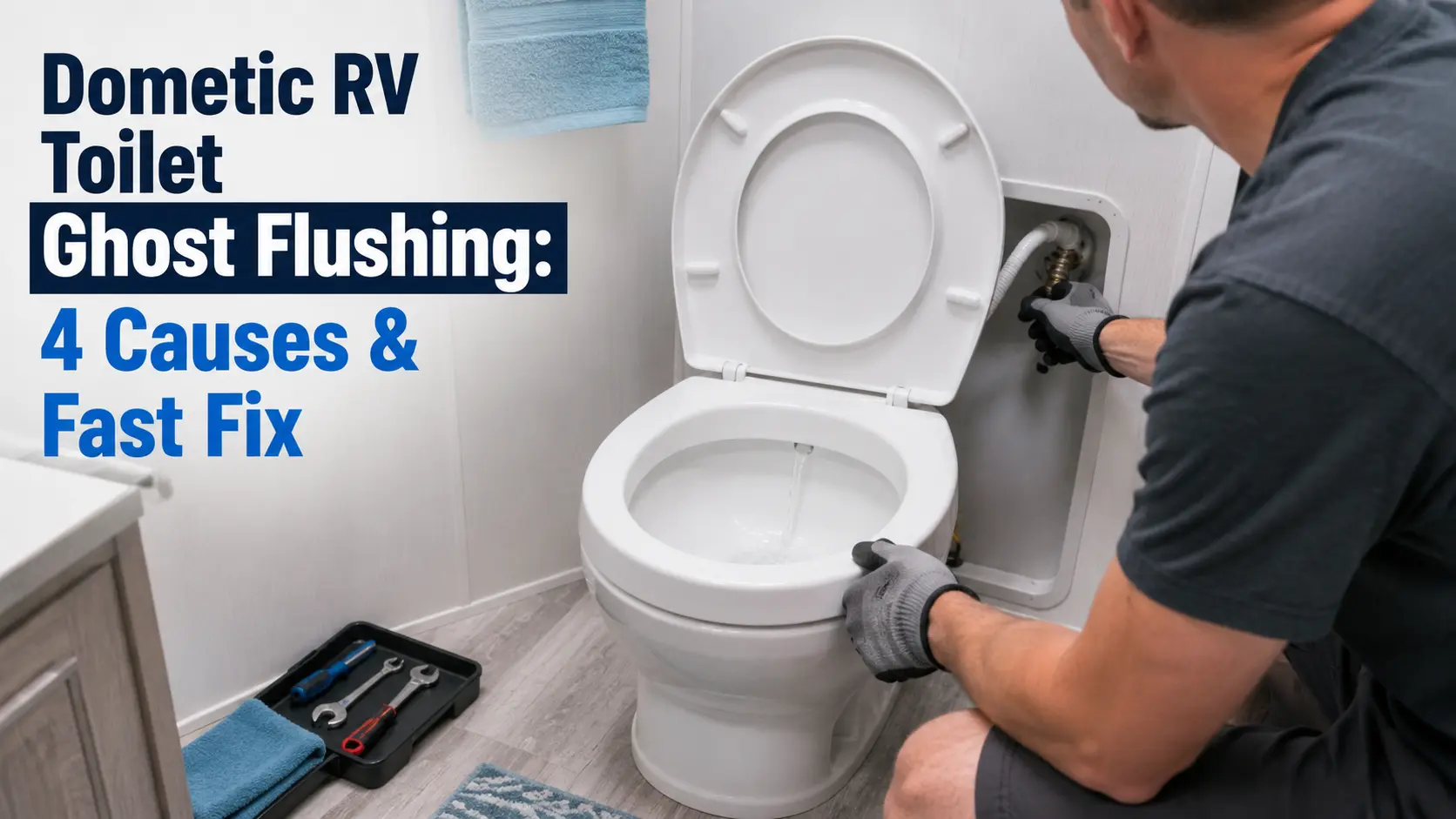
Ghost flushing is when water enters the toilet bowl without you pressing the foot pedal. It can be a slow trickle that fills the bowl overnight, or a brief burst every few minutes that keeps triggering your water pump. On Dometic 300, 310, and 320 series toilets, the water inlet valve controls all water flow into the bowl. Ghost flushing happens when that valve fails to shut completely after a flush.
The consequences stack up fast. Your fresh water tank drains. Your pump runs constantly. In bad cases, the bowl overflows and you get water damage on the floor of your rig. This is not a problem to ignore until the next trip.
Is It Ghost Flushing or Normal Residual Trickle?
Before you order any parts, check this first.
Some Dometic ceramic bowl models (including certain 310, 311, 320, and 321 series toilets) may trickle a small amount of water into the bowl for a short time after flushing. This happens because water remains in the integrated rim and drains into the bowl slowly. On these models, a brief trickle right after flushing can be normal.
How to tell the difference:
- Short trickle that stops within 20 minutes after a flush: likely normal residual rim water. Monitor it. No immediate repair needed.
- Trickle that continues for 30 minutes or longer: not normal. Treat it as ghost flushing.
- Bowl fills up significantly without anyone flushing: not normal.
- Water pump cycles on when nobody is using water: not normal.
- Happens in the middle of the night, long after the last flush: not normal.
If you’re seeing any of the last four, keep reading. If you’re only seeing a brief post-flush drip on a ceramic bowl model, give it a few days of observation before ordering any parts.
What Causes Ghost Flushing on a Dometic Toilet?
The most common cause is a worn or stuck water inlet valve. When the valve’s internal seals degrade, it can’t hold a full seal and water keeps trickling into the bowl. This can happen from normal wear, mineral buildup, freeze damage, or a stuck foot pedal. Most cases trace back to one of four specific issues.
Here are the four causes in order of how often they show up:
1. Worn or failed water inlet valve
This is the cause in the large majority of cases. The valve has internal seals that wear out over time. According to etrailer.com, Dometic’s own owner manual states that continuous water flow into the bowl after flushing means the water valve is damaged or worn and should be replaced.
2. Mineral and debris buildup inside the valve
Hard water deposits calcium on valve components over years of use. The buildup stops the valve from closing all the way. A JustAnswer RV mechanic with shop experience notes that calcium from hard water is one of the most common causes they see. White vinegar can dissolve mild buildup before a full replacement is needed.
3. Freeze damage from incomplete winterization
Water left inside the valve during freezing temperatures expands and cracks the valve body. The crack is usually invisible from outside. But from that point on, the valve leaks constantly. If you see white stress marks on the plastic housing, freeze damage is likely the cause.
4. Worn foot pedal spring
The foot pedal has a return spring that snaps it back to its closed position after each flush. If the spring weakens, the pedal stays slightly depressed. That holds the valve cam just enough open to let water in. As ecocampor.com explains, a sticky or partially-closing pedal prevents the flush valve from turning off completely.
How to Tell Which Problem You Have
Run this check before ordering any parts. It takes two minutes.
Step 1: Turn off your water supply.
Shut off the water pump or disconnect from city water. Watch the bowl for a few minutes. If the ghost flushing stops, the problem is the valve or the pedal. If the bowl level still changes with the water supply off, look closer before blaming the inlet valve. It may be residual rim water, water already sitting in the line, or a separate drainage or black tank issue rather than true ghost flushing.
Step 2: Check the foot pedal return.
With water off, press the foot pedal fully and release it. Does it snap back firmly to its original position? Or does it return slowly, or stop just short of fully closed? A slow or incomplete return points to a worn pedal spring.
If the pedal snaps back firmly, the spring is fine. The valve itself is the problem.
Note: Ghost flushing (bowl fills by itself) is a different problem from bowl not holding water (water disappears from the bowl). If your bowl is losing water rather than gaining it, the flush ball seal or bowl seal is the likely cause, not the water inlet valve. That is a separate repair.
Quick Diagnosis Table
| Symptom | Cause | Solution |
|---|---|---|
Brief trickle stops within 20 min | Normal residual rim water | Monitor, no repair needed |
Trickle continues 30+ minutes | Worn or stuck water valve | Try snap-shut/vinegar, then replace |
Bowl fills up overnight | Valve not sealing | Shut off water, replace valve |
Water pump cycles with no use | Toilet valve leak possible | Check bowl, inspect valve |
Problem started after freezing | Freeze-damaged valve | Replace valve, improve winterization |
Pedal returns slowly or not fully | Sticky or worn pedal mechanism | Check model-specific pedal parts |
Bowl loses water instead of filling | Flush ball seal or bowl seal issue | Inspect and replace seal |
Try the Free Fix First: The Snap-Shut Method
Before buying any parts, try this. It works more often than people expect.
Do 3–5 firm, deliberate flushes. Each time, let the foot pedal snap hard back to closed position. The force can break a stuck valve loose. Life on Route calls this the “snap shut method” and recommends trying it before ordering anything. If the valve is just stuck from debris or a minor deposit, this unsticks it.
If that doesn’t stop the ghost flushing, try white vinegar. Pour 1–2 cups into the toilet bowl. Press the pedal slowly to let vinegar reach the valve area without fully opening the flush ball. Let it sit for an hour. The acid dissolves calcium deposits that may be holding the valve open. Then do a few firm flushes to clear it out.
If ghost flushing continues after both of these, the valve needs replacement. The snap-shut method and vinegar flush only work when debris is the cause. A worn or freeze-damaged valve has to be swapped out.
Safety Checklist Before You Start Repairs
Work through this before touching anything:
- Turn off the water pump or disconnect from city water. Do not troubleshoot an active ghost flush while still connected to a pressurized water supply.
- Flush once after shutting off water to release any remaining pressure in the line.
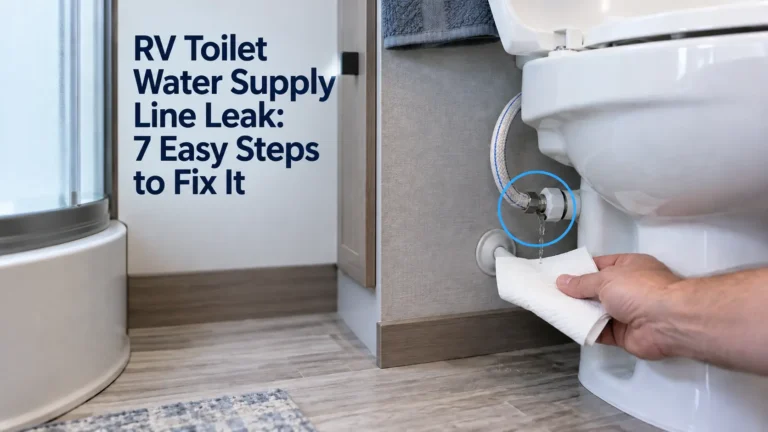
- Keep towels nearby. The supply line will drip when disconnected.
- If the bowl is filling quickly, shut off the water supply immediately before doing anything else.
- Do not leave the RV connected to city water overnight if you have confirmed ghost flushing. An unattended failed valve can overflow the bowl.
How to Replace the Dometic Water Inlet Valve
Part number: #385311641
Fits: Dometic 300, 301, 310, 311, 320, 321 series pedal-flush toilets. Also fits 400, 410, and 420 series. Does not fit 210 or 510 series.
Cost: Often $15–25 for aftermarket kits on Amazon. Genuine OEM Dometic kits may cost around $40–60 depending on the retailer. Prices vary, so check before ordering.
OEM vs aftermarket: Both are available for this part. Aftermarket kits are cheaper and often work well. Fit and long-term sealing quality can vary by brand. Before ordering, confirm the kit lists your exact Dometic model number in the compatibility notes. Matching the part number to your specific toilet model is more reliable than going by price alone.
Time: 15–20 minutes
Tools needed: Phillips screwdriver, pliers
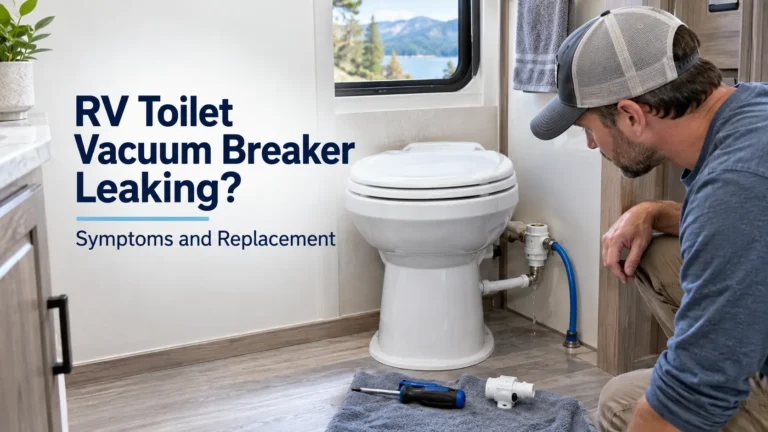
Step 1: Turn off water and clear the bowl.
Shut off the water pump or city water. Press the foot pedal to flush out any water still in the supply line. Mop up any residual water in the bowl.
Step 2: Disconnect the supply line from the valve.
The water supply line connects to the inlet valve at the back of the toilet. Use pliers to loosen the hose clamp. Pull the line off. Keep a small rag nearby for drips.
Step 3: Remove the two mounting screws.
The valve attaches to the toilet body with two Phillips screws. Remove both. The valve pulls straight out.
Step 4: Install the new valve.
Slide the new valve into position. Replace the screws and tighten snugly. Reattach the supply line. Use the new hose clamp included in the kit. The kit also includes mesh filters for the inlet. Install those too. They catch debris before it reaches the valve and prevent the same problem from happening again.
Step 5: Restore water and test.
Turn your water supply back on. Watch the bowl for five minutes without flushing. No water should enter. Then do a few test flushes and confirm the water stops as soon as the pedal is released.
If you notice water around the base of the toilet during testing, that is a separate issue. See the guide on Dometic toilet leaking at the base for how to trace and fix base leaks.
What If the Ghost Flushing Continues After a New Valve?
Check the foot pedal.
If you replaced the valve and the problem continues, the pedal mechanism is the next place to look. According to prked.com, a weak or broken pedal spring means the pedal doesn’t fully return to its closed position. The cam stays in slight contact with the valve. Water trickles in.
You can confirm this by watching the pedal closely after each flush. If it returns slowly, or stops just short of the fully upright position, the spring has lost tension.
Before attempting a pedal repair, do these steps first:
- Do not force the pedal assembly apart.
- Look up the parts diagram for your exact Dometic model number on the Dometic parts site. Pedal assemblies vary between models.
- Some pedal assemblies are straightforward to service. Others are less so. Check whether the manufacturer instructions for your specific model allow the repair before disassembling anything.
- In some cases, the right fix is a model-specific pedal kit rather than trying to replace just the spring.
- If the pedal is cracked, worn through, or otherwise damaged beyond the spring, a full toilet replacement may be more practical than sourcing a hard-to-find assembly.
For a full breakdown of Dometic toilet problems and how to work through them systematically, the RV toilet repair guide covers every common symptom in one place.
When Should You Replace the Whole Toilet Instead?
The water valve fix works in most ghost flushing cases. But sometimes the toilet itself is the better candidate for replacement.
Consider replacing the whole toilet if:
- The plastic base is cracked or shows structural damage.
- The pedal assembly is damaged and not serviceable on your model.
- You have multiple leaks at the same time (base, valve, and bowl seal).
- The toilet is old enough that replacement parts are hard to find.
- You’ve replaced the valve and the pedal and ghost flushing continues.
- Repair costs are adding up close to the cost of a new toilet.
If the toilet is otherwise solid and this is the first issue you’ve had, start with the valve replacement. It’s the cheapest first step by a significant margin, and it resolves the problem in most cases.
How to Prevent Ghost Flushing Going Forward
Three habits stop all four causes before they develop.
Winterize the toilet properly every time. When temperatures drop toward freezing, run RV antifreeze through the toilet system or blow the water lines out with compressed air. One freeze cycle on an improperly winterized valve is enough to crack it. This is the most common reason ghost flushing shows up on toilets that are only a few years old.
Flush the valve with white vinegar once a year. If you camp in hard water areas, do this every spring before the season starts. It dissolves mineral deposits before they build up enough to hold the valve open.
Apply dry silicone spray to the pedal mechanism annually. This keeps the pedal moving smoothly and reduces wear on the spring. Do not use petroleum-based lubricants. They degrade rubber components in the valve and seals over time.
If you’re dealing with odors after fixing the ghost flush, a dried-out bowl seal is often the next thing to check. See the guide on rv toilet smell after dumping for how to diagnose and fix tank and seal odors.
The Short Version
Ghost flushing on a Dometic RV toilet is almost always a water inlet valve problem. Replacing the valve is the right first move in most cases.
Try the snap-shut method and the white vinegar flush first. If neither works, replace part #385311641. That fixes it in the majority of cases. If ghost flushing continues after a new valve, check the pedal mechanism using your model’s parts diagram before disassembling anything.
Catch it early. A constantly running pump and overflowing bowl can do real damage to an RV floor.
Get Dometic Water Inlet Valve #385311641 on Amazon
Frequently Asked Questions
Is ghost flushing on a Dometic RV toilet normal?
True ghost flushing is not normal. However, on some Dometic ceramic bowl models, a small trickle right after flushing can be normal if it stops within about 20 minutes. If water keeps entering the bowl after 30 minutes, fills the bowl overnight, or makes the pump cycle, the water inlet valve should be inspected. In many cases, it needs to be replaced.
How long can a Dometic RV toilet trickle after flushing?
On some ceramic bowls, Dometic models (310, 311, 320, 321), a brief trickle right after flushing can be normal. Water remaining in the integrated rim drains into the bowl slowly. If the trickle stops within about 20 minutes, it is likely residual water, not a valve failure. If it continues past 30 minutes or happens when nobody has flushed, treat it as ghost flushing and inspect the valve.
Is ghost flushing the same as a bowl seal leak?
No. Ghost flushing means water is entering the bowl on its own. A bowl seal or flush ball seal problem usually causes the opposite: the bowl loses water instead of filling. If your bowl keeps going dry between uses, the flush ball seal is the likely cause. If the bowl keeps filling up, the water inlet valve is the likely cause. These are different parts and different repairs.
Should I buy OEM or aftermarket Dometic water valve 385311641?
Both options work for most owners. Aftermarket kits are often $15–25 and are widely available. Genuine OEM Dometic kits tend to cost more, around $40–60 depending on retailer, but are built to the original spec. Before buying either, confirm the kit lists your exact Dometic model in the compatibility notes. A mismatched part wastes time and money regardless of brand.
Can I keep using the toilet while it’s ghost flushing?
Short term, yes. But ghost flushing drains your fresh water tank, runs your water pump continuously, and can overflow the bowl if the valve fails. It can also trigger toilet smells when flushed if the bowl level gets disrupted. Fix it before your next trip.
What Dometic models does part #385311641 fit?
Part #385311641 fits Dometic 300, 301, 310, 311, 320, and 321 series pedal-flush toilets. It also fits the 400, 401, 410, 411, 420, and 421 series. It does not fit the 210 or 510 series.
Can ghost flushing cause water damage in my RV?
Yes. If the valve fails completely, the bowl overflows onto the floor. Water damage to an RV subfloor is expensive and often leads to mold. If your water pump is cycling without explanation, check the toilet bowl first. That is one of the most common causes people miss.
How do I know if freeze damage caused the ghost flushing?
Look for white stress marks or hairline cracks on the valve body. If you know the toilet was not properly winterized before a hard freeze, freeze damage is the likely cause. According to etrailer.com, even a small amount of water left inside the valve is enough to crack it when temperatures drop below freezing. Replace the valve and winterize properly going forward.