TL;DR
- Occasional dripping from a relief valve during heating is not automatically a fault. Dometic and Suburban say thermal expansion in a closed RV water system can cause it. Restore the air pocket only with the heater off and the water cool.
- RV water heater pressure relief valve replacement is needed if a qualified technician confirms the valve is faulty. Dometic says to use a compliant combination pressure-and-temperature (P/T) valve with a set pressure no higher than 150 psi, rather than try to repair the valve. Neither manual gives do-it-yourself replacement steps, so plan on a dealer or qualified technician.
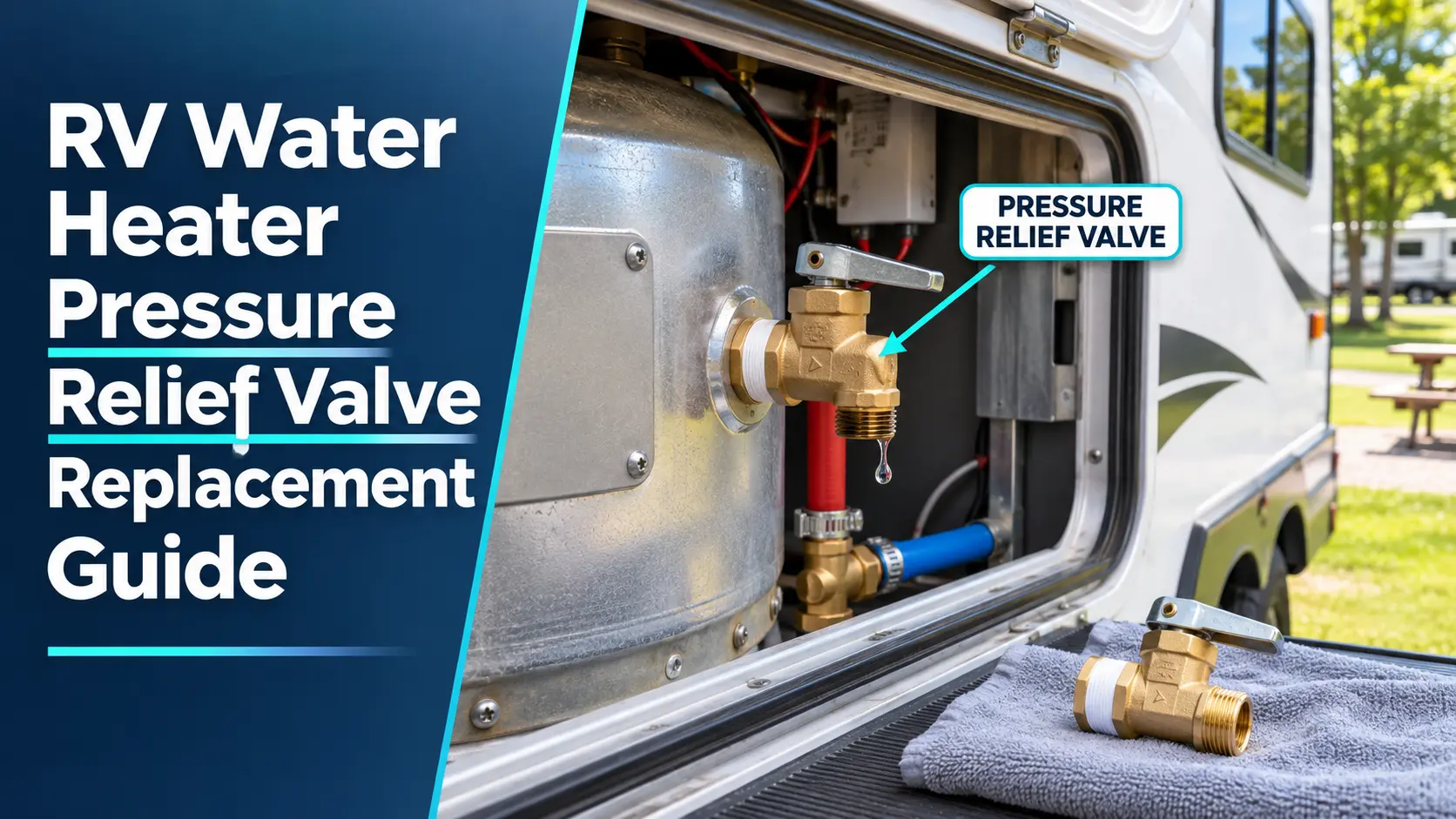
A drip from the pipe beside the heater makes many owners assume the valve has failed. This guide covers RV water heater pressure relief valve replacement: how to tell a normal expansion drip from a bad valve, what a replacement valve has to meet, and who should do the swap. One thing up front: the manufacturer manuals do not publish replacement steps, and this page will not invent them. If the valve drips occasionally during heating, see the air-pocket procedure below. As a general safety precaution, if water pours out continuously, steam escapes, or the heater appears to overheat, switch off the heater, keep clear of the outlet, and call a qualified technician.
The page is built on the WH-6GA to WH-16GEA manual from Dometic and the Suburban SW4D to SW16D manual. Other brands and models depend on their own manual. Keep scalding water and pressure in mind throughout, because the relief valve is a safety device and the water behind it can be hot enough to burn.
RV Water Heater Pressure Relief Valve Replacement: Is It Needed?
Occasional dripping while an RV water heater runs does not automatically mean the relief valve is faulty. Dometic’s manual says normal expansion of heated water in an RV’s closed water system can make the valve drip. Suburban’s manual says the same and describes it as normal. Dripping after the air pocket is restored does not prove the valve is faulty. A qualified technician should check for thermal expansion, excess pressure, or valve failure.
Here is why it happens. Suburban says its valve opens at 210°F or 150 psi. In a closed system, pressure builds as the water heats, and the valve opens and drips until the pressure drops. Dometic explains that the tank has an air gap at the top that cushions this expansion. Expanding water gradually absorbs that air, so the air pocket has to be restored.
| What you see | What the manuals say | What to do next |
|---|---|---|
| Drips only while heating | Normal expansion in a closed system (Dometic, Suburban) | Restore the air pocket |
| Drips again after restoring it | Dometic: repeat the steps. Suburban: repeat as needed | If weeping persists, ask a dealer about an expansion or accumulator tank (Suburban) |
| Valve found faulty | Dometic: the valve is not serviceable | Replace it |
| Corrosion on the valve | Dometic: water quality may shorten valve life, and corrosion is not covered by warranty | Have it inspected |
Dometic also notes that water quality may shorten valve life. Neither manual lists a failure rate or a replacement interval, so don’t expect a calendar date for when it should be swapped.
Safety
- Never plug or cap the valve to stop a drip. Dometic says not to put a valve, plug or reducing coupling on its outlet, and Suburban says never to plug it.
One more thing that gets confused with this: a tripped ECO is a different safety device from the relief valve. If your issue is a tripped ECO, see the reset button page instead.
How Do I Stop a Dripping Relief Valve Without Replacing It?
For an occasional drip, turn off the heater and water supply, let the tank cool, then follow the manufacturer’s air-pocket procedure. Dometic’s manual gives the full sequence and warns of scalding if the water is hot or the heater is on. Suburban’s manual describes the same idea. Repeat only as the manual allows.
Safety
- Water over 125°F can cause severe burns (Suburban). Dometic’s caution is that the heater must be off and the water cool before the valve is opened.
Before you start:
- The heater is off.
- The water supply (pump or city hookup) is off.
- The water in the tank is cool.
- You are standing clear of the valve outlet.
Dometic’s steps (section 6.4.2 of its manual):
- Let the water cool Wait, or run the hot water until it is cool.
- Turn off the main water supply Pump or hookup.
- Open the hot faucet nearest the heater This lets air in.
- Pull the valve handle straight out Let water flow until it stops.
- Let the valve snap shut Don’t hold it open.
- Close the faucet Close the hot water faucet nearest the heater.
- Turn the water supply back on Allow the tank to refill.
- Turn the heater on and test Watch for another discharge.
Dometic says to repeat steps 1 through 8 if the valve discharges again. Suburban’s version is similar: heater off, cold supply off, open a faucet, pull the handle until the water stops, release it so it snaps closed, close the faucet, and turn the cold supply back on. Refilling forms the air pocket. Dometic also says to operate the valve by hand at least once a year.
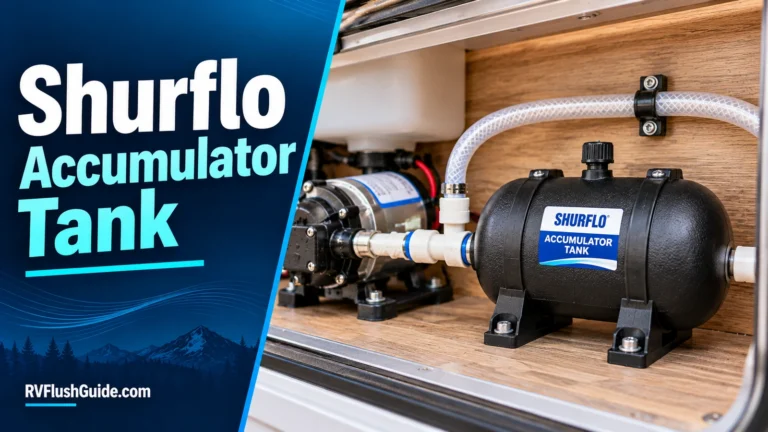
If the drip keeps coming back, both manufacturers point to a longer-term fix. Dometic describes a diaphragm-type expansion tank sized to accommodate approximately 15 oz of expanded water and precharged to the water supply pressure. It also lists a separate pressure relief valve set at 100 to 125 psi in the cold inlet line, with a drain line. Suburban says to use an expansion or accumulator tank, with the dealer’s help. Treat these as options to discuss with a dealer, not DIY steps.
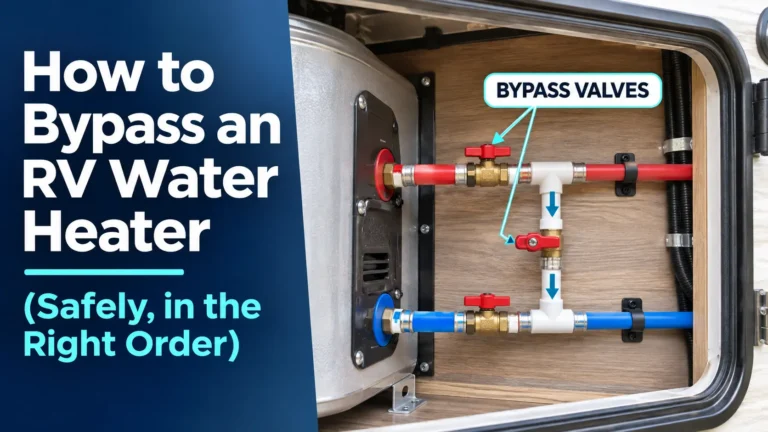
If you need to cool and empty the tank first, see draining the water heater. To isolate the heater from the plumbing, bypass the heater.
When Does a Relief Valve Actually Need Replacing?
Replace a P/T relief valve only when a qualified technician confirms that it is faulty. Dometic’s manual says the P/T relief valve is not serviceable and must be replaced if faulty, and Suburban says never to remove or plug it. If it keeps discharging after the air pocket is restored, or you see corrosion, have a dealer or qualified technician inspect it.
A typical path looks like this:
- The valve drips while heating, so you restore the air pocket.
- It drips again, so you repeat the steps as the manual allows.
- It still weeps, so you talk to the dealer about an expansion or accumulator tank (Suburban).
- The valve is judged faulty, so it gets replaced.
Dometic says water quality may shorten valve life, and corrosion damage is not covered by warranty. The manuals don’t list symptoms like a valve that won’t move, won’t snap shut, or leaks constantly. A valve that can’t open or close properly likely can’t do its safety job, so a technician should look at it.
Dometic’s instructions conflict on removal. Section 6.4.4 says to remove the P/T relief valve for odor flushing, while section 6.7 says it must be removed only for replacement. Do not attempt removal based on these conflicting directions. Contact Dometic or a qualified technician for the correct procedure for your model.
What Must a Replacement Relief Valve Meet?
For the covered Dometic WH models, the replacement must be a model-matched combination P/T relief valve rated no higher than 150 psi. It must meet ANSI Z21.22/CSA 4.4 and fit the heater’s designated opening. Never cap, block, or restrict the valve outlet. If a discharge line is used, it must meet the manufacturer’s flow and drainage requirements. Match the part to your heater’s model, since the manuals do not give a thread size.
| Requirement | What the manual says | Source |
|---|---|---|
| Type and listing | Combination P/T valve certified by a nationally recognized testing lab to ANSI Z21.22 | Dometic |
| Set pressure | No higher than 150 psi (Suburban’s valve opens at 210°F or 150 psi) | Dometic, Suburban |
| Location | In the opening provided for it on the heater | Dometic |
| Codes | Dometic cites local codes and ANSI A119.2/NFPA 501C. A qualified installer must confirm current requirements | Dometic |
| Outlet | No valve, plug, or reducing coupling on the outlet; any discharge line must be unrestricted | Dometic |
| Between valve and tank | No valve between the relief valve and the tank | Suburban |
| Discharge line | If used, no smaller than the valve outlet or restricted, and the valve and line must drain completely | Dometic |
Dometic prints “ANSI 221.22” in both its valve servicing section and replacement-parts instructions. The published standard is ANSI Z21.22/CSA 4.4. Ask the technician to confirm that the replacement meets that standard and the model requirements.
Dometic also says it accepts no liability for damage from parts other than original manufacturer parts, and tampering with the P/T valve voids the warranty.
Neither manual gives the valve’s thread size or a part number. Use your old valve, the heater’s model plate, and the manufacturer’s or dealer’s parts lookup. A retail listing that says it “fits Suburban/Atwood” isn’t a guarantee, because fit depends on the exact heater model.
Can I Replace the Relief Valve Myself?
A dealer or qualified technician should replace a faulty P/T relief valve. Neither Dometic nor Suburban publishes a valve replacement procedure. Dometic says installation and service must be done by a qualified technician or service center, and Suburban says all repairs and maintenance should be done by a dealer or qualified service person. The safe move is to have one of them do it.
That is why this page gives no replacement steps. The valve is a pressure and scald safety component, and Dometic’s warning for it is an explosion or scalding hazard that could result in death or serious injury.
Safety
- Before any service, Dometic says to switch the heater off and remove the red wire from the left ECO terminal. That is wiring work, so it belongs with the technician. Dometic also says to shut gas off at the LP container before a gas line is disconnected, and Suburban lists turning off electrical power and gas.
What to ask your dealer or technician:
- Confirm the exact replacement valve for your model number.
- Confirm it is a combination P/T valve listed to ANSI Z21.22 and set no higher than 150 psi.
- Ask that nothing be added to the outlet.
- Ask how the discharge is routed and that it is not restricted.
- Ask whether an expansion tank makes sense if yours keeps dripping.
- Ask them to test for leaks and check operation after the swap.
Neither manual describes a removal tool, so don’t treat a tool as a substitute for the manual or a technician. And remember that tampering with the valve voids the Dometic warranty.
What Should Happen After the Valve Is Replaced?
After replacement, the technician needs to refill the tank, purge air, and check for leaks before returning the heater to service. This is a service checklist, not a DIY procedure. Suburban says to refill the tank and remove air from it before relighting or turning on electric power.
- No dry electric element. Dometic says not to operate the heater without water in the tank, and Suburban says running the element dry burns it out.
- Leak check. Dometic says to check the tank and all water connections for leaks.
- Verify operation. Dometic’s wording is to verify proper operation after servicing. Remember to operate the valve lever by hand at least once a year.
If you’re refilling after storage, see de-winterizing your RV plumbing. For the element switch, see the electric element switch page.
When Should I Stop and Call a Technician?
Stop and get help if any of these apply:
- The valve keeps discharging after you restore the air pocket and repeat the steps as the manual allows. Suburban says to involve the dealer.
- You smell propane. Suburban says to evacuate, shut off gas at the container, avoid switches and phones, and call a gas supplier or qualified technician. Dometic says to shut gas off at the LP container before a gas line is disconnected.
- The valve looks corroded, is stuck, or won’t snap shut after you operate it. The manuals don’t list these symptoms, but a valve like that likely can’t protect the tank.
- Someone has plugged, capped, or fitted a valve or reducer on the outlet. Stop using the heater until a technician corrects it.
- The water is hotter than expected or the ECO keeps tripping. Suburban’s ECO trips above 180°F, so have the heater checked.
- Your heater isn’t covered by these manuals, or you can’t find the exact model’s documentation. Contact the manufacturer or a qualified technician.
Stop and get help
- Do not work around a pressure, gas, or electrical problem using tips from forums, videos or retailer pages. If the manufacturer gives no procedure, stop and contact them or a qualified technician.
Which Heaters Do These Manuals Cover?
This page is built on two manuals:
- Dometic Form 3317866 Rev A: WH-6GA, WH-6GEA, WH-9GEA, WH-10GEA and WH-16GEA.
- Suburban PN 205269: the SW4D through SW16D series (D, DE, DEC, DEL, DELC, DEM variants).
Everything else, including older Atwood models, other brands and tankless units, depends on that model’s own manual. Check that model’s own manual or contact its manufacturer. If you are unsure whether either manual matches your heater, contact your dealer or the heater’s manufacturer.
For general help with Atwood-style heaters, see Atwood water heater troubleshooting. It is not a valve replacement guide.
What to Do Next
An occasional drip during heating does not prove the valve is faulty. Restore the air pocket only after turning the heater off and letting the water cool. If a technician confirms that the valve is faulty, have it replaced. Never plug or modify the valve. For the covered Dometic models, the replacement must be a combination P/T valve meeting ANSI Z21.22/CSA 4.4 with a maximum set pressure of 150 psi. Do not cap or restrict the outlet. If dripping persists, ask the dealer or technician to check the system pressure and valve before deciding on replacement.
Your next step is to find your heater’s model number and read its exact manual. If you need to cool and empty the tank before service, see how to drain the water heater.
Frequently Asked Questions
Can I plug or cap the relief valve to stop it dripping?
No. Suburban warns never to plug the relief valve under any circumstances, and Dometic warns against placing a plug, valve or reducing coupling on the valve’s outer part. A blocked valve can’t relieve pressure, which is the whole reason it is there.
Does the relief valve need replacing every year?
Neither manual gives a replacement interval. Dometic says to operate the valve by hand at least once a year and notes that water quality can shorten valve life. Replace it if it is found faulty.
Do I need a T&P valve remover tool?
Neither the Dometic nor the Suburban manual describes a removal tool or a replacement procedure, and both send service to a qualified technician or dealer. A tool is not a substitute for the manual or a technician.
Will a check valve at the water heater inlet change the dripping?
It can make it worse. Suburban recommends not installing a check valve directly at the tank inlet because it increases weeping of the relief valve. If weeping persists, Suburban suggests an expansion or accumulator tank, installed with your dealer’s help.