You know that dread. You’re three days into a perfect boondocking stretch, miles from the nearest dump station, and the black tank gauge starts climbing. Suddenly your off-grid trip has a countdown timer.
That frustration is the single biggest reason RVers start researching RV composting toilets. But “composting toilet” is one of those topics where the marketing is rosy and the honest details are buried. This guide gives you both sides, using real owner data and actual numbers, so you can make a decision you won’t regret six months from now.
We’ll cover how they work, every real advantage, every real drawback, what they cost, who they’re right for, and who should probably stick with a traditional setup.
What Is an RV Composting Toilet?
A composting toilet is a self-contained, waterless unit that processes human waste without plumbing, a black tank, or chemicals. Instead of flushing waste into a holding tank, it separates liquids and solids the moment they enter the bowl.
Liquids go into a removable bottle at the front. Solids drop into a composting chamber below, mixed with a carbon-rich medium like coco coir or peat moss. A small 12V fan runs continuously, pulling air through the unit and venting moisture and trace odors outside your RV.
It’s worth noting: according to the National Park Service, true composting requires specific temperatures, time, and microbial conditions that most RV units don’t reach. What you’re really getting is dehydration and partial breakdown, not garden-ready compost. That distinction matters when you’re deciding how to dispose of the solid waste.
Want to understand the full mechanics before weighing the trade-offs? The deep-dive on how composting toilets actually work in an RV covers every step of the process.
What Are the Real Advantages of an RV Composting Toilet?
Here’s what each advantage actually looks like in practice.
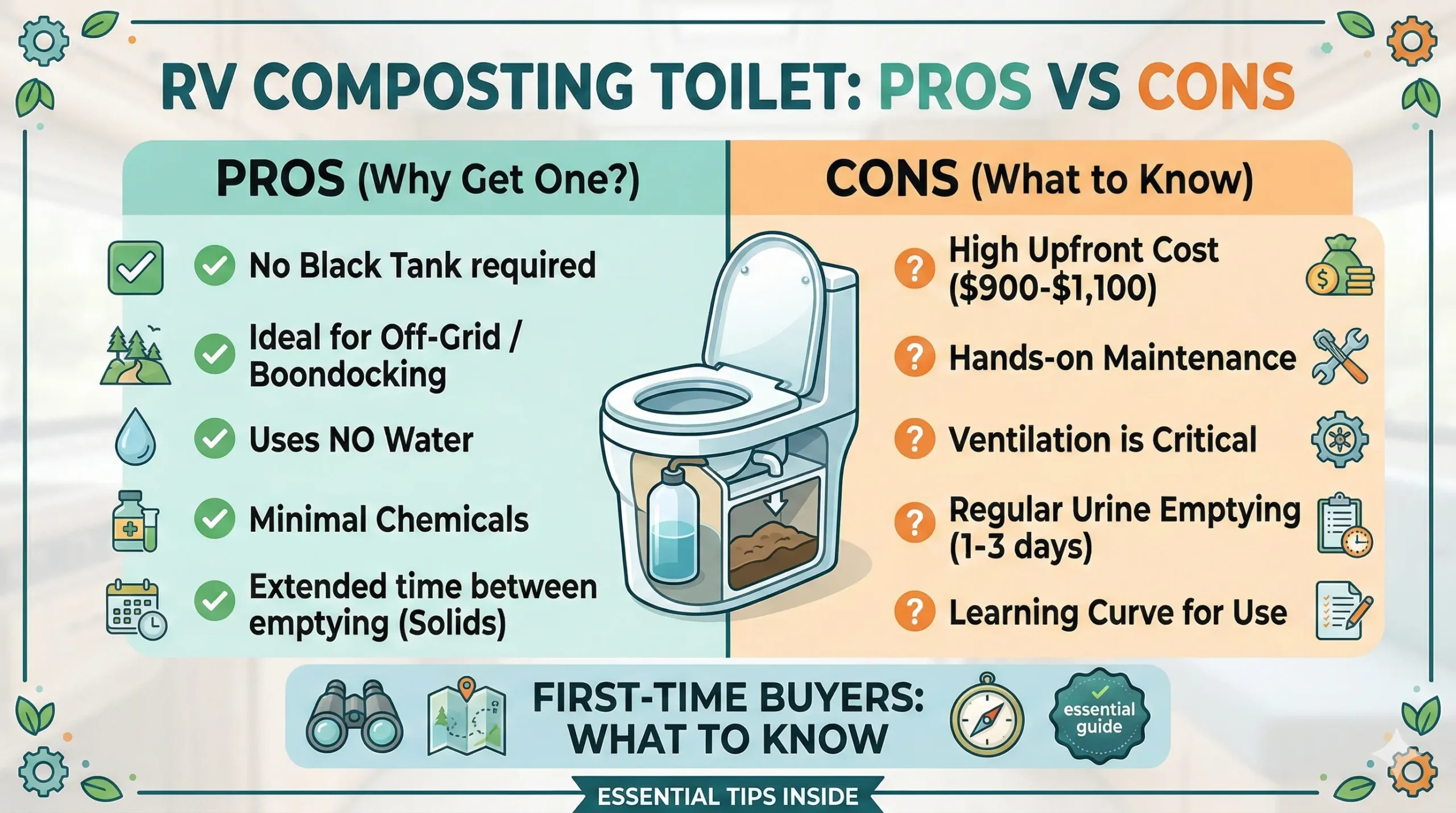
No black tank. This is the headline benefit. No black tank odor after dumping, no failed tank sensors, no sewer hose at a crowded dump station, no pyramid plug blockage building up from a dry tank. Owners consistently report this as the change they feel most immediately.
Massive water savings. A standard RV gravity toilet uses roughly 0.3 to 0.5 gallons per flush. That adds up fast on a 10-day boondocking trip. Research published via ScienceDirect puts the potential saving at over 6,600 gallons of water per person per year. Waterless Toilet Shop’s analysis confirms that toilet flushing accounts for roughly 30% of average indoor water use. For RVers with limited fresh tanks, that recovery is directly more days off-grid.
True off-grid freedom. The liquid bottle typically needs emptying every one to two days for two users. Any public restroom, pit toilet, or porta-potty works. The solid bin lasts two to four weeks. You can go weeks without needing a dump station at all.
Odor control that beats a black tank. Counterintuitive but true. The sewage smell everyone associates with RV toilets comes from liquid and solid waste mixing together. A composting toilet prevents that mixing at the source. When the system is running correctly, the only smell you notice is faintly earthy, like damp soil. Nothing offensive.
Fewer chemicals. A traditional black tank usually needs chemical treatments to control odor and break down waste. A composting toilet replaces all of that with airflow, coco coir, and separation. Fewer chemicals stored in a small living space is a genuine quality-of-life win.
What Are the Real Downsides Nobody Talks About?
Here’s what actually catches people off guard.
The upfront cost is significant. A basic RV gravity toilet runs $150 to $300. Popular composting models like the Nature’s Head land around $1,030, and the AirHead runs about $1,095. Even the budget-friendly Cuddy from CompoCloset starts at $650. You’re committing real money before you’ve used it once.
You need to drill a hole. Installation requires routing a 1.25- to 2-inch vent hose from the toilet to the exterior of your RV. That means drilling through your floor, side wall, or roof. It’s a manageable DIY job, but it’s permanent. This is the step that makes some RVers pause. If drilling a permanent vent hole isn’t something you want to do, a portable camping toilet gives you a much simpler no-install alternative for short trips and backup use.
Daily liquid management is non-negotiable. For two people, the liquid bottle needs emptying every one to two days. Ignore it, and the bottle overflows into the solid chamber. That mixing creates exactly the sewage smell the system is designed to prevent. Real-world data from FarOutRide, who used a Nature’s Head full-time for years, puts the liquid emptying frequency at every four days for two users when one person frequently uses outside facilities. For purely indoor use, every other day is realistic.
Men must sit for all uses. The diverter is designed for a seated position. This catches people off guard, especially men who have never thought about it. Most full-time owners say they stop noticing within a week.
It’s harder for larger families. Tiny Shiny Home documented their experience living in an Airstream with multiple people: the liquid bucket needed emptying daily, and the solid bin required attention every two weeks. A single composting toilet strains under heavy use from three or more people.
The solid waste isn’t finished compost. You can’t spread it on your garden or on public land. It goes in a double-bagged trash bag into a standard dumpster. Most jurisdictions treat it the same as diaper waste: bagged, non-flowable, and landfill-appropriate. Disposal rules vary significantly by location — more on this in the legal section below.
How Does the Cost Actually Break Down?
Let’s put real numbers on this.
| Composting Toilet | Standard RV Toilet | |
|---|---|---|
| Unit cost | $650 to $1,100 | $150 to $350 |
| Installation | DIY: a few hours + vent kit | Usually included, bolt-in |
| Composting medium | ~$10 to $20 per change | None |
| Chemical treatments | None | $10 to $30/month |
| Dump station fees | Eliminated | $10 to $25 per visit |
| Black tank repairs | N/A | $50 to $500+ |
| Water usage | Zero | 0.3 to 0.5 gal/flush |
For a full-timer who currently dumps their black tank every week at $15 per visit, that’s roughly $780 per year in dump station fees alone. Add chemicals, occasional seal repairs, and the value of skipping dump station trips entirely. The composting toilet typically pays back its premium within two to three years for serious boondockers.
For campground-only RVers with sewer hookups at every site, the math works differently. You’re paying the upfront premium without most of the usage benefits. In that case, a high-quality standard toilet often makes more sense.
Browse composting toilet options in our full category to compare current models side by side.
Does an RV Composting Toilet Actually Smell?
The EPA’s composting toilet guidance confirms that continuous ventilation is the key mechanism for odor control. The fan pulls air through the toilet and vents it outside before it can build up in your bathroom.
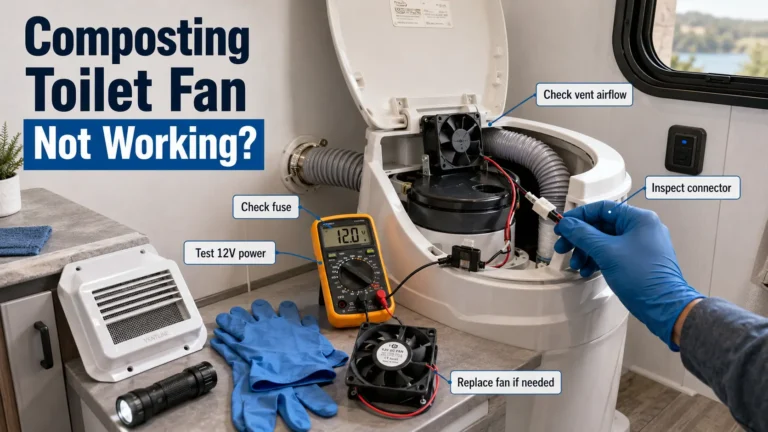
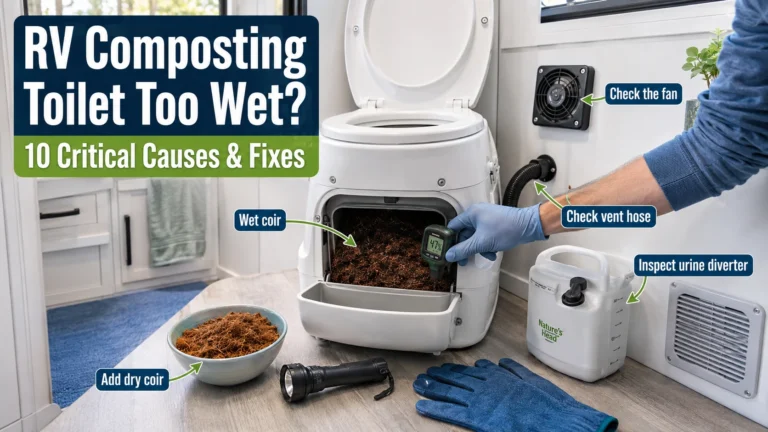
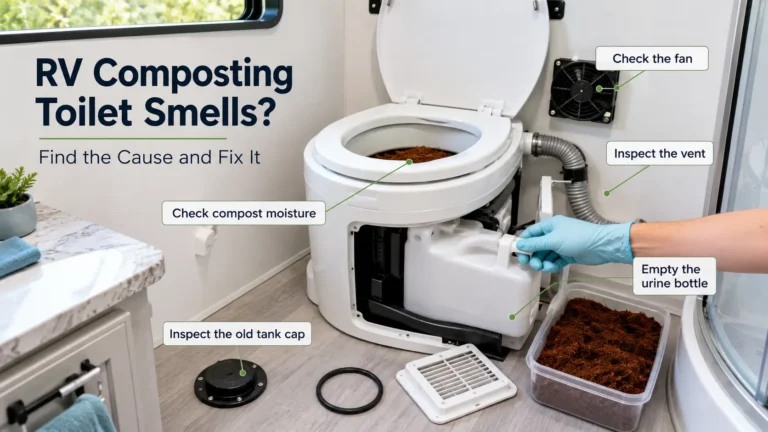
There are three situations that produce odor. First, if the liquid bottle overflows into the solid chamber, you’ve temporarily recreated sewage conditions. Empty it consistently and this never happens. Second, if the fan fails, airflow stops and odor can develop within hours. This is the most common failure point — keep a spare fan on long trips. Third, if the coco coir medium gets saturated or isn’t refreshed, the beneficial aerobic bacteria slow down and the bad-smelling anaerobic bacteria take over. Adding fresh medium regularly prevents this.
If you’re dealing with RV toilet smells in general, understanding why smell happens in traditional systems makes the case for composting toilets even clearer.
Real-world verdict: FarOutRide’s long-term review after years of full-time use described the solid tank as having an earthy or soil smell when the system runs correctly. That matches what most experienced owners consistently report.
The Legal Side of Disposal: What You Need to Know Before You Empty
This is the part most composting toilet guides skip over. Here’s what the rules actually look like in practice.
Liquid waste (urine). In most states, urine must be disposed of into a toilet, porta-potty, or approved dump facility. On land managed by the Bureau of Land Management (BLM) or the National Park Service, ground disposal is typically prohibited, especially in high-use areas. In remote wilderness areas, some rangers allow diluted urine disposal on non-edible plants well away from water sources, but this varies by district. When in doubt, use a restroom.
Solid waste. The solid bin contents from an RV composting toilet are NOT finished, pathogen-free compost. They’re partially broken-down waste and must be treated accordingly. The safest and most widely accepted disposal method is double-bagging in heavy-duty trash bags and placing them in a standard landfill dumpster. Most counties treat this the same as diaper waste: non-flowable, bagged, and landfill-acceptable.
Here’s where it gets nuanced by location:
- National Parks and National Forests: Follow Leave No Trace principles. Ground disposal of any human waste is usually prohibited. Use designated facilities or pack it out.
- BLM land: Rules vary by field office. Many allow bagged solid waste in dumpsters, but some remote areas require pack-out. Check with the local BLM office before your trip.
- State parks: Most accept double-bagged solid waste in dumpsters. Call ahead to confirm.
- Private campgrounds: Most are fine with bagged solid waste in their dumpsters. A quick check at check-in avoids any issues.
- Urban areas: Standard dumpster disposal of double-bagged solid waste is almost universally accepted.
Who Should Get One (And Who Shouldn’t)?
This is the most useful section in the guide. There’s no universal right answer. It depends entirely on how you camp.
A composting toilet is a strong fit if you:
- Boondock regularly or live in your RV full-time
- Camp solo or as a couple (one or two users)
- Have a smaller rig with limited black tank capacity
- Are tired of planning trips around dump station locations
- Want to reduce water consumption on extended off-grid stretches
- Live the van life or travel in a converted vehicle with no existing plumbing
A composting toilet is a poor fit if you:
- Stay exclusively at campgrounds with full hookups
- Travel with three or more people regularly
- Are uncomfortable with hands-on waste management
- Don’t want to permanently modify your RV with a vent hole
- Have a large rig with a big black tank that only needs dumping every two to three weeks anyway
Two Wandering Soles, who reviewed their Nature’s Head after years of campervan use, described it as something they’d recommend without a doubt for anyone with the budget. But they’re living in a van full-time. Context is everything.
Is an RV Composting Toilet Worth It?
The simplest version of the decision: if your travel style means you regularly run out of black tank capacity before you’re ready to leave a spot, a composting toilet fixes that problem permanently. If you never feel constrained by your black tank, you don’t need one.
Start with how composting toilets work in an RV if you want to get comfortable with the mechanics before committing. Once you’re ready to compare models, our composting toilet category covers the top options with detailed breakdowns.
The Bottom Line
Three things to take away from this guide.
First, composting toilets work. When properly maintained, they’re odor-free, reliable, and give you genuine off-grid freedom that a traditional black tank setup can’t match.
Second, they require consistent attention. The liquid bottle is a daily job. The coco coir needs refreshing. The fan needs to keep running. This isn’t a complicated system, but it’s not passive either.
Third, they’re not right for everyone. If you’re primarily a hookup camper, the upfront cost is hard to justify. If you boondock regularly or live in your RV, the case is strong.
The right call depends on one question: how often does your black tank limit where you go and how long you stay? If the answer is “often,” a composting toilet is worth a serious look.
Frequently Asked Questions
How long does an RV composting toilet last before needing to be replaced?
A quality composting toilet is built to last well over a decade with proper maintenance. Nature’s Head offers a 5-year warranty and uses stainless steel hardware specifically to resist corrosion. The most common replacement parts are the fan (a standard 12V computer fan, available for under $20) and the liquid bottle, which can crack over years of use. The toilet body itself rarely fails.
Can you use an RV composting toilet in winter?
Yes, and here’s the simple reason why: the toilet lives inside your heated RV, so it stays warm enough to keep working. The composting process relies on bacteria that need warmth to break down waste. When temperatures drop below 50°F, those bacteria slow down, like a fire running low on oxygen. Waterless Toilet Shop confirms the process doesn’t stop inside a warm RV interior — it just gets slower. That means your solid bin fills up faster in winter: expect to empty it every 10 to 14 days for two users instead of every two to four weeks. Think of it like a compost pile in your backyard — it breaks down fast in summer and slower in winter, but it still works. The other thing to watch in freezing conditions: the liquid bottle can freeze if it sits in a cold spot, so keep it in the warmer part of your RV bathroom.
Do you need to drill a hole in your RV to install a composting toilet?
Yes. Every self-contained composting toilet requires a vent hose routed to the exterior of your RV. You’ll need to drill a 1.25- to 2-inch hole through your floor, side wall, or roof. This is a permanent modification. Most handy RVers complete the full installation in a few hours. The vent exit must be sealed with RV-grade lap sealant, not household caulk, to prevent water intrusion. If you’re uncomfortable with the drilling step, any RV service center can handle it in under two hours.
How often do you really need to empty the liquid bottle?
For two full-time users, plan on emptying the liquid bottle every one to two days. Solo users typically get three to four days. CompoCloset’s guidance and real-world owner reports align on this range. You can empty it into any restroom toilet, porta-potty, or RV dump station. The key rule: don’t let it overflow. Treat the liquid bottle like a fuel gauge and empty it before it reaches full.
Are RV composting toilets legal to empty in any dumpster?
For liquid waste, no — urine must go into a toilet or approved sanitation facility, not on the ground, especially on BLM or NPS-managed land. For solid waste, most counties allow double-bagged solid waste in a standard landfill dumpster, treating it the same as diapers. But rules vary significantly by state, county, and land type. National parks and some BLM districts have stricter requirements. Always verify the specific rules for your location before disposal. When you’re unsure, a public restroom or RV dump station is always a safe and legal option.